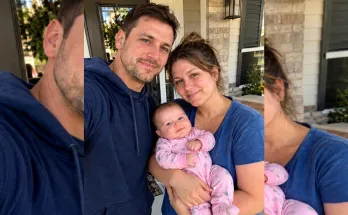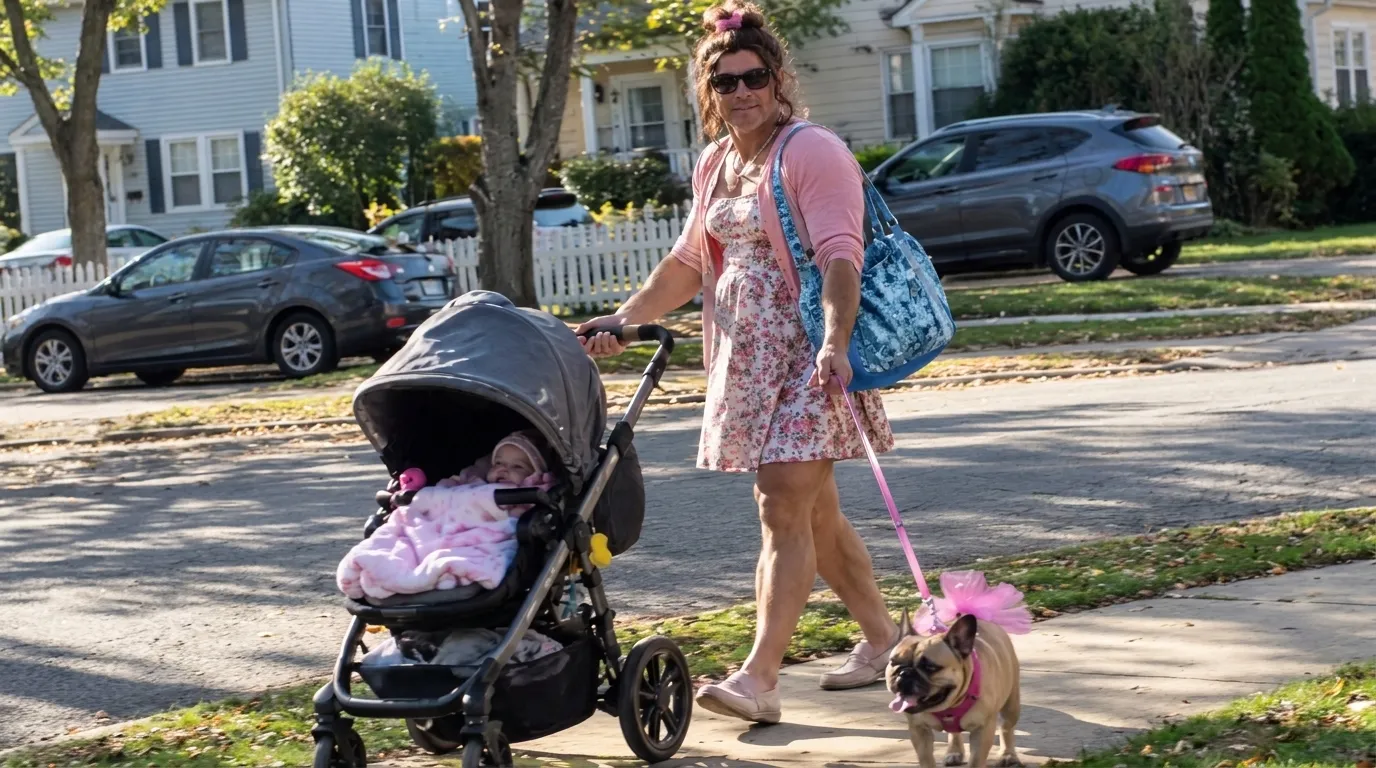
“Good thing my wife recovered years ago.”
Diane stood so quickly the folder slid from the bed.
“What is this?”
“The truth.”
“You tricked me.”
“You lied to seven women.”
“I protected my granddaughter.”
“From Emma?”
“From what could happen.”
I stepped out of the closet.
Diane turned toward me.
Her face collapsed.
“Emma?”
“You told strangers I was dangerous.”
“I was afraid.”
“You showed them my private medical records.”
“I had to make them understand.”
“Understand what?”
She looked toward Ben as though he might help her.
He did not.
Diane sat on the edge of the bed.
“When Sophie was born, you were sick.”
“I know.”
“You said terrible things.”
“I was ill.”
“You said you wanted to disappear.”
“I got help.”
“But what if it comes back?”
Her voice broke.
“What if everyone relaxes and something happens?”
Ben shook his head.
“Then we respond to what is happening, not to what happened five years ago.”
Diane began crying.
“I couldn’t lose Sophie.”
The truth finally surfaced.
This had never been only about protecting Sophie.
Diane had become Sophie’s primary caregiver during the worst months of my illness. She fed her, rocked her, and slept beside her crib when I was in treatment.
When I recovered, Diane had to step back.
But she never truly did.
“You believed every nanny was replacing you,” I said.
“No.”
“Then why frighten them away?”
“I needed someone responsible.”
“You needed someone loyal to you.”
She did not deny it.
Ben picked up the folder.
“You kept records on my wife for five years.”
“I kept proof.”
“Of her recovery?”
Diane looked at him.
“Of the risk.”
I felt something inside me settle.
For years, I had carried shame about the mother I had been during those months. Diane had turned that shame into a weapon and convinced others that recovery was an illusion.
“You will not come into this house again without permission,” I said.
Her eyes widened.
“Emma, please.”
“You will return every copy of my medical records, every photograph, and every recording.”
“I was trying to help.”
“No,” I said. “You were trying to control us.”
Ben stepped beside me.
“If you contact another sitter, the agency, or Sophie’s school, we will seek a protective order.”
Diane stared at him.
“You would do that to your own mother?”
“You did this to my wife.”
She left without saying goodbye.
The following morning, Ben and I met with the agency director.
We placed copies of the confidentiality agreement, Carla’s statement, Julia’s statement, and the recording of Diane on her desk.
The director’s practiced smile disappeared.
“We had no knowledge of this specific behavior.”
“You had seven complaints connected to our address,” I said.
“They were not identical.”
“Because you never investigated them.”
Ben leaned forward.
“You paid people to stay silent.”
She insisted the payments were standard dispute settlements.
We told her our attorney could decide whether that explanation was sufficient.
Within two weeks, the agency released every former nanny from her confidentiality agreement and announced an outside review.
The director resigned shortly afterward.
Carla returned to our house once.
She stood in the doorway looking nervous.
“I should have told you.”
“You were afraid,” I said.
“I still left you thinking Sophie was the problem.”
I glanced toward the living room, where Sophie was building a tower.
“She never was.”
Carla sat with us for coffee. Sophie remembered her and immediately asked if she still knew how to make purple play dough.
Carla laughed.
“I think I can remember.”
We did not ask her to babysit again. Too much had happened for that to feel simple.
Instead, we hired someone through a different agency after conducting our own interviews and explaining what had occurred.
Her name was Lacey.
On her first day, she stayed until I came home.
On her second day, she came back.
After one week, I realized I had been holding my breath each afternoon, waiting for another resignation.
It never came.
Diane did not see Sophie for three months.
When we finally agreed to meet her in a counselor’s office, she apologized without defending herself.
“I convinced myself fear was the same as instinct,” she said. “It wasn’t.”
I did not forgive her immediately.
Ben did not ask me to.
Trust returned slowly, through boundaries she respected rather than promises she made.
Months later, Sophie found the old wig in our bedroom closet.
She carried it downstairs and placed it on Ben’s head.
“Who are you supposed to be?”
He adjusted the crooked bangs.
“Megan.”
Sophie giggled.
“She looks weird.”
“She had a difficult job.”
I laughed for the first time about the disguise.
Every babysitter had quit because Diane made them believe they were protecting Sophie from me.
In reality, the person they feared was the one person who had done the hardest thing a frightened mother can do.
I had admitted I needed help.
I had accepted treatment.
I had returned home and rebuilt my life.
Diane had watched me recover, but she trusted her fear more than the woman standing in front of her.
So here’s the real question: If someone uses your most painful chapter to convince others that you can never change, does their fear deserve compassion, or does protecting your future require leaving their version of you behind?
Latest Posts
- My Husband Mocked My Postpartum Appearance in His Brothers’ Group Chat—I Stayed Quiet for Five Days
Four months after giving birth, I thought my husband understood why I hardly recognized myself. Then I discovered the cruel joke he'd been sharing with his brothers, along with photos I never knew he'd taken. I kept my discovery secret for five days, determined to make him regret every word. “Dude, you weren't exaggerating 😂” …
- My Stepdaughter Called Me the Help Until My Envelope Changed Everything
The insult came before I’d even finished setting down the peach cobbler. I’d baked it at five that morning in the kitchen of the lake cabin we’d rented, and it was still warm under the foil. The smell of cinnamon followed me across the grass toward the pavilion tables, where thirty-two members of the Cole …
- My In-Laws Gave Their Other Three Children $20,000 for Houses and Gave Us Only a Card Two Years Later, We Bought the Old Miller Place for $41,500
The envelopes were tucked under the Easter plates. Each had a name written on it in my mother-in-law’s round schoolteacher handwriting. Kim opened hers first. She’s the oldest. Divorced two years. Raising two boys in a rented trailer behind the grain elevator. She looked at what was inside the envelope and put her hand flat …
- My Mother-in-Law Told Me to Lose Weight After Giving Me a Dress That Didn’t Fit, but Minutes Later, She Regretted Everything
I couldn’t get it over my hips. I stood in my bedroom in my underwear with the dress bunched around my thighs like a deflated balloon. Midnight blue silk. A designer label I’d only ever seen in magazines. Tiny pearl buttons down the back. Beautiful. And four sizes too small. I pulled. I tugged. I …
- Teen Wore a Dress to His Best Friend’s Funeral—The Family Nearly Had Him Removed Before He Reached the Microphone
My son’s best friend read the eulogy at his funeral in a red dress. I almost had him removed before he reached the microphone. My son Jack died 17 days after his 18th birthday. Cancer. Fourteen months from diagnosis to funeral. We found out late. Too late, as it turned out, and the treatment never …