Finding a babysitter for our five-year-old daughter shouldn’t have been this difficult.
Every nanny we hired came through the same highly rated agency. They all had excellent references and glowing reviews.
Yet the first lasted only three days.
The second quit before the end of her first week.
The third called me in tears halfway through a shift.
And every single one gave us almost the exact same explanation.
“I’m sorry… I just can’t do this.”
But whenever I asked what had happened, they refused to say another word.
It made no sense.
We paid well. Our daughter, Sophie, was sweet, polite, and easy to look after.
We even had security cameras throughout the common areas of our house, and nothing on the recordings ever seemed unusual.
Still, one babysitter after another disappeared from our lives.
After the seventh one quit, my husband, Ben, finally joked, “Maybe I should apply.”
I laughed.
Then I suddenly stopped.
“What if you actually did?”
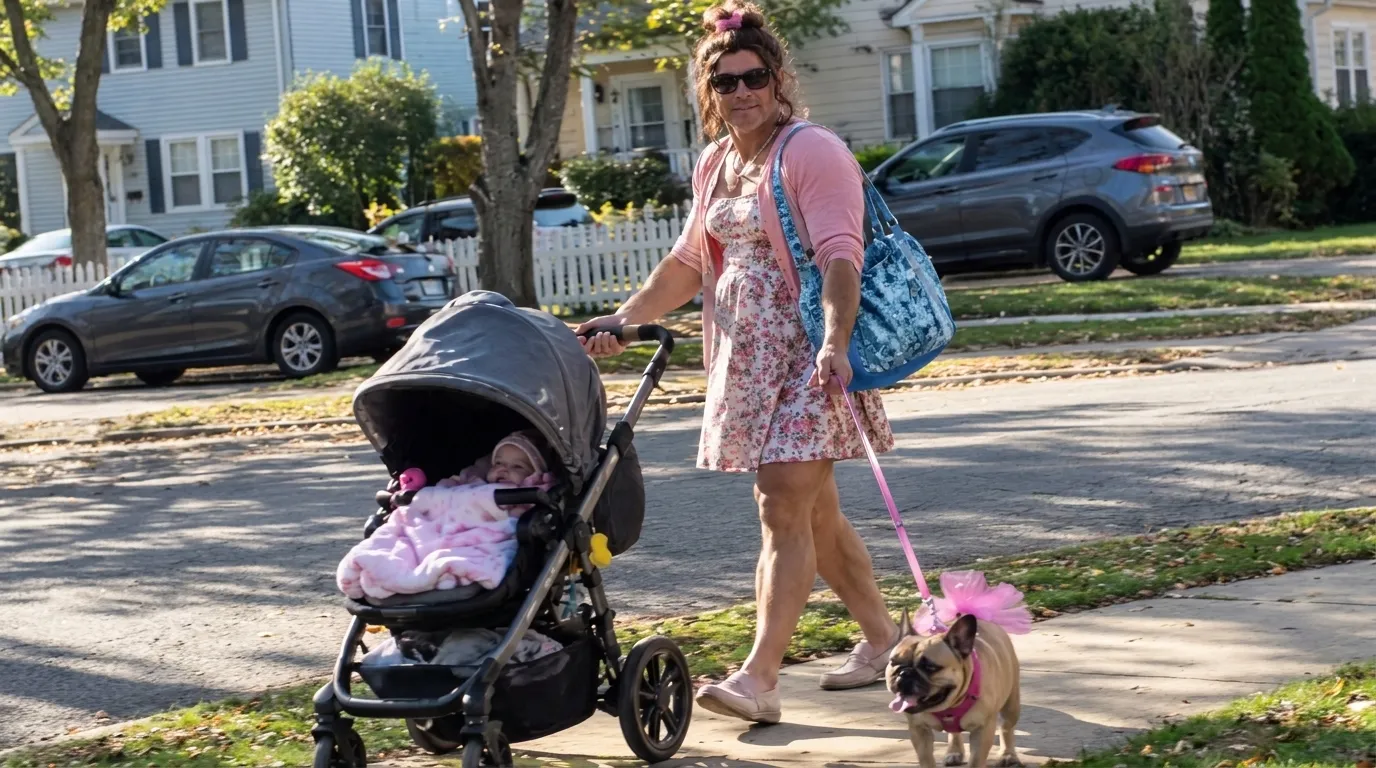
A week later, wearing a wig and glasses and using the name “Megan,” Ben responded to one of the agency’s online ads.
To our surprise, they hired him.
Not to work for us.
For another family.
We agreed he’d stay there as long as he could and tell me everything he saw, especially anything that seemed strange.
For the first few days, everything appeared completely normal.
The agency’s office was spotless. The employees were friendly and smiled constantly. Every nanny signed the same paperwork. Every family seemed perfectly ordinary.
Then, on his fifth day, something finally happened.
Just as he was about to leave, the agency director stopped him in the hallway.
She smiled.
“We need you to deliver one last package before you go home.”
Then her expression became strangely serious.
“No questions,” she said. “Just leave it on the doorstep and walk away.”
Ben looked down at the address.
It wasn’t the home where he’d been working. It wasn’t even in the same neighborhood.
He recognized it.
The address belonged to one of the babysitters who had abruptly quit working for us months earlier.
He was supposed to drive there, leave the envelope, and walk away.
Instead, he pulled into an empty parking lot, locked the doors, and secretly opened it.
Inside was a cashier’s check for $15,000, a confidentiality agreement, and a letter.
The letter thanked the former nanny for agreeing not to discuss “events witnessed during placement.” It warned that contacting the family, other employees, or law enforcement could violate the settlement.
Ben called me from his car.
“They’re paying them to stay quiet,” he said.
I sat down at the kitchen table.
“About what?”
“I don’t know.”
“Was Sophie’s name anywhere in it?”
“No. It only listed the agency and the nanny.”
“Which nanny?”
“Carla. She was the fourth one.”
I remembered Carla clearly.
She had been warm, confident, and wonderful with Sophie. On her second day, she made homemade play dough with her. On the fourth, she left halfway through her shift and blocked both our numbers.
“Don’t deliver it without making copies,” I said.
“I wasn’t planning to.”
Ben copied the documents, resealed the envelope, and drove to Carla’s house.
He left it on the doorstep as instructed, then parked across the street.
Carla opened the door less than five minutes later. She picked up the envelope, looked in both directions, and hurried inside.
Ben waited another hour before knocking.
She did not answer.
He slipped a note beneath her door.
“I know about the agency. I am not here to hurt you. Please call me.”
Nothing happened that night.
The following afternoon, an unknown number called Ben.
“You shouldn’t have opened the envelope,” a woman said.
“Carla?”
“Who are you?”
Ben glanced toward me. We had put the call on speaker.
“My name is Ben. My wife and I hired you to watch our daughter.”
The line went silent.
Then Carla whispered, “Sophie?”
“Yes.”
“You need to stop using that agency,” she said.
“Why?”
“I signed something.”
“I saw it.”
“You had no right.”
“Neither did they.”
Carla exhaled shakily.
“You don’t understand what you’re dealing with.”
“Then help us understand.”
She refused to talk by phone but agreed to meet us at a diner outside town.
Carla arrived wearing a baseball cap and oversized sunglasses. She chose a booth in the back and kept looking toward the entrance.
“I never should have taken that job,” she said.
“You mean ours?” I asked.
She nodded.
“What happened in our house?”
“Nothing at first.”
Her hands tightened around her coffee cup.
“Sophie was lovely. You were both kind. I thought it would be an easy placement.”
“Then why did you leave?”
Carla looked directly at me.
“Your mother.”
I frowned.
“My mother died when Sophie was a baby.”
Carla’s face changed.
“The woman called herself Sophie’s grandmother.”
I knew immediately who she meant.
Ben did too.
“My mother,” he said.