Elias talked.
Eventually.
Not because he suddenly grew a conscience.
Because the ledger left him nowhere else to hide.
He admitted staging his boating death.
He admitted blackmailing people named in my father’s records.
He admitted recruiting Caleb.
He admitted the surveillance.
The hospital attack.
The threats against me.
And he admitted ordering Mrs. Bell’s death after she discovered the cameras inside the Cross estate.
That confession broke me more than I expected.
Mrs. Bell had known me since I was a teenager.
She used to leave extra cinnamon in my coffee because she knew I liked it.
She had died trying to protect me from the truth my own family had buried.
Elias denied wanting to kill me.
He claimed he only wanted the ledger.
I didn’t believe him.
Neither did prosecutors.
His messages said otherwise.
Especially the ones discussing my pregnancy.
My child had become, in his mind, the next obstacle in a line of inheritance that had never truly been about money.
It was about control.
That was the disease running through both our families.
The Crosses.
My father.
Elias.
Even Dorian, in his own way.
Every man believed protection meant deciding for someone else.
I refused to let that continue.
Dorian cooperated fully with investigators.
The ledger implicated businesses connected to him.
Some were legitimate.
Some were not.
He surrendered records.
Closed operations that could not survive legal scrutiny.
Placed the legitimate shipping and real-estate companies under independent compliance oversight.
He refused to buy immunity with information.
“If I committed something they can prove,” he told his lawyer, “then I answer for it.”
That frightened me.
But I respected it.
The investigation ultimately found that Dorian had known about parts of his father’s organization but had spent years separating legitimate businesses from it.
He still faced penalties and scrutiny for financial conduct he had allowed to continue too long.
He accepted them.
For the first time since I had known him, Dorian stopped trying to control the outcome.
The divorce papers remained unsigned.
That did not mean I immediately moved back into our bedroom.
I didn’t.
For almost four months, I lived in the east guest suite of the Cross estate while the threats were resolved.
Dorian slept on the opposite side of the house.
We attended counseling.
He hated the first session.
The therapist asked:
“Why did you decide divorce was safer than telling your wife the truth?”
Dorian answered:
“Because I could control a divorce.”
I looked at him.
The therapist asked:
“And could you control Alina?”
“No.”
“Did you try?”
Dorian was silent.
Then:
“Yes.”
That was probably the most honest conversation of our marriage.
He learned to tell me things before he had solved them.
I learned that understanding why someone hurt you does not obligate you to pretend it didn’t happen.
Some nights I still woke furious.
Some mornings I saw those divorce papers in my mind.
Sometimes Dorian reached for me and I pulled away.
He never complained.
“I told you I’d wait,” he said.
And he did.
My pregnancy continued normally.
At twelve weeks, Dorian sat beside me during another ultrasound.
The doctor asked whether we wanted to know the sex when the time came.
Dorian looked at me.
“Your decision.”
I smiled faintly.
“You’re learning.”
“Painfully.”
At twenty weeks, we discovered we were having a daughter.
Dorian stared at the screen for nearly a minute.
Then whispered:
“A girl.”
“Yes.”
He looked terrified.
I laughed.
“What?”
“I know what men like me do to daughters.”
My smile faded.
“No.”
I took his hand.
“You know what men like your father did.”
He looked at me.
“You get to decide what kind of father you become.”
His eyes filled.
That sentence became his own version of a ledger.
Something he returned to whenever fear tried to become control.
I visited Elias once before his trial.
Only once.
He sat behind reinforced glass wearing a plain detention uniform.
For a moment, I saw my childhood brother.
The boy who used to steal peaches from our neighbor’s tree.
The teenager who taught me to drive.
The brother whose funeral I had cried through seven years earlier.
Then I remembered Mrs. Bell.
The hospital.
The surveillance photograph.
My unborn daughter.
“Why?” I asked.
Elias leaned back.
“Father chose you.”
“No.”
His jaw tightened.
“Yes.”
“He trusted me.”
“That’s the same thing.”
“It isn’t.”
“He left you the ledger.”
“He left me the ability to destroy it.”
That finally silenced him.
I continued.
“You spent seven years believing the ledger was an inheritance.”
“It was power.”
“That’s exactly why he didn’t give it to you.”
His eyes hardened.
“You sound like Dorian.”
“No.”
I stood.
“I sound like myself.”
He stared at me.
“What happens to us?”
“There is no us right now.”
“I’m your brother.”
“Yes.”
“And you are still responsible for what you did.”
I walked away.
He called my name.
I did not turn around.
Love does not erase accountability.
Blood does not erase choice.
I had learned both lessons the expensive way.
Elias eventually received a lengthy prison sentence after pleading guilty to conspiracy, extortion, attempted violence, financial crimes, and charges connected to Mrs. Bell’s death.
Caleb cooperated and received a lesser sentence.
The network documented in the ledger fractured.
Some people were prosecuted.
Others lost businesses or licenses.
Several investigations continued for years.
Not every rumor became a charge.
Not every suspicious name became guilt.
That distinction mattered to me.
My father’s ledger had not been created to replace courts.
It had been created to give them somewhere to start.
Dorian understood that too.
The Chicago newspapers loved the story.
THE CROSS LEDGER.
THE DEAD BROTHER.
THE DIVORCE THAT EXPOSED AN EMPIRE.
They called Dorian a crime boss.
A whistleblower.
A villain.
A reformer.
Sometimes all four in the same week.
He stopped reading the articles.
“I know what I am,” he told me.
“What?”
“A man trying to become less dangerous to the people he loves.”
It wasn’t romantic.
That was why I believed him.
Six months after the morning at the law office, I returned there.
Same conference room.
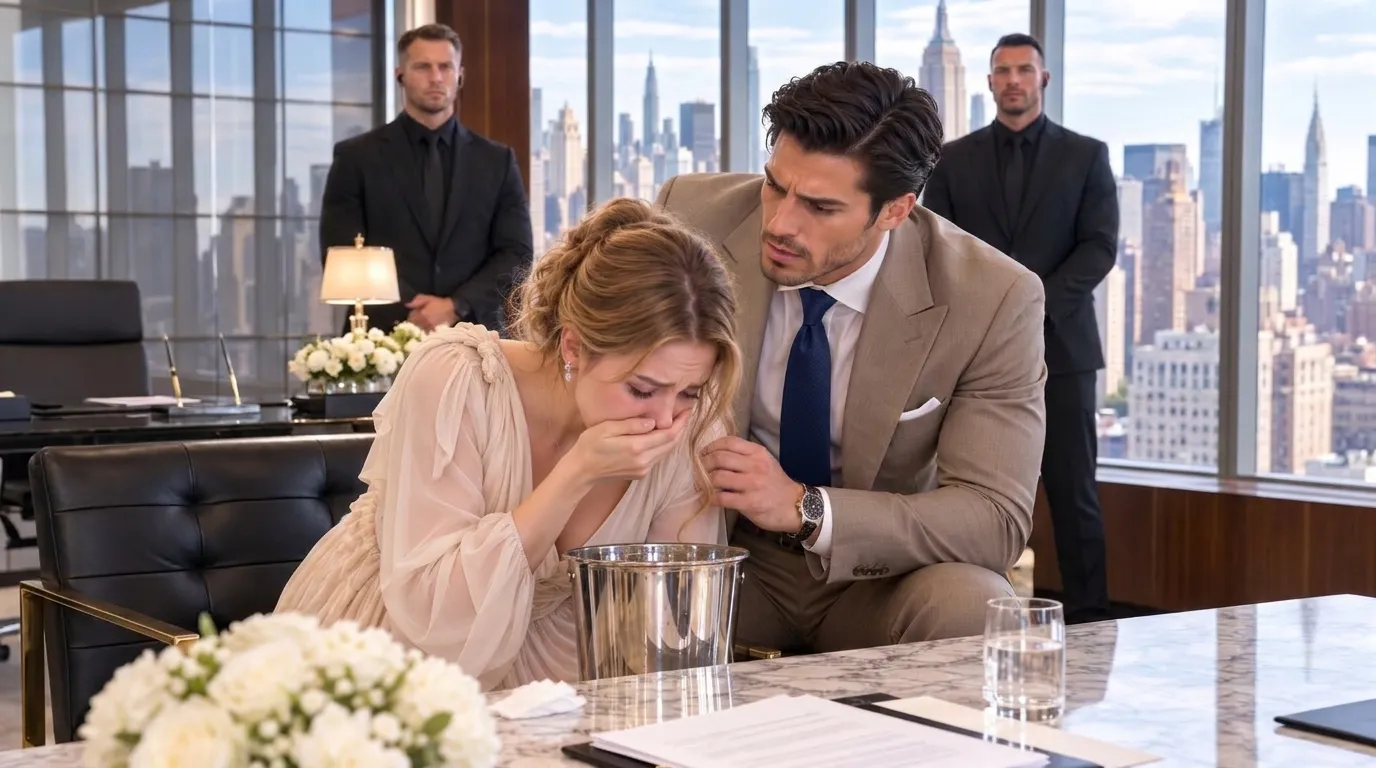
Same silver trash can.
Different reason.
The attorney placed the old divorce petition in front of us.
“You never signed it.”
“I know.”
Dorian sat beside me.
Not opposite me.
The attorney asked:
“What would you like done with it?”
I looked toward Dorian.
He did not answer for me.
That mattered.
“Close the case,” I said.
The attorney nodded.
Dorian exhaled slowly.
But I held up my hand.
“That does not mean everything goes back to the way it was.”
“I know.”
“We rebuild or we don’t.”
“I know.”
“You never decide my future without me again.”
“I know.”
“And if someone threatens me?”
“I tell you.”
“If you’re afraid?”
“I tell you.”
“If you think leaving me will protect me?”
He almost smiled.
“You remind me of this conversation.”
“Good.”
Then I signed one document.
Not divorce papers.
A dismissal.
Dorian watched my pen move.
When I finished, he whispered:
“Can I ask you something?”
“Yes.”
“Do I get to take you home?”
I looked at him.
“Which home?”
His expression softened.
“Whichever one you choose.”
That was the right answer.
Our daughter was born in early autumn.
Dorian cried before I did.
When the nurse placed the baby against my chest, he stood beside the bed staring at her tiny face.
“She’s so small.”
“Babies tend to be.”
“What if I hold her wrong?”
I laughed weakly.
“The terrifying Dorian Cross is afraid of a newborn?”
“Yes.”
“Good.”
He looked offended.
“Good?”
“It means you understand she isn’t something you control.”
He looked at our daughter.
Then nodded.
“No.”
He touched one tiny hand.
“She’s someone I protect by teaching her she belongs to herself.”
I started crying.
“Now you’re learning.”
One year after the divorce papers nearly ended our marriage, Dorian made pancakes on Sunday morning.
They were still terrible.
He burned one side and somehow left the center undercooked.
I watched from the kitchen table with our daughter asleep against my chest.
“You own restaurants,” I said.
“That has nothing to do with cooking.”
“That explanation gets worse every year.”
He smiled.
Then his eyes moved toward my hand.
I still wore my wedding ring.
But the hidden compartment was empty.
The microchip had become evidence.
Eventually, investigators returned the ring.
I could have replaced it.
I didn’t.
The tiny hollow space remained inside the band.
A reminder.
Not of Elias.
Not of my father.
Not even of the ledger.
Of everything people had hidden inside our marriage because they believed secrets were safer than truth.
Dorian placed a plate in front of me.
“Are these edible?”
“Legally?”
He laughed.
Our daughter stirred.
He immediately lowered his voice.
I looked around the kitchen.
One year earlier, I had believed my marriage was ending because my husband no longer loved me.
The truth was far more complicated.
Dorian had loved me.
He had simply loved me badly.
Fearfully.
Secretly.
Like protecting me gave him the right to remove me from my own life.
I had loved him too.
But I had learned something equally important.
Love alone was not enough.
Love needed honesty.
Choice.
Respect.
And room for the person beside you to stand there willingly.
Dorian sat across from me.
“Alina?”
“Yes?”
“Are you happy?”
A year earlier, he would have assumed the answer.
Now he asked.
I looked at our daughter.
At the awful pancakes.
At the man who had finally learned that protecting someone did not mean controlling them.
“Yes.”
His shoulders relaxed.
“But?”
He knew me too well.
I smiled.
“But you’re still making breakfast next Sunday.”
He groaned.
I laughed.
And the sound filled the kitchen.
The divorce papers were gone.
Elias was no longer hiding in the shadows.
The ledger belonged to evidence rooms and court files instead of criminal families.
Dorian’s empire was smaller.
Cleaner.
Less frightening.
Our life was smaller too.
And somehow much larger.
That morning, the secret hidden inside my wedding ring no longer mattered.
Neither did the fortune Elias believed he deserved.
The only inheritance I cared about was sleeping against my chest.
A little girl who would grow up knowing that love was not obedience.
That family was not ownership.
That fear was not permission to lie.
And that nobody—
not a father,
not a brother,
not even a husband who loved her desperately—
had the right to decide her life without her voice.
Dorian reached across the table.
This time, he didn’t take my hand.
He waited.
I looked at him.
Then placed my fingers in his.
And that was the difference.
Not possession.
Not command.
Choice.
The End.
- My Husband Mocked My Postpartum Appearance in His Brothers’ Group Chat—I Stayed Quiet for Five Days
 By Saturday evening, Ryan had bought the groceries I’d listed, and dinner was ready. I wore a comfortable blue dress I’d bought after Emma was born. It fit properly, and …
- My Stepdaughter Called Me the Help Until My Envelope Changed Everything
 The family reunion was scheduled for the third Saturday in June at Lake Anna, the way it had been every summer for forty years. Thirty-two members of the Cole family. …
- My In-Laws Gave Their Other Three Children $20,000 for Houses and Gave Us Only a Card Two Years Later, We Bought the Old Miller Place for $41,500
 We still didn’t tell anybody. By then it wasn’t a rule so much as a habit. And there was a little pride in it too. I’ll own that. I wanted …
- My Mother-in-Law Told Me to Lose Weight After Giving Me a Dress That Didn’t Fit, but Minutes Later, She Regretted Everything
 But I need to tell you about March. Because that’s where this really starts. In March, before Hazel was born, Ryan and I decided to buy a house. We’d been …
- Teen Wore a Dress to His Best Friend’s Funeral—The Family Nearly Had Him Removed Before He Reached the Microphone
 My head snapped toward him. Theo looked at me. “Mrs. Harris, I’m sorry. I should’ve told you before today. I just… I couldn’t.” He unfolded the paper. “It says, ‘Theo, …