My Son Left Me Behind on Thanksgiving and Flew His Family to Hawaii—So Friday Morning, I Called Movers to Take Back What Was Mine
On Thanksgiving, my son flew his wife and children to Hawaii for a luxury vacation and left me behind with a note pinned to the refrigerator.
I didn’t break down. Friday morning, I called movers. Five days later, my phone kept ringing nonstop.
“We left for Hawaii. Don’t worry, Mrs. Margaret. At your age, it’s better for you to stay home and rest.”
That was the message, pinned to the refrigerator with a turkey-shaped magnet.
I read it three times while standing alone in the quiet kitchen of my son Daniel’s house in Scottsdale, Arizona.
Thanksgiving morning had always carried the smell of cinnamon, coffee, and butter. But that Thursday had no smell at all.
No voices. No cartoons playing on the television. No sound of my grandchildren running through the hallway.
“Emily,” I called first.
Nothing.
“Jack.”
Silence.
I slowly went up to the second floor. The children’s beds were made. Their backpacks were gone. Their jackets were missing too. In the master bedroom, Daniel’s and Rebecca’s suitcases were gone.
I came back downstairs with a strange calm, the kind that arrives before pain knows where to settle.
The SUV was no longer in the garage.
Rebecca’s car was gone too.
Only I was still there.
And the note.
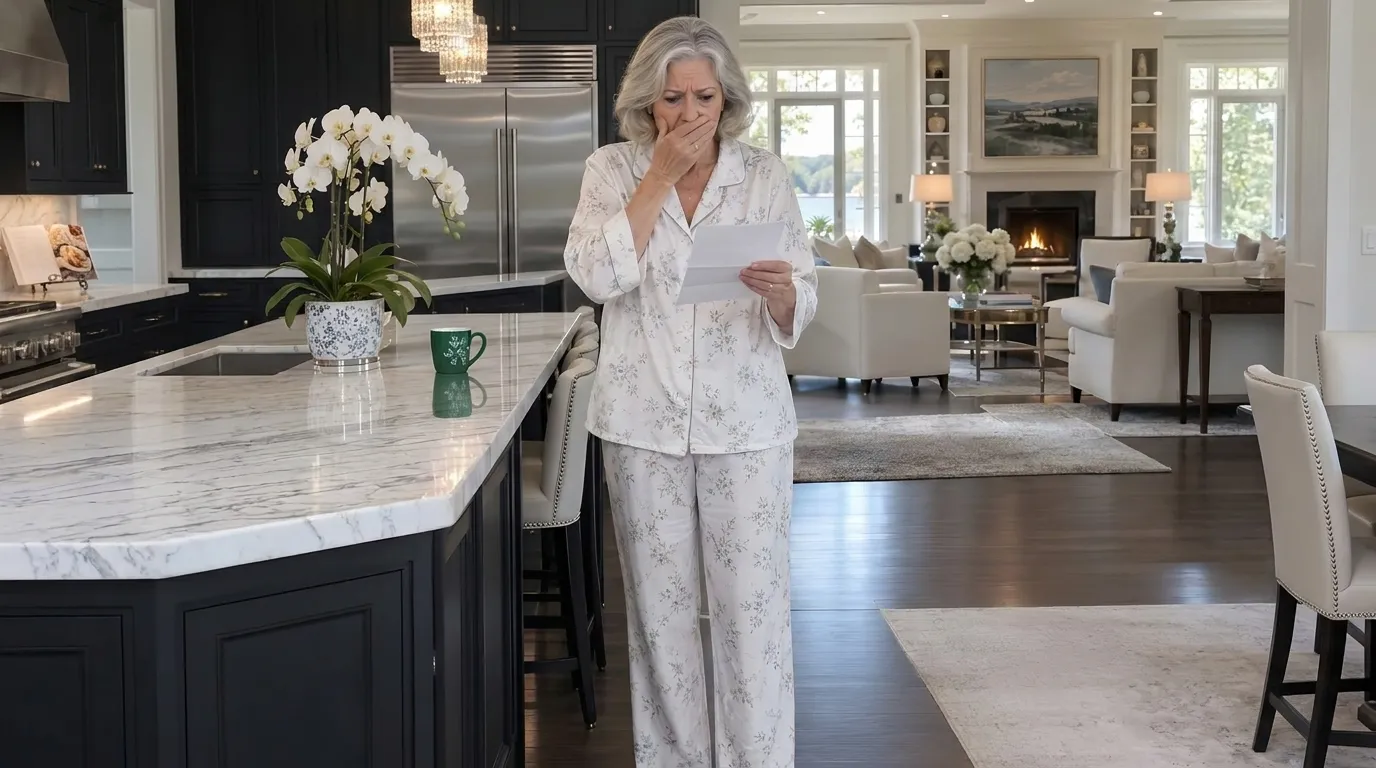
“We decided to spend Thanksgiving in Hawaii this year. We didn’t tell you earlier because we knew you would insist on coming. The flight is long, and you get tired so easily now. We’ll be back in a week. There’s soup in the freezer.”
I placed the note on the table.
I was seventy-three years old, but I was not a child. I did not need anyone choosing for me whether I could board a plane, walk through an airport, or sit beside the ocean.
The worst part wasn’t that they had left.
It was that they had left me behind like a houseplant watered before vacation.
Four years earlier, after Arthur passed away, Daniel had told me, “Mom, come live with us. I don’t want you being alone. Besides, it would be good for the kids to have you close.”
I sold my small apartment in Oak Park and moved to Scottsdale, Arizona. With part of the money, I helped with the down payment on the house.
I bought the refrigerator, the living room set, the washing machine, the dryer, the curtains, the dining room furniture, and even the Italian coffee maker Rebecca liked to show off to her friends.
At first, they called me a blessing.
Slowly, that blessing turned into an obligation.
If I wanted to go downtown with a friend, Rebecca would purse her lips.
“And who’s supposed to pick up the kids from swim practice?”
If I said my back was hurting, Daniel would sigh.
“Mom, we’re only asking you to help with dinner. It’s not that much.”
If I bought myself something, Rebecca would comment, “Well, good thing you can still afford things, because expenses in this house are really tight.”
The words that finally cracked something inside me had come six months earlier. Rebecca had been on the patio, talking on the phone, thinking no one could hear her.
“We can’t ask her to move out. She watches the kids, pays for things, and even buys groceries. It’s not her we’re keeping around. It’s her money that’s saving us.”
I had said nothing then.
I folded that pain into my chest like a needle hidden inside fabric.
But that morning, with the house empty and the note still lying on the table, I finally understood it all.
They hadn’t asked me to live with them because they loved me.
They had placed me there because I was useful.
I poured myself coffee and sat down.
I looked at the dining room furniture I had paid for, the curtains I had ordered, and the blender I had bought after Rebecca said, “A beautiful house can’t have old appliances.”
Then I went to my bedroom.
I opened the bottom drawer of my nightstand and pulled out a blue folder.
Inside was every receipt.
Arthur used to tease me with affection.
“Maggie, you even keep receipts for a loaf of bread.”
That day, I smiled for the first time.
“Thank you, old man,” I whispered.
I took out a notebook and wrote on the first page:
Things That Belong to Me
Then I started listing them.
Refrigerator.
Living room furniture.
Dining room set.
Washing machine.
Dryer.
Television.
Coffee maker.
Guest beds.
Curtains.
Lamps.
Dinnerware.
Patio furniture.
Each item I wrote gave me another breath.
That night, I did not cry.
Friday morning, I searched for a moving company on my phone and called the first business that answered.
“Ma’am, it’s a holiday weekend, so there’s an added charge.”
“That’s fine,” I replied.
“When do you need the service?”
I glanced at the note again.
“Tomorrow morning at eight.”
The House Arthur Helped Me Build
Evelyn arrived shortly after breakfast on Friday.
She carried a canvas grocery bag and two slices of pumpkin pie.
“I thought you’d need something sweet.”
I looked at the pie.
“It’s nine in the morning.”
“It’s Thanksgiving weekend.”
“That’s not an argument.”
“It’s an excellent argument.”
She placed the pie on the counter.
Evelyn and I had known each other for nearly forty years.
She had lived three streets away when Arthur and I raised Daniel. Our husbands worked together at a municipal equipment company.
We attended school functions, shared recipes, and occasionally argued over which of us made better cornbread.
After Arthur died, Evelyn was one of the few people who understood that I sometimes wanted company without wanting consolation.
She didn’t tell me to stay busy.
She didn’t explain grief.
She sat at my kitchen table and allowed the room to be quiet.
Now she looked at the itinerary.
Then the chore list.
Then the budget.
“Margaret.”
I waited.
“They didn’t forget to invite you.”
“No.”
“They planned around you not going.”
“Yes.”
She picked up the itinerary.
Three adult passengers.
Two children.
Seat assignments.
Hotel confirmation.
Paid activities.
All arranged in advance.
“How long have they known?”
“Weeks.”
She placed the paper down.
“And nobody thought to tell you.”
“Apparently not.”
Evelyn studied me.
“You’re very calm.”
“I’ve spent the morning trying to decide whether I’m entitled to be angry.”
Her expression changed.
“You’re entitled to feel whatever you feel.”
I looked toward the stove.
“That doesn’t tell me what I should do.”
“No.”
She pulled out a chair.
“Then tell me what you want.”
I thought.
Not revenge.
Not a public argument.
Not an elaborate surprise when Daniel returned.
I wanted to know whether I still had a life that belonged to me.
“I want to leave,” I said.
Evelyn didn’t smile.
She didn’t congratulate me.
She didn’t tell me it was overdue.
She asked, “For a few days?”
“No.”
“For good?”
“I think so.”
She looked toward the blue folder.
“Then we need to be careful.”
I nodded.
Arthur would have said exactly the same thing.
My husband had spent thirty-eight years working for the city before retiring. He was practical, methodical, and mildly irritating about paperwork.
We had owned a modest home in northern Arizona.
Nothing spectacular.
Three bedrooms.
A small garage.
A backyard where Arthur grew tomatoes that were usually eaten by birds.
We raised Daniel there.
Paid the mortgage.
Replaced appliances when they failed.
Took one proper vacation every few years.
We were comfortable by the time Arthur retired.
Not wealthy.
Comfortable.
When he became ill, we used savings for home modifications and medical expenses.
He remained at home as long as he could.
I cared for him.
Daniel visited.
Rebecca brought food.
The grandchildren drew pictures beside Arthur’s bed.
Our family wasn’t always easy, but it was loving.
Or so I believed.
After Arthur died, home felt enormous.
Every room held something of his.
The chair where he read.
His tools.
The desk.
The coffee mug with a chipped handle he refused to replace.
Daniel began suggesting that I move closer to him.
At first, I refused.
Then he and Rebecca found a larger house in Scottsdale.
They said there would be a bedroom and bathroom on the main floor for me.
Space for my belongings.
Room for the grandchildren to visit with me.
I could help with the down payment, and everyone would benefit.
I met with my financial adviser before agreeing.
We documented my contribution and how it would be treated.
It was not an ownership interest in the house.
That mattered later.
I understood it at the time.
I wanted to help my son.
And I wanted to be part of the family.
So I sold my apartment and moved.
The first Christmas in Scottsdale was wonderful.
Daniel cooked.
Rebecca decorated.
The children opened presents on the floor.
I made Arthur’s favorite stuffing.
We laughed when Daniel burned the rolls.
For a while, I thought we’d created something good.
Then the expectations changed.
First, Rebecca asked me to pick up the children on Thursdays.
Then most weekdays.
Then to prepare dinner while she handled after-school activities.
Then to stay home when contractors came.
Then to manage deliveries.
Then to help with household expenses beyond our agreed contribution.
Some requests were reasonable.
Others grew from the assumption that because I was retired, my time had no competing purpose.
I began buying things for the house.
The original refrigerator failed.
I purchased a replacement.
The washer broke.
I bought a new one.
Then the dryer.
A dining table large enough for the entire family.
Furniture for the living room.
Some items were intended as gifts.
Others, we’d specifically discussed as my furniture that I could take if I ever moved.
Too often, we hadn’t put those understandings in writing.
Arthur would have hated that.
Rebecca liked the new furniture.
She appreciated it.
At first.
Then she began questioning the cost of groceries I purchased.
“Margaret, are we really spending this much on food?”
I’d explain.
The children were growing.
Prices had increased.
Daniel had invited friends for dinner.
She would nod.
Then ask whether I’d considered shopping somewhere cheaper.
It was strange to be questioned about how I spent my own money while simultaneously being expected to contribute more of it.
Daniel rarely got involved.
He would kiss my forehead and say, “Don’t worry about it, Mom. We’ll sort it out.”
Those words became an answer to almost everything.
When I asked why the utility accounts remained under my name:
“We’ll sort it out.”
When I suggested returning to part-time bookkeeping for something to do outside the house:
“We’ll sort it out.”
When I said I wanted to visit an old friend in Santa Fe for a few weeks:
“Let’s talk about it later.”
I began feeling less like a mother living with her family and more like a permanent household resource.
Then Thursday morning came.
They left for Hawaii.
And the list on the freezer finally gave me an accurate description of how they viewed my role.
Evelyn watched me turn over the receipts.
“Have you told Daniel you’re leaving?”
“No.”
“Are you going to?”
“Yes.”
“When?”
“Before I move the larger things.”
She nodded.
“Good.”
“I don’t want to take something I can’t establish belongs to me.”
“Also good.”
I pulled another receipt from the folder.
The huge television Daniel used for football games.
Purchased using my card.
But Rebecca had ordered it. We’d discussed buying it for the family room.
I couldn’t remember whether I’d intended it as a gift.
Evelyn looked at the receipt.
“Then don’t assume it’s yours.”
I stared.
“You sound like Arthur.”
“Someone has to.”
We divided the records into categories.
Items clearly belonging to me before I moved into the house.
Furniture purchased by me and explicitly retained as mine.
Items likely given as gifts.
Items with uncertain ownership.
Money contributed to the down payment.
Ordinary groceries and household spending.
I wasn’t going to demand reimbursement for every meal I’d cooked.
I wasn’t going to assign wages to every afternoon I’d watched the children.
Those contributions mattered, but treating love and care as a debt calculation would turn the entire family history into something I didn’t recognize.
I only wanted to stop the assumptions.
By late morning, the receipts covered the dining table.
Evelyn looked at the pile.
“Arthur really did keep everything.”
“He trained me.”
She smiled.
“What would he say if he could see this?”
I thought.
Then I said, “He’d tell me to write down what I know and stop guessing about the rest.”
Evelyn nodded.
“Then let’s do that.”
At eleven forty, I opened my notebook.
Across the first page, I wrote:
WHAT I PAID.
Beneath it:
WHAT I OWN.
Then:
WHAT I AGREED TO PROVIDE.
Three different categories.
For years, we’d treated them as if they were the same.
They weren’t.
That afternoon, after reviewing my accounts, I called the moving company again.
A man named Frank answered.
I explained that I needed a written estimate for the move.
Some items would be packed.
Some would remain.
There might be disagreements about ownership.
Frank paused.
“Ma’am, we can transport your belongings, but we can’t decide which property belongs to whom.”
“I understand.”
“Do you have an inventory?”
“I’m preparing one.”
“Then have it ready before we touch anything.”
I almost smiled.
Arthur would have liked Frank.
“When are you hoping to move?”
“As soon as possible.”
“Locally?”
I looked toward the small photograph of Arthur on his desk.
Then I remembered Santa Fe.
The adobe buildings.
The mountains.
The quiet apartment I’d admired during my last visit.
A place where I’d once imagined spending a few weeks without schedules belonging to other people.
“No,” I said.
“New Mexico.”
Frank began explaining interstate moving arrangements, delivery dates, storage, and the extra time needed to transport large appliances safely.
I took notes.
When he finished, he asked, “Are you ready for an estimate?”
“Yes.”
He scheduled a survey.
After the call, Evelyn looked at me.
“Santa Fe?”
I nodded.
“You’ve been talking about that city for years.”
“Arthur liked it.”
“I remember.”
We sat quietly.
Then she said, “You’re not planning to move there just because you’re angry?”
I thought.
“No.”
“Then why?”
“Because I want to know what it’s like to wake up somewhere my day hasn’t already been planned for me.”
Evelyn watched my face.
Then she said, “Let’s find you a lawyer before the movers arrive.”
That was the first plan we made that day I didn’t feel compelled to justify.
The movers arrived the next morning, right at eight.
Three men stepped out of a white truck in front of the house. The crew leader was Frank. He wore a gray cap, carried a clipboard, and had the face of a man hoping not to get dragged into family problems.
“Good morning, Mrs. Margaret. What are we moving?”
“Everything on this list,” I answered.
Frank looked at the paper. Then he looked at the house.
“Are you sure?”
I handed him the blue folder.
“The receipts are here. Everything on the list is in my name.”
Frank checked several papers and nodded.
“Then we’ll get started.”
First went the ivory living room set.
Then the coffee table, the lamps, the eight-chair dining table, the refrigerator, the washer, the dryer, the coffee maker, the fine dishes, the entryway cabinet, and the linen curtains.
With every object that left, I felt the house deflate, as if it had finally stopped pretending to be warm.
By noon, echoes bounced off the walls.
The kitchen looked like another place. No refrigerator, no blender, no coffee maker, no table.
Only the cabinets and the note remained.
I asked Frank to wait five minutes.
I went to my room and checked it one last time.
I did not take the children’s toys.
I did not take their clothes.
I did not touch anything that was not mine.
Latest Posts
- My In-Laws Gave Their Other Three Children $20,000 for Houses and Gave Us Only a Card Two Years Later, We Bought the Old Miller Place for $41,500
The envelopes were tucked under the Easter plates. Each had a name written on it in my mother-in-law’s round schoolteacher handwriting. Kim opened hers first. She’s the oldest. Divorced two years. Raising two boys in a rented trailer behind the grain elevator. She looked at what was inside the envelope and put her hand flat …
- My Mother-in-Law Told Me to Lose Weight After Giving Me a Dress That Didn’t Fit, but Minutes Later, She Regretted Everything
I couldn’t get it over my hips. I stood in my bedroom in my underwear with the dress bunched around my thighs like a deflated balloon. Midnight blue silk. A designer label I’d only ever seen in magazines. Tiny pearl buttons down the back. Beautiful. And four sizes too small. I pulled. I tugged. I …
- Teen Wore a Dress to His Best Friend’s Funeral—The Family Nearly Had Him Removed Before He Reached the Microphone
My son’s best friend read the eulogy at his funeral in a red dress. I almost had him removed before he reached the microphone. My son Jack died 17 days after his 18th birthday. Cancer. Fourteen months from diagnosis to funeral. We found out late. Too late, as it turned out, and the treatment never …
- My Mother Refused to Walk Me Down the Aisle—Then the Truth Surfaced
My mother had proudly escorted both of my sisters down the aisle as though they were miracles dressed in lace. On the morning of my own wedding, I stood in the bridal suite wearing my white gown, hoping for a single moment of family peace. Instead, she stared at me and said, “I refuse to …
- I Arrived at My Son’s House on Christmas Eve With Food and Gifts, but What Happened at the Door Broke My Heart
“Dad, who’s at the door?” My son didn’t even turn all the way around. He kept one hand on the doorknob and one foot on the porch, blocking the gap with his body like I was a salesman or a stray dog. “Wrong house,” he called back over his shoulder. Then he looked at me. …