Harper looked at me.
“Ethan?”
I walked into the hospital hallway.
Daniel was gone.
Detective Mills was speaking into his radio.
“Where is he?”
Mills turned.
“He said he needed the restroom.”
“How long?”
“Maybe two minutes.”
My phone buzzed.
A home-security notification filled the screen.
FRONT DOOR OPENED — 8:47 P.M.
I showed Mills.
His expression hardened.
Daniel had left the hospital.
And he had gone directly back to my house.
Units were dispatched immediately.
Everything inside me wanted to follow.
Fifteen years in the Army had trained me to move toward threats.
But behind the glass was Violet.
My daughter needed a father more than I needed revenge.
So I stayed.
At 9:16, Mills’s phone rang.
He listened.
Then looked at me.
“Officers found Daniel Mercer inside your home office.”
Harper gasped.
“With the black case?”
Mills nodded.
“But that’s not all.”
A photograph from the scene appeared on his phone.
Daniel was handcuffed beside my desk.
The black case sat open.
Beside it was a second bag.
Gloves.
Cash.
Two prepaid phones.
And the necklace I had bought Violet for her sixteenth birthday.
Harper covered her mouth.
“Oh my God.”
“One of the phones contains messages between Daniel and the two men believed to have entered your house.”
My hands tightened.
“What messages?”
Mills read:
Girl gets home at 3:15. Alarm code 0612. Search office. Scare her if necessary.
Harper began crying.
But there was another message.
Sent after Violet had been attacked.
YOU IDIOTS. I SAID SCARE HER. NOW HER FATHER IS HOME EARLY. GET OUT OF TOWN.
I looked through the glass at my daughter.
Her face was swollen.
Machines surrounded her bed.
“Preserve everything.”
“We will.”
“Every phone.”
“Yes.”
“Every camera.”
“Yes.”
“Every person involved.”
Mills nodded.
“That’s exactly what we’re doing.”
Harper wiped her face.
“This doesn’t make sense. Daniel knew Violet.”
“No.”
I looked at the black case in the photograph.
“He didn’t send them there because of Violet.”
Harper stared at me.
Then she understood.
“The case.”
Three weeks earlier, while deployed, I had been assigned to support an investigation involving military equipment that had vanished between a private defense contractor and an overseas logistics depot.
Nothing glamorous.
Nothing that belonged in movies.
Inventory numbers.
Invoices.
Serial numbers.
Transportation records.
But people had lied.
Expensive equipment listed as delivered had never reached the unit that supposedly received it.
The black case contained copies of records I had been authorized to bring home for a scheduled secure transfer the following week.
Daniel had asked about the case twice.
Too casually.
I noticed.
But not enough.
Then my phone rang.
Unknown number.
Mills gestured.
“Speaker.”
I answered.
A distorted male voice spoke.
“Cross, you should’ve stayed deployed.”
Five words.
Then silence.
The line disconnected.
Harper stopped crying.
Mills looked at me.
“Who knew your return date?”
“Very few people.”
“Daniel?”
“No.”
That was the problem.
Daniel believed I would still be overseas.
Someone else knew my travel schedule.
Someone with access to information Daniel did not have.
Daniel was involved.
But Daniel was expendable.
The person above him believed police would stop with the obvious suspect.
Then a nurse opened Violet’s door.
“She’s awake.”
I entered immediately.
Violet looked impossibly small beneath the hospital blanket.
“Dad?”
“I’m here.”
“Did they catch them?”
“They caught Daniel.”
Her expression changed.
“Daniel?”
“Yes.”
“He wasn’t here.”
“I know.”
I sat beside her.
“Violet, you told us Harper gave them the code.”
She nodded.
Harper stood near the doorway.
“I’m so sorry,” she whispered.
Violet looked at her.
“Daniel told you Dad asked him to get the case?”
Harper froze.
“How did you know?”
“One of them said it.”
Mills stepped closer.
“What exactly did you hear?”
Violet closed her eyes.
“They were looking in Dad’s office.”
“One guy kept saying they needed to hurry.”
She swallowed.
“The other one called somebody.”
“What did he say?”
“He said, ‘Mercer, it’s not here.’”
Daniel.
Then Violet opened her eyes.
“But Daniel said something back.”
“What?”
“He told them to check Dad’s bedroom.”
Mills wrote.
“Anything else?”
Violet nodded slowly.
“One of the guys got scared.”
“Why?”
“He said they shouldn’t be there because…”
She looked at me.
“Because Colonel Kessler said nobody was supposed to touch me.”
Every part of my body went still.
Mills noticed.
“You know that name.”
“Yes.”
Colonel Adrian Kessler.
Retired Army logistics officer.
Now vice president of security and government programs for Sentinel Ridge Defense, the contractor at the center of the missing-equipment investigation.
He had been present at two briefings.
He knew what records existed.
He knew the investigation timeline.
And unlike Daniel—
he knew exactly when I was scheduled to return home.
I wanted to leave the hospital.
Mills stopped me before I reached the elevator.
“Don’t.”
“Kessler knows Violet survived.”
“Probably.”
“He knows she heard his name.”
“Which is why you stay here.”
“I can help.”
“You can help by being a witness and a father.”
I stared at him.
He did not blink.
“You go after him yourself, Cross, and every defense attorney involved gets to turn this into a story about an angry soldier pursuing suspects.”
He was right.
I hated him for being right.
So I went back to Violet.
That decision became more important than I understood at the time.
Because while I sat beside my daughter, the investigation moved without giving anyone a warning.
Daniel’s phones were cloned.
His accounts were preserved.
Search warrants followed.
The two men who entered my house were identified through neighborhood cameras and vehicle records.
Neither was a professional operative.
They were private-security contractors who had previously worked temporary assignments for a company subcontracted by Sentinel Ridge.
One was arrested before midnight.
The second made it less than forty-eight hours.
Both initially claimed Daniel hired them for a burglary.
Then investigators showed them the phone messages.
Their stories changed.
Daniel had paid them.
But the money had reached him from a consulting company tied to Kessler.
The trail was not perfect.
It did not need to be.
Not yet.
It only needed to justify the next question.
Then Daniel asked for a lawyer.
And started talking anyway.
According to him, Kessler wanted only the black case.
Daniel had gambling debts.
Kessler knew it.
He offered Daniel enough money to clear them if Daniel could obtain my alarm code and arrange access while I was deployed.
Harper had been the weak link.
Daniel told her I needed him to retrieve an Army file.
She believed him.
That was why she gave him the code.
But Violet had come home earlier than expected.
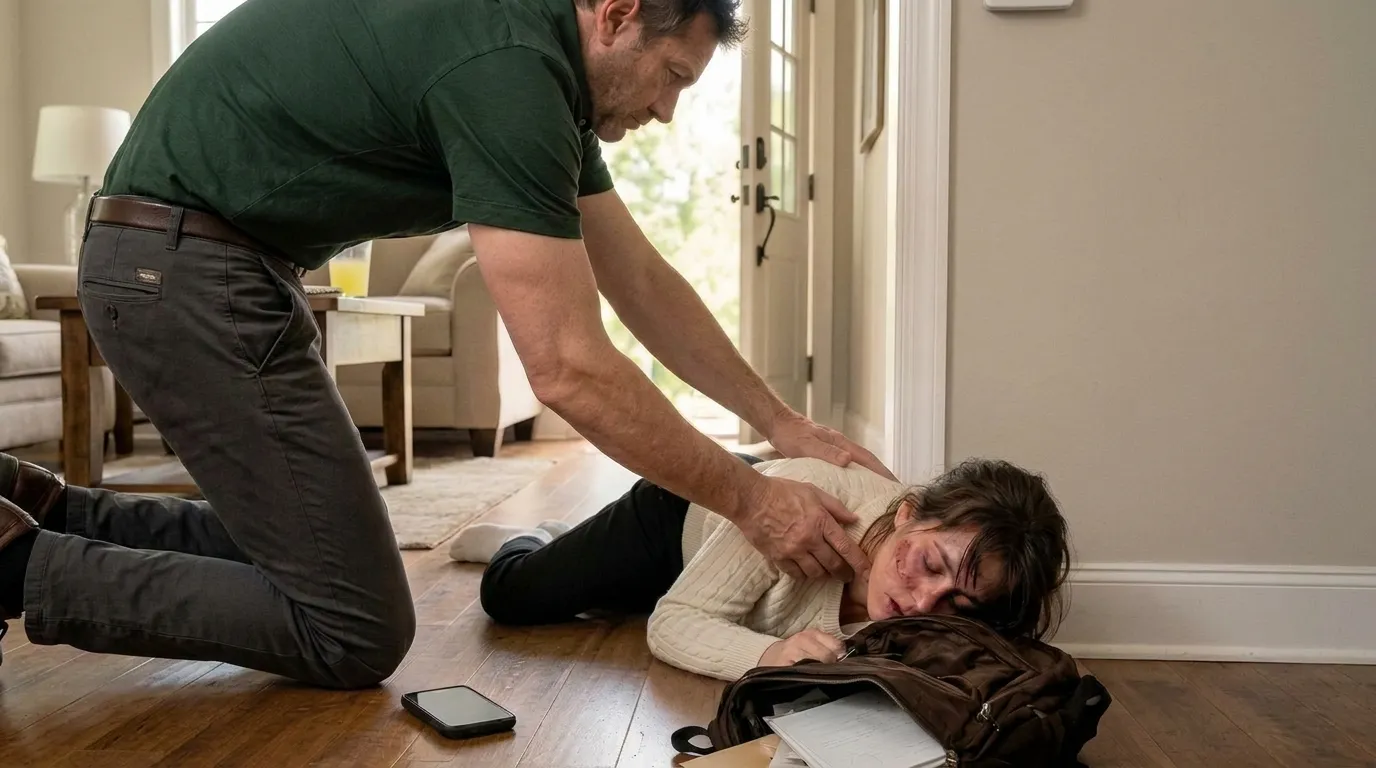
The men found her in the hallway.
She saw them near my office.
She recognized one from a neighborhood event where Daniel had introduced him months earlier.
They panicked.
Their instruction had been to frighten her and leave.
Instead, the confrontation escalated.
By the time they fled, Violet was critically injured.
Daniel then returned to my house later because the black case still had not been recovered.
He believed I would remain at the hospital.
That was why police found him standing inside my office with the evidence bag already open.
But Daniel’s account raised another problem.
The black case was important.
Yet the truly sensitive originals were not inside it.
Those remained within military systems.
The documents at my house could embarrass Sentinel Ridge.
They could support an investigation.
But they were not enough to destroy a company.
So why take such an enormous risk?
The answer arrived the following morning.
An Army investigator and a federal agent met me at the hospital.
They closed the door.
“Major Cross, we need to know whether anyone outside your unit knew you had identified a discrepancy involving serial batch 7-R.”
“Yes.”
“Who?”
“Kessler was present when the contractor was asked to reconcile it.”
The agent placed a photograph on the table.
The picture showed a warehouse inventory label.
Then another.
Same serial number.
Different equipment.
They had discovered that Sentinel Ridge was not simply losing equipment.
Records suggested certain items were being removed from legitimate shipments and replaced with lower-value substitutes.
The paperwork made every shipment appear complete.
The missing assets then moved through brokers and shell companies.
My audit had begun uncovering the pattern.
The black case contained handwritten cross-references I had made while reviewing several shipping manifests.
Not classified intelligence.
But enough to tell investigators where to look next.
Kessler knew that.
He had not needed to destroy an entire federal case.
He only needed to learn what I had already connected before investigators widened the audit.
Daniel was supposed to steal the case quietly.
Instead, Violet came home.
Everything after that was damage control.
“What happens now?” I asked.
The agent answered:
“We let him believe Daniel is still the biggest problem he has.”