“My grandpa secretly Took me to his room every night… When my mother discovered Why, she sat down on the floor and
burst Into tears”
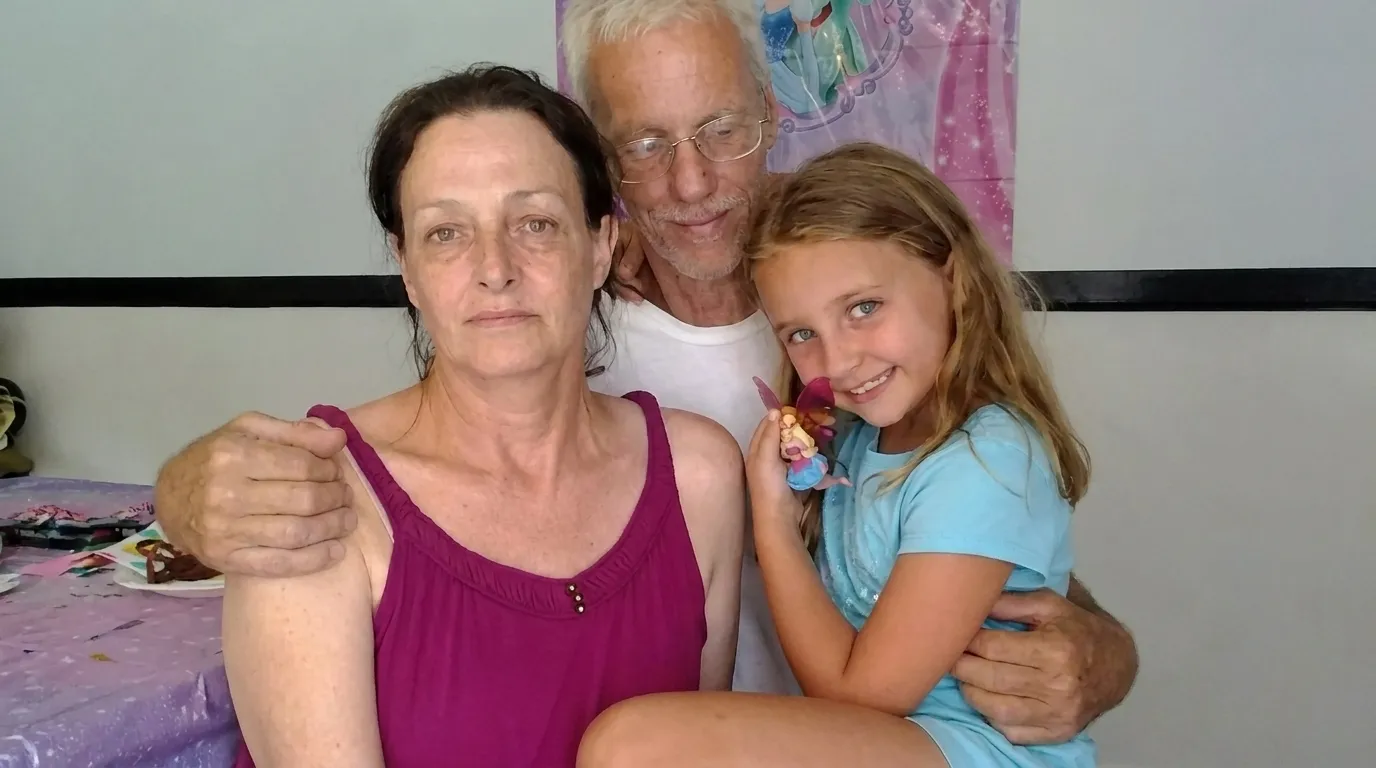
My daughter was only eight years old when I noticed that every night after her bath, she secretly went into my father’s room.
At first, I didn’t think much of it. My father, George, was seventy-six and had moved in with us after my husband passed away so that we wouldn’t be alone. He adored Emily and often read bedtime stories to her. But soon, their behavior began to seem strange. Around nine o’clock every evening, my father would stand in the hallway and quietly say:
“Emily, it’s time.”
My daughter would immediately leave her toys and follow him. The moment they entered his room, they closed the door.
Whenever I approached, their conversation stopped.
One evening, I tried to open the door, but it was locked from the inside. I knocked. For several seconds, no one answered.
Then my father opened the door just enough for me to see his face.
“What are you doing in there?” I asked.
“We’re just playing.”
I tried to look past him, but he blocked my view with his body. Emily was standing near the desk, hurriedly hiding something behind her back.
“What are you holding?” I asked her.
She looked at her grandfather and then at me.
“Nothing, Mom.”
I couldn’t sleep that night.
Over the next few days, everything became even more troubling. Emily began waiting until I went into the kitchen before quietly knocking on Grandpa’s door. Once she entered, my father sometimes locked it with a key.
One evening, as I walked down the hallway, I heard my father say:
“Don’t tell your mother yet. If she finds out now, the whole surprise will be ruined.”
Emily whispered:
“I promise.”
My heart tightened.
I tried to convince myself that my father would never hurt my daughter. He had raised me with love, worked as a teacher his entire life, and was the kindest person in our family.
But then I noticed that Emily had become quieter after school. Some evenings, she said she was tired and didn’t want dinner. I found crumpled papers in her schoolbag covered with corrections in red ink.
One day, her teacher called and said that Emily had refused to read aloud in class. When one of the children laughed at her, she ran into the restroom and refused to come out for a long time.
I tried to speak to her.
“Emily, is someone at school hurting or bullying you?”
“No.”
“Then why don’t you want to read in class?”
She lowered her head.
“I just don’t like it.”
At that moment, my father appeared in the hallway. He had heard our conversation.
“Let her rest tonight,” he said. “I’ll talk to her later.”
I became angry.
“You’re always protecting her. What are the two of you doing behind that locked door every night?”
My father turned pale.
“You’ll find out soon.”
“I’m her mother. I shouldn’t have to wait.”
Emily ran to her grandfather and grabbed his hand.
“Please, Grandpa. Don’t tell her yet.”
Once again, they were hiding something from me. That night, I decided to put an end to the secrets.
At around nine-thirty, Emily entered my father’s room. The door closed. I waited for about ten minutes and then silently approached it.
I could hear my daughter’s voice from inside. She was struggling to pronounce the words, sometimes stopping and beginning the same sentence again. Then I heard my father say:
“Don’t be afraid. Even if you make a mistake, keep going. Your mother can’t protect you for the rest of your life. You have to learn how to do this yourself.”
I couldn’t take it anymore. Using the spare key, I unlocked the door and walked in. What I saw made me freeze.
The first thing I saw when I opened my father’s locked bedroom door was my eight year old daughter standing beneath the yellow desk lamp with tears streaming down her cheeks.
The second thing I saw was the stack of papers in her hands.
And the third was a small wooden box sitting open on my father’s desk.
For several seconds, none of us moved.
My father, George, stood beside the desk with one hand resting on the back of a chair. His face had gone completely pale.
Emily stared at me as though I had walked into a room I was never supposed to see.
I looked from her to my father.
Then back to the papers.
“What is this?”
My voice came out sharper than I intended.
Emily immediately lowered the pages.
“Mom.”
“What are you doing in here every night?”
My father stepped forward.
“Laura, please.”
“No.”
I held up the spare key.
“No more telling me I’ll understand later. No more locked doors. No more secrets. She’s my daughter.”
Emily flinched.
The look on her face stopped me.
It was not fear of my father.
It was embarrassment.
A deep, painful kind of embarrassment I recognized because I had worn the same expression myself as a child whenever I thought I had disappointed someone.
I softened my voice.
“Emily, sweetheart, tell me what’s happening.”
Her lower lip trembled.
For a moment, I thought she would refuse.
Instead, she lifted the papers.
“I’m learning how to read.”
I stared at her.
“You already know how to read.”
Emily shook her head.
“Not like everybody else.”
I looked at my father.
He closed his eyes briefly.
Then he pulled out the chair and sat down.
“Come here, Laura.”
I did not move.
“What does she mean?”
Dad sighed.
“She means she has been struggling for a long time.”
“That’s not true.”
The denial came instantly.
Too instantly.
“She reads to me.”
“She memorizes.”
The word hit me strangely.
I looked at Emily.
Dad continued quietly.
“She remembers stories after hearing them. She remembers pictures. She remembers where sentences are located on a page. She is brilliant at hiding what she cannot do.”
Emily’s face crumpled.
“I’m sorry, Mom.”
Those three words broke something inside me.
I crossed the room immediately.
“No. No, sweetheart. What could you possibly be sorry for?”
“I didn’t want you to know.”
“Why?”
She looked down.
“Because you already worry about everything.”
I stopped breathing for a second.
Children notice more than we think.
They notice unpaid bills hidden beneath grocery advertisements.
They notice mothers crying quietly in laundry rooms.
They notice the empty chair at dinner.
They notice when adults say, “I’m fine,” with voices that mean exactly the opposite.
Emily had been six when her father, Michael, died.
Two years had passed, but sometimes it felt like two weeks.
Michael had been driving home on a rain soaked November evening when a truck crossed the center line.
The police officer who came to my door had removed his hat before speaking.
I remembered that detail more clearly than anything else.
His hat in his hands.
Rain running from his shoulders.
His mouth moving.
My knees hitting the floor.
After Michael died, I had become obsessed with keeping Emily’s life normal.
Breakfast at seven.
School at eight.
Homework at four.
Dinner at six thirty.
Bath at eight.
Bedtime at nine.
Normal was the structure I built around a hole so enormous I was afraid it would swallow both of us.
Apparently, in my determination to make sure my daughter was all right, I had failed to notice she wasn’t.
I sat beside her.
“What happens when you try to read?”
Emily pressed her fingers against the paper.
“The words move.”
“Move?”
“Sometimes.”
She swallowed.
“Sometimes letters look backward. Sometimes I know what the word is, but my mouth won’t say it. Sometimes I read the first part and guess the rest.”
My father added gently, “Her teacher suspected a reading difficulty last year.”
I turned toward him.
“What?”
Emily grabbed his sleeve.
“Grandpa.”
His expression became regretful.
“She asked me not to tell you until she was ready.”
Anger flashed through me again.
“She is eight years old.”
“I know.”
“You don’t let an eight year old decide whether her mother knows something this important.”
“You’re right.”
His immediate agreement took some of the force out of my anger.
“But she was terrified.”
“Of what?”
Emily answered.
“Of making you sad again.”
I looked at her.
She could barely meet my eyes.
“After Daddy died, you cried when you thought I wasn’t looking.”
My throat closed.
“I heard you in the bathroom sometimes.”
I wanted to speak.
Nothing came.
“And whenever my teacher said I needed extra help, you looked scared.”
“I wasn’t scared of you.”
“I know.”
She wiped her cheek with the back of her hand.
“You were scared for me.”
That was somehow worse.
My father reached for the stack of papers.
“These are reading exercises.”
I finally looked at them properly.
Large printed words.
Short paragraphs.
Colored marks.
Some letters had been circled.
Other lines were divided into small sound groups.
There were no mysterious documents.
No dangerous secret.
No reason for the fear I had allowed to grow inside me.
Just my daughter trying desperately to read.
I turned to the open wooden box.
“And that?”
Both of them became quiet again.
My father’s expression changed.
Emily looked at him.
He looked at her.
And suddenly I understood that the reading lessons were not the entire secret.
My stomach tightened.
“What is inside that box?”
Dad placed his hand over the lid.
“Laura.”
“What?”
“This is the part we weren’t ready to tell you.”
Every instinct in me sharpened again.
I stood.
“What part?”
Emily stepped between us.
“Grandpa promised Daddy.”
The room seemed to tilt.
I stared at her.
“What did you say?”
She pointed at the wooden box.
“Daddy left it.”
I turned toward my father so quickly that the chair scraped against the floor.
“Michael?”
Dad nodded.
I could hear the blood rushing in my ears.
“My Michael?”
“Yes.”
“What do you mean he left it?”
“Before he died.”
I felt suddenly cold.
“That doesn’t make sense.”
My father opened the box completely.
Inside were twelve cream colored envelopes tied together with a faded blue ribbon.
My husband’s handwriting covered the front of every envelope.
I knew that handwriting.
I had seen it on birthday cards, grocery lists, notes stuck to the refrigerator, and the first love letter he ever wrote me.
I stepped closer.
The first envelope said:
For Emily, when reading becomes hard.
The second:
For Emily, when she thinks she isn’t smart.
The third:
For Emily, when someone laughs at her.
Another said:
For Emily, when she misses me so much it hurts.
My knees weakened.
I sat down.
“No.”
My father did not answer.
I pulled another envelope from the bundle.
For Laura, but only after Emily reads this one by herself.
I stared at those words until they blurred.
“When did he write these?”
My father took a slow breath.
“About three weeks before the accident.”
I looked up.
“Why?”
“I didn’t know at first.”
His voice cracked slightly.
“Michael came to see me one Saturday. You and Emily were visiting your sister. He brought the box.”
Dad stared at it.
“He told me he had noticed something about Emily.”
“What?”
“She was four then. He noticed she had trouble recognizing certain letters even though she could remember entire stories after hearing them once.”
I remembered.
Michael had been the one who read with her every night.
I had always thought it was simply their special ritual.
Dad continued.
“He wondered if she might have inherited his dyslexia.”
I froze.
“His what?”
My father looked at me carefully.
“You didn’t know?”
“No.”
Michael had never told me.
My husband had graduated from college.
He had managed a construction company.
He read contracts.
He wrote estimates.
He loved newspapers.
How could he have had dyslexia?
Dad almost smiled.
“Michael became very good at hiding it.”
The phrase struck me.
Just like Emily.
“He struggled terribly when he was young,” Dad said. “He told me his father used to call him stupid.”
I remembered Michael’s father.
A hard man.
A man who believed children learned through humiliation.
Michael rarely spoke about his childhood.
Dad continued.
“Teachers made him read aloud. Children laughed. His father punished him for bad grades. He spent years believing something was wrong with him.”
Emily stared at the envelopes.
“Daddy was like me?”
“Yes,” Grandpa said.
Her eyes widened.
“He said letters moved?”
“Sometimes.”
“And he mixed words up?”
“All the time.”
For the first time that evening, Emily smiled.
It was tiny.
But it was there.
Dad touched the box.
“Michael made me promise that if he was ever unable to help her, I would.”
My eyes filled.
“Why would he think he wouldn’t be able to help her?”
Dad hesitated.
That hesitation changed everything.
I saw it immediately.
“Dad.”
He looked away.
“Why would Michael write letters about not being here three weeks before he died?”
Silence.
“Dad.”
Emily looked frightened again.
My father stood.
“Maybe this conversation should wait.”
“No.”
“Laura.”
“No.”
I could barely hear myself now.
“Michael died in an accident.”
“Yes.”
“You’re telling me that three weeks before that accident, he gave you a box full of letters for his daughter to open after he was gone.”
Dad rubbed his forehead.
“He didn’t say he expected to die.”
“Then why write them?”
“He said fathers should prepare for things they pray will never happen.”
That sounded like Michael.
It almost satisfied me.
Almost.
Then I noticed something beneath the envelopes.
A small black notebook.
I reached toward it.
My father immediately placed his hand over mine.
“Not that.”
I looked at him.
“Why?”
“That isn’t for tonight.”
A nervous laugh escaped me.
“You’re still doing this?”
“It contains things Emily doesn’t need to hear.”
“Then she can go to her room.”
“Mom.”
I looked at my daughter.
Her face was frightened.
Not of Grandpa.
Of me.
I realized how wild I must look.
I forced myself to breathe.
“Sweetheart, will you go brush your teeth?”
“I already did.”
“Brush them again.”
Normally she would have laughed.
She didn’t.
She hugged my father first.
Then me.
At the doorway she stopped.
“Don’t be mad at Grandpa.”
I closed my eyes.
“I’m not mad.”
“You look mad.”
“I’m confused.”
“He helped me.”
“I know.”
“He never makes fun of me.”
“I know.”
“And when I get the words wrong, he lets me try again.”
That sentence cut deeply because I suddenly remembered all the times I had corrected her too quickly.
All the times I had finished a word for her.
All the times I had unknowingly made reading feel like a test instead of a discovery.
“I know,” I whispered.
Emily went upstairs.
I waited until her bedroom door closed.
Then I turned to my father.
“Give me the notebook.”
He sat down again.
“Laura, there are things parents keep from their children because they love them.”
“I am forty years old.”
“You are still my child.”
“And Michael was my husband.”
Dad looked at me for a long time.
Finally, he removed his hand.
I opened the notebook.
The first pages were Michael’s handwriting.
Dates.
Names.
Numbers.
At first they meant nothing.
Then I recognized the name of his company.
Harrison and Vale Construction.
Michael had been operations manager.
Below it were several names I remembered from his office.
Thomas Vale.
Richard Kessler.
Anthony Bell.
I flipped another page.
There were notes about invoices.
Amounts.
Addresses.
Materials supposedly purchased.
Beside several entries Michael had written the word FALSE in capital letters.
“What is this?”
Dad’s shoulders sagged.
“Michael believed someone at his company was stealing money.”
I looked up.
“What does that have to do with his death?”
Dad said nothing.
My stomach dropped.
“Dad.”
“He came to me because he didn’t know who he could trust.”
“No.”
“He found irregularities in some accounts.”
“No.”
“He believed invoices were being created for projects that did not exist.”
I shut the notebook.
“Michael died because a truck crossed the center line.”
“That is what the investigation concluded.”
“What do you mean, that is what the investigation concluded?”
Dad stood and walked toward the window.
For several seconds he stared outside.
Then he said the sentence that changed everything I thought I knew about the last two years.
“The morning Michael died, he called me and said somebody had discovered what he was investigating.”
My mouth went dry.
“What?”
“He told me not to tell you because he didn’t want you frightened.”
“You knew this for two years?”
“I knew he was worried.”
“And you said nothing?”
“What was I supposed to say? The police investigated the crash.”
“Did you tell them?”
“Yes.”
That stopped me.
“You did?”
“The next morning.”
“And?”
“They examined everything.”
“What did they say?”
“The truck driver had alcohol in his system. He lost control in heavy rain. There was no evidence Michael’s death was anything but an accident.”
I stared at the notebook again.
“Then why keep this?”
“Because Michael asked me to.”
“Why?”
“He said if anything happened to him, I should wait.”
“For what?”
Dad looked toward the hallway.
“For Emily.”
I almost shouted.
“What could any of this possibly have to do with Emily?”
“I didn’t know.”
“What do you mean?”
“Until she began reading the letters.”
The room became very still.
I looked at the envelopes.
Dad untied the blue ribbon.
“We started six weeks ago.”
“Six weeks?”
“When her teacher called me.”
“Her teacher called you?”
“She knows I used to teach reading intervention.”
Of course.
Dad had spent thirty seven years as an elementary school teacher.
After retiring, he volunteered at literacy programs.
The red marks I had seen on Emily’s pages were not punishment.
They were phonetic guides.
Her disappearing appetite was not because something sinister was happening behind a locked door.
It was because she was being laughed at in school.
And my father had quietly stepped into the wound I had failed to see.
Still, another question remained.
“Why lock the door?”
Dad looked embarrassed.
“Because she wanted the lessons to be private.”
Emily’s voice floated faintly from the upstairs hallway.
“And because you keep walking in!”
Dad and I both looked toward the ceiling.
Despite everything, a laugh escaped me.
Then I started crying.
I covered my mouth, but it was too late.
Months of worry, grief, suspicion, guilt, exhaustion and fear rose all at once.
I sank onto the carpet.
My father immediately knelt beside me.
And just like that, I was six years old again.
My father’s arms were around me.
His hand rested on the back of my head.
“I’m sorry,” I whispered.
“For what?”
“For thinking.”
I could not finish.
Dad understood.
“You were protecting your child.”
“I thought something was wrong.”
“Something was wrong.”
“But I suspected you.”
“You were frightened.”
“I should have trusted you.”
He pulled back.
“No. You should ask questions when something concerns your daughter. Even of me.”
That made me cry harder.
Dad gave a tired laugh.
“Just perhaps don’t break into my bedroom next time.”
“I used a key.”
“That is still breaking in.”
I laughed through tears.
Then my eyes returned to the letters.
“Which ones has she read?”
“Only one.”
He handed it to me.
The envelope was already open.
For Emily, when reading becomes hard.
Inside was a single sheet of paper.
Dad stopped me before I unfolded it.
“She wants to read it to you herself.”
“Can she?”
He smiled.
“She couldn’t six weeks ago.”
That night, Emily sat between us on the bed.
Her small hands trembled as she held her father’s letter.
She stumbled on the second sentence.
Stopped.
Started again.
Dad said nothing.
Neither did I.
For once, I did not rush to rescue her.
Emily sounded out the word.
Then continued.
“Dear Emily,” she read.
Her voice was quiet.
“If Grandpa gave you this letter, then reading probably feels difficult right now.”
She stopped.
Her eyes filled.
I reached for her hand.
She shook her head.
“No. Grandpa says I have to keep going.”
Dad smiled.
Emily took a breath.
She continued.
“First, I need you to know something. Hard does not mean impossible. Slow does not mean stupid. Different does not mean broken.”
I pressed my lips together.
Emily carefully followed the words with her finger.
“When I was a boy, letters confused me too. Sometimes I hated books because I thought books hated me. Then one teacher showed me that my brain was not wrong. It simply used a different road.”
Emily looked up.
“Daddy really wrote this?”
“Yes,” I whispered.
She continued.
“I hope I am sitting beside you when you read this. But if I am not, Grandpa knows what to do. He helped lots of children learn. Be patient with him because he is old.”
Dad made an offended sound.
Emily giggled.
Then she read the next sentence.
“If your mother is there, hug her. She worries too much.”
I began crying again.
Emily put the letter down and wrapped her arms around me.
For a long time, none of us spoke.
That should have been the end of the mystery.
For several weeks, I believed it was.
Emily received a formal evaluation.
She was diagnosed with dyslexia.
Her teacher changed the way certain assignments were presented.
Dad continued helping every evening, except now the door remained open.
Sometimes I joined them.
I learned not to interrupt when Emily struggled.
I learned to ask, “Do you want help?” instead of giving it automatically.
And slowly, almost imperceptibly, something changed.
Emily stopped calling herself bad at reading.
She began saying, “I’m still learning.”
Those three words became a kind of family motto.
When I burned dinner, Emily grinned and said, “You’re still learning.”
When Dad could not figure out how to use the television remote, I said, “You’re still learning.”
When Emily managed to read an entire page without stopping, Dad pretended to wipe away tears.
“My teaching career has finally peaked.”
For the first time since Michael died, our house began to feel alive again.
Then, one Thursday afternoon, an envelope arrived.
There was no return address.
Inside was a photocopy of a page from Michael’s black notebook.
One line had been circled.
Briarwood Elementary Renovation. $218,400. No work completed. Invoice approved by T.V.
Beneath it, someone had written four words in blue ink.
He was right. Look deeper.
I stood in the kitchen reading that message again and again.
Dad entered carrying groceries.
One look at my face and he put the bags down.
“What happened?”
I handed him the envelope.
He read it.
His face changed.
“Where did this come from?”
“Mailbox.”
“No stamp?”
“No.”
Dad went outside immediately.
He looked up and down the street.
Nothing.
That night, I slept badly.
At two in the morning, I went downstairs.
The black notebook sat on the kitchen table.
I opened it again.
Briarwood Elementary.
The name sounded familiar.
Then I remembered.
My father had taught there.
“Dad?”
His bedroom door opened.
He appeared moments later in his robe.
“What is it?”
“You worked at Briarwood.”
He nodded slowly.
“For eleven years.”
“Was the school renovated?”
“Yes.”
“When?”
He thought.
“Three years before Michael died.”
“How much work was done?”
“A lot.”
“Are you sure?”
“Of course.”
I showed him Michael’s note.
No work completed.
Dad frowned.
“That is impossible.”
“Maybe Michael meant a specific job.”
We searched online records the next morning.
The project had supposedly involved replacement of a retaining wall behind the school.
Cost: $218,400.
Dad stared at the screen.
“There was no retaining wall replacement.”
“You remember?”
“I walked past that wall every day.”
“Could it have happened after you retired?”
“The date is right there. I was still teaching.”
We drove to Briarwood that afternoon.
Dad led me behind the gymnasium.
A long brick retaining wall bordered the playground.
Parts of it were cracked.
A faded date had been carved into the concrete footing.
The invoice Michael had investigated was dated seventeen years later.
I took photographs.
Dad looked sick.
“They stole money from a school.”
“Apparently.”
“How many other entries are in the notebook?”
We checked.
Twenty three.
Libraries.
Municipal buildings.
A fire station.
Two public schools.
A community center.
All projects connected to Michael’s employer.
All approved by someone whose initials were T.V.
Thomas Vale.
The company’s owner.
I remembered Thomas from Michael’s funeral.
Tall.
Gray hair.
Expensive black suit.
He had hugged me beside the church.
“If you or Emily ever need anything, you call me.”
I had thanked him.
Two weeks later, his company had sent me Michael’s unpaid vacation money and a framed photograph of him at a company barbecue.
I had hung that photograph in the hallway.
That evening I took it down.
Dad watched me.
“You don’t know Thomas was involved.”
“His initials are in the notebook.”
“That is not proof.”
“No.”
I turned the photograph over.
“But maybe somebody knows what is.”
I contacted the detective who had handled Michael’s crash.
Detective Alan Pierce had retired the previous year, but after several phone calls I reached him.
The moment I said Michael’s name, he remembered.
“Rainstorm accident on Route 16.”
“Yes.”
His voice softened.
“I’m sorry, Mrs. Carter.”
“There may have been something you didn’t know.”
He met me at a diner the following morning.
I brought copies of the notebook pages.
Pierce examined them for nearly twenty minutes.
“I remember your father mentioning financial concerns.”
“You investigated?”
“I passed the information to our fraud division.”
“And?”
“They spoke to Harrison and Vale.”
“What did the company say?”
“That Mr. Carter had been examining accounting discrepancies related to a software migration.”
“That’s not what this says.”
“No.”
“Did anyone verify the projects?”
Pierce leaned back.
“That would have fallen outside the collision investigation.”
My frustration rose.
“So nobody looked?”
“I didn’t say that.”
“Then what are you saying?”
“I’m saying there was no evidence linking his accounting concerns to the crash.”
“What about the truck driver?”
“Ronald Mercer.”
“Is he still alive?”
Pierce’s expression shifted.
“No.”
My stomach tightened.
“What happened?”
“Suicide. About eight months after your husband’s death.”
I stared at him.
“Did he leave a note?”
“Yes.”
“What did it say?”
Pierce hesitated.
“That he could not live with what he had done.”
My heart sank.
“That sounds like guilt over killing Michael.”
“That was the interpretation.”
“But you don’t believe it?”
“I didn’t say that.”
“You didn’t have to.”
Pierce studied me.
“Mrs. Carter, grief can make coincidence look like design.”
“And evidence?”
“Evidence makes design look like design.”
“Then help me find some.”
He looked at the notebook again.
“I’m retired.”
I waited.
Pierce sighed.
“But I still know where records are stored.”
Three days later, he called.
“The toxicology report bothered me.”
“Why?”
“Mercer’s blood alcohol level was elevated.”
“I knew that.”
“But witnesses at the truck stop saw him less than an hour before the crash.”
“And?”
“They described him as sober.”
I gripped the phone.
“Could they have been wrong?”
“Yes.”
“Could the test have been wrong?”
“Possible, but unlikely.”
“What else?”
“The truck’s brakes were inspected.”
My heart accelerated.
“And?”
“At the time, investigators concluded the damage was caused by impact.”
“At the time?”
“There were cuts on one brake line.”
I stood up.
“What kind of cuts?”
“That is the problem. The original report says they were consistent with collision damage. One photograph makes me less certain.”
“Can I see it?”
“No.”
“Why?”
“It’s evidence.”
“You said the case was closed.”
“It is.”
“Then reopen it.”
“I can’t.”
“You worked there thirty years.”
“That doesn’t give me authority.”
I was furious.
“Then why tell me any of this?”
“Because if you pursue it, pursue it carefully.”
His voice became quieter.
“And because somebody left that note at your house.”
I looked toward the front window.
“Meaning?”
“Meaning somebody knows you have the notebook.”
That evening, I told Dad everything.
He wanted me to stop.
“No.”
“Laura, listen to me.”
“Michael might have been killed.”
“And investigating it yourself won’t bring him back.”
“It could bring him justice.”
“Or put you and Emily in danger.”
That silenced me.
Dad lowered his voice.
“You are not alone in this house anymore.”
I looked upstairs.
Emily was reading in her bedroom.
He continued.
“You have a child.”
“I know.”
“Then act like it.”
I hated those words.
Mostly because he was right.
I put the notebook back in the wooden box.
For two days, I did nothing.
Then Emily came home from school carrying a small certificate.
She had read an entire paragraph aloud in class.
No one laughed.
Her teacher had applauded.
Emily burst through the front door.
“Mom!”
She held the certificate above her head.
“I did it!”
I dropped the laundry basket and hugged her.
Dad came from the kitchen.
“What happened?”
“I read!”
He lifted her off the floor.
She squealed.
That evening she wanted to open another letter from Michael.
We chose the envelope:
For Emily, when someone laughs at her.
This time she read almost every sentence herself.
At the bottom, Michael had written something that made Dad freeze.
“If someone makes you feel small because you struggle, remember that people sometimes laugh at what they do not understand. Never let embarrassment decide what truth you are willing to say out loud.”
Emily finished.
Dad stared at the letter.
“What?” I asked.
He took it from her gently.
“Nothing.”
But after Emily went to bed, he pulled the black notebook from the box.
“What are you doing?”
He flipped through the pages.
“I remembered something Michael said.”
“What?”
“He told me the letters contained instructions.”
I frowned.
“For helping Emily read?”
“That’s what I thought.”
He took the first letter.
“Hard does not mean impossible. Slow does not mean stupid. Different does not mean broken.”
“So?”
He placed the second letter beside it.
“Never let embarrassment decide what truth you are willing to say out loud.”
He looked at me.
“Michael chose his words carefully.”
We opened three more envelopes.
Not the one addressed to me.
Only Emily’s.
Certain sentences seemed oddly formal.
One mentioned numbers.
One mentioned names.
One said:
“When a story does not make sense, go back to where it began.”
Dad stood suddenly.
“The beginning.”
He grabbed the black notebook.
The first page contained no accounting notes.
Only a sentence.
Emily likes stars.
I remembered it and had assumed it was a personal note.
Dad opened the bottom drawer of his desk.
Inside was an old wooden puzzle Michael had made for Emily when she was a toddler.
The top had been painted like a night sky.
Stars.
Dad stared at it.
“No.”