After she left, Kyle leaned forward and said, “Frank, you’re making a mistake.”
“Am I?”
“You hired me to turn this place around. I increased average spending per table. I cleaned up the dining room. I started attracting customers who actually spend money.”
“Then why are sales down?”
“Because the transition takes time.”
“Why have my regulars stopped coming?”
“Because they don’t like change.”
I looked at the stack of reports on my desk.
Kyle had been sending me monthly summaries showing modest improvements in average spending.
What I hadn’t noticed was the steady decline in the number of meals served.
The remaining customers were spending more, but there were fewer of them.
“Leave your office keys here,” I said.
He blinked.
“What?”
“I’m taking you off the floor while I review what’s happened.”
“You can’t be serious.”
“I am.”
He placed his keys on the desk.
“You’re going to regret listening to a waitress who gives away food.”
I watched him leave.
For the first time in years, I felt like a stranger inside my own restaurant.
Amber returned ten minutes later.
She handed me her phone.
The first message was from Kyle, sent to the staff six weeks earlier.
“Effective immediately, we are repositioning Rosie’s toward a more upscale customer base. Management has approved stricter seating standards.”
Another message followed.
“Do not encourage customers who cannot afford regular menu prices. Complimentary meals are discontinued.”
Then one that made me stop reading.
“Frank is fully behind these changes. Anyone uncomfortable with the new direction should reconsider whether this restaurant is the right workplace for them.”
I read it twice.
“Did anyone quit?”
“Three people,” Amber said.
“Three?”
She nodded.
“Two servers and a hostess. They’d worked here for years.”
I remembered Kyle telling me we’d lost employees because they couldn’t adapt to updated service standards.
I’d approved replacements without asking another question.
Amber scrolled farther.
“There’s more.”
The next message concerned the photograph.
“All outdated personal decorations are to be removed. We’re creating a modern dining environment.”
Outdated personal decorations.
My mother’s smiling face had been reduced to clutter.
I handed the phone back.
“Where is the photograph?”
“I think it’s in storage.”
I stood immediately.
The storage room was behind the kitchen, beside the shelves of spare dishes.
I opened the door.
There were old menus, broken chairs, holiday decorations, and boxes of tablecloths.
The photograph was leaning against a metal cabinet, facing the wall.
I turned it around.
The glass was dusty, but my mother was still smiling.
I remembered taking that picture on opening day.
She’d insisted on wearing her oldest apron because she said a new restaurant needed at least one thing that already felt like home.
I carried the frame into my office.
Amber followed quietly.
“Mr. Frank?”
“Yes?”
“There’s something I don’t understand.”
I looked at her.
“Why didn’t Kyle just tell you what he wanted to do?”
I considered the question.
“Because he knew I wouldn’t agree.”
But as soon as I said it, I wondered whether that was entirely true.
I’d approved his new table settings.
I’d approved the more expensive dinner specials.
I’d agreed that we should modernize the dining room.
Each change had seemed harmless on its own.
I opened my laptop and searched through our correspondence.
The first proposal arrived four months earlier.
“Refresh Rosie’s image.”
I’d approved it.
The second proposed reducing inexpensive menu items to improve profitability.
I’d agreed to review the menu, assuming our familiar favorites would remain.
The third discussed attracting a more affluent customer base.
I’d written, “Sounds promising. Keep me updated.”
Then came a document I’d barely remembered receiving.
“Rosie’s Brand Transition: Phase Two.”
I opened it.
There were sample menus, photographs of expensive dining rooms, and a proposed new name.
“The Willow Room.”
I stared at the screen.
He wanted to rename my restaurant.
Below the name was a suggested description.
“A refined dining destination with a sophisticated atmosphere.”
No mention of Rosie. No mention of family. No mention of the neighborhood that had supported us for twenty years.
I checked my response.
“Interesting ideas. Let’s discuss before making decisions.”
Kyle had treated that as encouragement.
But the next page revealed something worse.
Under “Current Obstacles,” he’d listed three problems.
Low-spending regulars, outdated family branding, and staff resistance to elevated standards.
I scrolled to the bottom.
“Successful repositioning requires a gradual departure from the restaurant’s original identity.”
I sat back.
Kyle wasn’t merely improving Rosie’s.
He was trying to erase it.
And he’d been using my casual approvals to move the process forward without ever showing me the whole picture.
I called him.
He answered immediately.
“Frank, have you reconsidered?”
“Come back. We need to talk.”
Twenty minutes later, Kyle entered my office.
I turned the laptop toward him.
“What’s this?”
He glanced at the screen.
“Our long-term development plan.”
“You were planning to rename Rosie’s?”
“Eventually. Nothing was finalized.”
“Why didn’t you tell me?”
“I did. I sent you the proposal.”
“You sent me eighteen pages and buried the name change near the end.”
“You said the ideas were interesting.”
“I said we’d discuss them.”
Kyle rubbed his forehead.
“Frank, you’re getting emotional about a name.”
“My mother’s name.”
“Exactly. That’s the problem.”
I stared at him.
He continued.
“You built something successful, but you’re still running it like the little neighborhood diner it was twenty years ago.”
“What’s wrong with that?”
“People with money don’t want to eat beside someone counting pennies for soup.”
For a moment, neither of us spoke.
Then I asked, “Is that why you threw me out?”
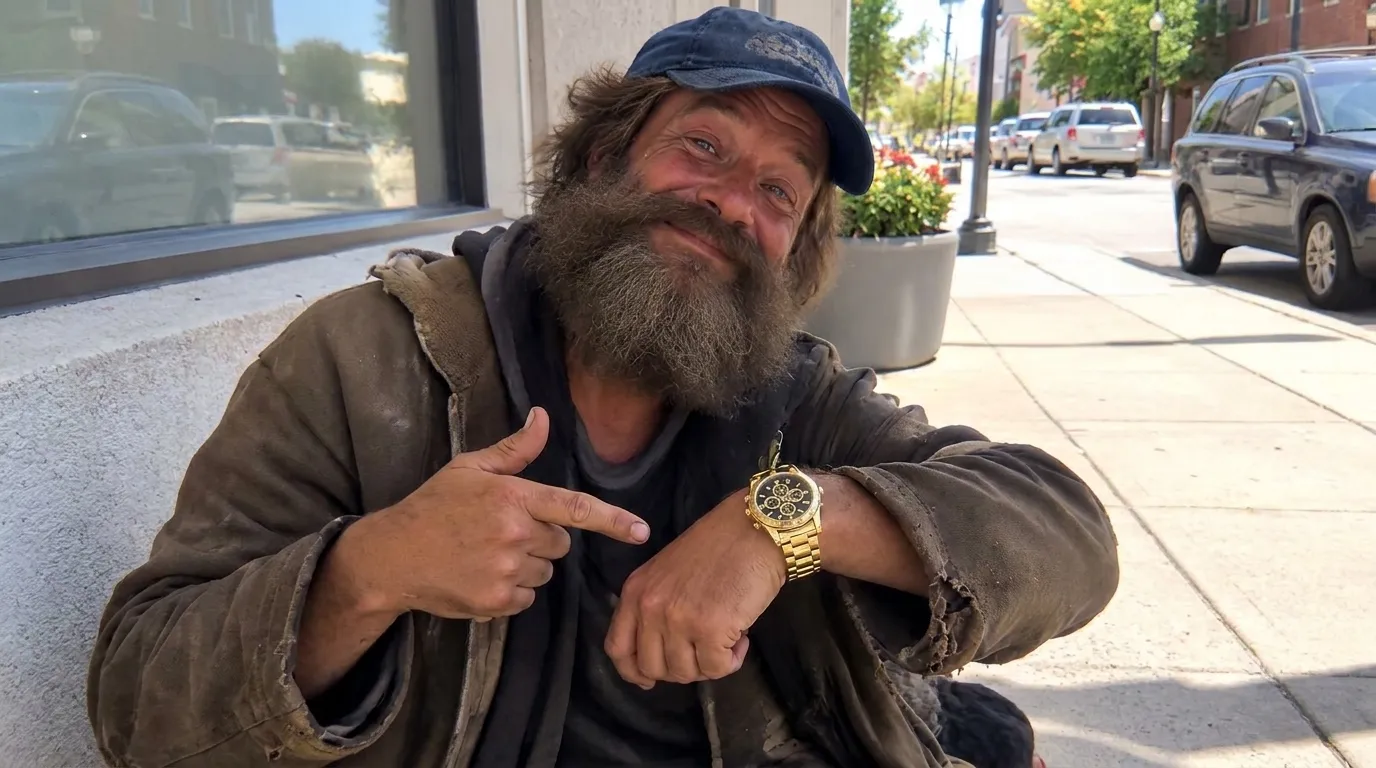
“You looked homeless.”
“And?”
“That kind of appearance makes other customers uncomfortable.”
“Did anyone complain?”
He hesitated.
“No.”
“Then whose comfort were you protecting?”
He didn’t answer.
I called Amber into the office and asked her to gather the employees in the dining room. Kyle followed me out.
The staff stood near the counter, exchanging nervous glances.
I placed my mother’s photograph on an empty table.
“I owe everyone an explanation,” I began.
Kyle shifted beside me.
I told them I’d never approved refusing service based on someone’s appearance. I’d never ordered them to turn away customers who couldn’t afford expensive meals.
And I’d certainly never told Kyle to remove my mother’s photograph.
Several employees looked visibly relieved.
One of the cooks spoke.
“We thought you’d changed, Frank.”
I recognized him. He’d worked beside me for nearly fifteen years.
“Why?”
“Because Kyle kept saying everything came from you. And you were hardly ever here.”
I had no answer.
Kyle stepped forward.
“Can we stop pretending the old business model was working?”
Everyone turned toward him.
“Restaurants have to evolve,” he continued. “You can’t keep handing out cheap meals and expect to survive.”
“Nobody said we should give everything away,” I replied.
“You named this place after your mother. Fine. But sentiment doesn’t pay the bills.”
I looked at the photograph.
“Do you know why my mother fed people who couldn’t pay?”
“Frank…”
“Because she knew what hunger felt like.”
My mother had once spent an entire winter choosing between heating our apartment and buying enough groceries. Years later, when I opened Rosie’s, she insisted we keep a simple soup special affordable enough for almost anyone.
She never expected us to lose money feeding the neighborhood.
She simply believed nobody should be humiliated for having less.
“There’s a difference between running a profitable restaurant and making people ashamed to walk through its doors,” I said.
Kyle crossed his arms.
“Then maybe I’m not the right person to manage this place.”
“You’re not.”
He looked surprised.
“I’m ending your employment here.”
The room went silent.
“You’d throw away everything I’ve done because of one incident?”
“No. Because you repeatedly lied to my employees, ignored my instructions, and mistreated customers. Today was simply the day I finally saw it.”
Kyle looked around, perhaps expecting someone to defend him.
Nobody did.
He collected his belongings and left without another word.
I watched through the window as he crossed the parking lot.
I’d expected to feel victorious.
Instead, I felt embarrassed.
Kyle had done the damage, but I’d given him room to do it.
After the staff returned to work, Amber stayed behind.
“Can I say something?” she asked.
“Please.”
“When I started here, everyone told me stories about you.”
“What kind of stories?”
“How you used to remember customers’ birthdays. How you’d bring meals to people who were sick. How you knew everybody’s name.”
I smiled faintly.
“I used to have more time.”
She shook her head.
“That’s what people kept saying. That you used to.”
Her words stayed with me.
I thought about the last few years.
I’d spent more time studying sales reports than talking to customers.
More time planning improvements than walking through my own dining room.
I thought success meant building something that could run without me.
Somewhere along the way, I’d stopped noticing what it was becoming.
“Amber,” I said, “why did you feed me today?”
She seemed surprised.
“Because you were hungry.”
“You didn’t know who I was?”
“I recognized you from the picture in the office after you sat down. But I’d already decided to help.”
“Even though you thought I’d approved Kyle’s rules?”
She nodded.
“I figured if I got fired for buying someone soup, maybe I shouldn’t work here anyway.”
I laughed softly.
Then I thanked her.
Not for recognizing me.
For treating me kindly before it mattered who I was.
That afternoon, I put my mother’s photograph back beside the entrance. I removed Kyle’s sign.
Over the next several days, I contacted the employees who’d left and apologized for allowing their concerns to be dismissed.
I called regular customers who’d stopped coming and invited them back.
I restored the affordable soup special and asked Amber to help develop clear service expectations for the staff.
Some customers returned immediately. Others needed convincing.
I understood.
Trust doesn’t come back simply because the owner says he’s sorry.
A week later, I was sitting at the window table when an elderly man entered.
His coat was worn, and he held a few folded bills.
He approached the counter cautiously.
“Excuse me,” he asked. “Is four dollars enough for something warm?”
The hostess glanced toward me.
I stood and walked over.
“More than enough,” I said.
I showed him to the same table where Amber had served me.
Then I went into the kitchen and brought out a bowl of soup, some bread, and a cup of coffee.
The man thanked me.
As I turned toward the counter, I caught sight of my mother’s photograph.
For years, I’d believed that keeping her name above the door was enough to honor her.
It wasn’t.
What mattered was how people felt when they walked through it.
And this time, I intended to make sure nobody had to disguise themselves to find out.
Latest Posts
- My In-Laws Gave Their Other Three Children $20,000 for Houses and Gave Us Only a Card Two Years Later, We Bought the Old Miller Place for $41,500
The envelopes were tucked under the Easter plates. Each had a name written on it in my mother-in-law’s round schoolteacher handwriting. Kim opened hers first. She’s the oldest. Divorced two years. Raising two boys in a rented trailer behind the grain elevator. She looked at what was inside the envelope and put her hand flat …
- My Mother-in-Law Told Me to Lose Weight After Giving Me a Dress That Didn’t Fit, but Minutes Later, She Regretted Everything
I couldn’t get it over my hips. I stood in my bedroom in my underwear with the dress bunched around my thighs like a deflated balloon. Midnight blue silk. A designer label I’d only ever seen in magazines. Tiny pearl buttons down the back. Beautiful. And four sizes too small. I pulled. I tugged. I …
- Teen Wore a Dress to His Best Friend’s Funeral—The Family Nearly Had Him Removed Before He Reached the Microphone
My son’s best friend read the eulogy at his funeral in a red dress. I almost had him removed before he reached the microphone. My son Jack died 17 days after his 18th birthday. Cancer. Fourteen months from diagnosis to funeral. We found out late. Too late, as it turned out, and the treatment never …
- My Mother Refused to Walk Me Down the Aisle—Then the Truth Surfaced
My mother had proudly escorted both of my sisters down the aisle as though they were miracles dressed in lace. On the morning of my own wedding, I stood in the bridal suite wearing my white gown, hoping for a single moment of family peace. Instead, she stared at me and said, “I refuse to …
- I Arrived at My Son’s House on Christmas Eve With Food and Gifts, but What Happened at the Door Broke My Heart
“Dad, who’s at the door?” My son didn’t even turn all the way around. He kept one hand on the doorknob and one foot on the porch, blocking the gap with his body like I was a salesman or a stray dog. “Wrong house,” he called back over his shoulder. Then he looked at me. …