I pretended to be homeless to test the employees of my restaurant—it all ended with the police being called.
My name is Frank, and I’m fifty-two.
Twenty years ago, I washed dishes for six dollars an hour. Today, I own Rosie’s, a restaurant named after my late mother.
But lately, something felt off.
Customers stopped coming back. A few regulars sent me emails. Nothing specific. Just, “The staff seemed cold.”
Then one of my old line cooks pulled me aside.
“Boss,” he said quietly, “you should see how they treat people who look like they can’t pay.”
That night, I couldn’t sleep.
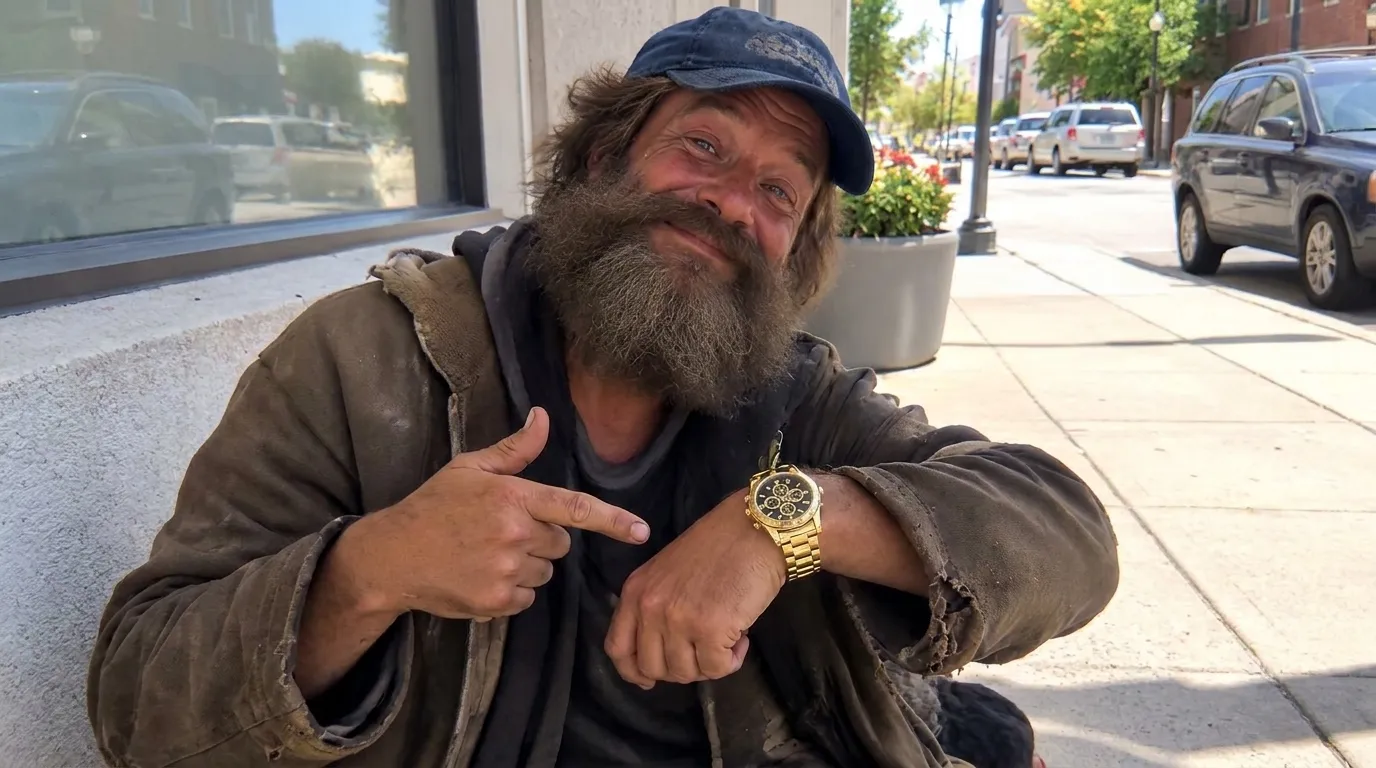
So on Thursday, I bought a torn jacket from a thrift store. Skipped the shower. Left my wallet and watch at home. I kept only my phone, hidden in the inner pocket.
At noon, I walked into my own restaurant.
“Excuse me,” I said to the hostess. “Could I get a glass of water? And maybe a bowl of soup? I have four dollars.”
She looked at me like I was something stuck to her shoe.
“We’re full,” she said.
But the dining room was half empty.
A young waitress named Amber walked past. She stopped. Looked at my face. Then my hands.
“Sit down, sir,” she said gently. “Table by the window.”
She brought me soup, bread, and a cup of coffee. When I reached for my coins, she shook her head and said, “It’s on me.”
I almost cried right there.
Then the manager, Kyle, stormed over.
“What is this?” he yelled. “Who let him in?”
“He’s just hungry,” Amber said.
“This isn’t a charity!” Kyle barked. He grabbed my arm. “Get out. Now.”
“Please, I’m not causing any trouble,” I said.
“I said OUT!”
He shoved me hard toward the door.
I stumbled.
And as I turned, I saw it.
The photograph of my mother was gone.
For twenty years, her picture had hung beside the entrance.
She was standing in our first kitchen, wearing a flour-covered apron and smiling as if she’d just heard the funniest joke in the world.
Now there was a polished black sign in its place.
“Management Reserves the Right to Refuse Service.”
I stared at it.
“Where’s Rosie?” I asked.
Kyle tightened his grip on my arm.
“What?”
“The photograph. Where did it go?”
His expression changed.
For a second, he looked genuinely confused.
Then he shoved the door open.
“That’s none of your business.”
I pulled my arm free.
“It belongs right there.”
Kyle took out his phone.
“That’s it. I’m calling the police.”
Amber stepped between us.
“He’s leaving, Kyle. There’s no reason to call anyone.”
“He threatened me.”
“No, he didn’t.”
Kyle ignored her and made the call.
I stood beside the entrance, looking at the space where my mother’s photograph had been.
My mother had worked three jobs to keep food on our table.
When I finally saved enough to open Rosie’s, she gave me one piece of advice.
“Never make somebody feel small because they’re hungry.”
I wondered what she’d say if she could see her restaurant now.
“Sir?” Amber whispered.
I turned.
“You should go. I’ll explain everything.”
“Explain what?”
She glanced toward Kyle.
“Please. Just go.”
But I wasn’t leaving.
When the two officers arrived, Kyle rushed outside to meet them.
“That’s him,” he announced, pointing at me. “He’s been harassing customers and threatening employees.”
One officer approached me.
“Sir, can you tell me what happened?”
“Certainly,” I said. “But first, could you ask that man who owns this restaurant?”
Kyle laughed.
“What’s that supposed to mean?”
I looked directly at him.
“My name is Frank. I own Rosie’s.”
The smile disappeared from his face.
Amber covered her mouth.
Kyle stared at me for several seconds.
“Frank?”
I nodded.
The officer looked between us.
“Is that correct?”
“Yes,” Kyle said. “He’s the owner.”
I explained that Kyle had grabbed and shoved me. Amber confirmed what she’d witnessed. After speaking with us separately, the officers determined there was no immediate reason for further action.
Before leaving, one reminded me that I could contact them if I wanted to report the shove formally.
I thanked him.
Kyle stood motionless beside the hostess station.
“Frank, I can explain.”
“Good,” I said. “Start with my mother’s photograph.”
He glanced at the wall.
“We were updating the decor.”
“Without asking me?”
“You told me the place needed a new direction.”
“I told you we needed more customers.”
“Exactly.” He lowered his voice. “You said we needed a better class of customers.”
I stared at him.
I’d said nothing of the sort.
Three months earlier, I’d told Kyle that we needed to improve our lunch business and attract younger diners. We’d discussed updating the menu and freshening the dining room.
Somehow, he’d turned that conversation into permission to throw hungry people out.
“Go to my office,” I told him.
“Frank, the lunch rush…”
“Now.”
He walked away.
I turned to Amber.
“Can we talk?”
She looked frightened.
“Am I in trouble?”
“No. But I need you to tell me something.”
I pointed toward the entrance.
“How long has that sign been there?”
“About six weeks.”
“And the photograph?”
“Same day.”
“Did anyone question it?”
She hesitated.
“Yes.”
“What happened?”
“Kyle said you wanted it removed.”
“Why would he say that?”
Amber studied my face.
“Because he told us you were embarrassed by how this place used to be.”
I didn’t answer.
She looked toward my office, then back at me.
“Mr. Frank, can I ask you something?”
“Of course.”
“Did you really tell him we weren’t supposed to serve people who couldn’t afford a full meal?”
“No.”
Her eyes filled.
“Then he’s been lying to us.”
I asked Amber to join me in the office.
Kyle was waiting behind my desk.
He stood when we entered.
“Frank, this is getting blown out of proportion.”
“Get out of my chair.”
He moved.
I sat down and gestured for Amber to take the other seat.
“Tell me everything,” I said.
Kyle folded his arms.
“She’s been giving away food without authorization.”
“I paid for his meal myself,” Amber said.
“That’s not the point.”
“Then what is the point?” I asked.
Kyle exhaled impatiently.
“We’re trying to establish standards. You can’t build a successful restaurant if anyone can wander in and expect free food.”
“Four dollars wasn’t enough for soup?”
“We have prices for a reason.”
“And grabbing someone by the arm?”
Kyle looked away.
“I shouldn’t have done that.”
It was the first honest thing he’d said.
I turned to Amber.
“Has this happened before?”
She nodded.
“Several times.”
“Why didn’t anyone tell me?”
Kyle answered before she could.
“Because I handled it.”
Amber shook her head.
“No. Because you told us Frank agreed with you.”
Silence filled the room.
Then she explained.
During her first week, she’d watched Kyle refuse service to an older woman who wanted tea and toast. He’d said she was taking up a table that could go to a paying customer.
When Amber protested, Kyle told her the policy came directly from me.
Another employee had questioned why certain regulars were no longer welcome to sit at the counter during quiet afternoons.
Kyle had given the same answer.
“Frank wants us to attract a different crowd.”
I remembered the emails.
The regular who said the restaurant didn’t feel welcoming anymore.
The retired teacher who’d written that she missed the old Rosie’s.
I’d forwarded those messages to Kyle, asking him to look into the complaints.
He’d replied that some longtime customers were resisting necessary improvements.
And I’d believed him.
“Why didn’t you come directly to me?” I asked Amber.
“I tried.”
I looked up.
“What?”
“About a month ago. I asked Kyle for your number. He said you didn’t want staff contacting you about management decisions.”
“That’s ridiculous.”
“He said you were tired of employees questioning changes you’d already approved.”
Kyle interrupted.
“I was trying to maintain a chain of command.”
“You were speaking for me,” I said.
He opened his mouth, but I raised my hand.
“Amber, would you give us a minute?”
She stood.
At the door, she paused.
“There’s something else you should see.”
“What?”
“The messages he sends us.”
Kyle’s eyes widened.
“Amber, those are internal communications,” he said.
She looked at me.
“I’ll bring my phone.”