The next morning, David put the chest on the dining room table.
I couldn’t stop staring at it.
“Why didn’t you tell me about this?”
He looked exhausted.
“You would have gotten rid of it.”
“I would not.”
He gave me a look.
“You took apart Rosie’s crib before I got home from the funeral home.”
“That was different.”
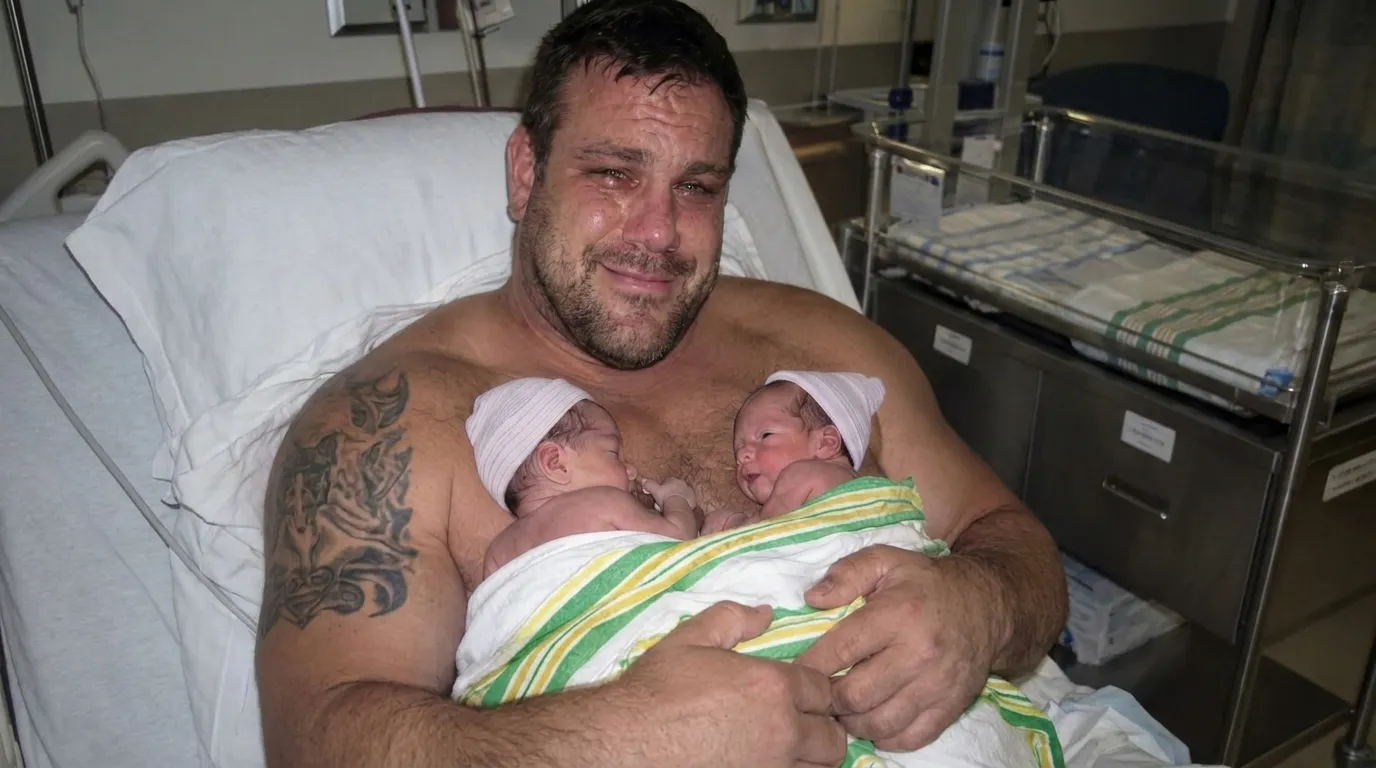
“You made your mother take down the hospital photo.”
“I couldn’t look at it.”
“Exactly.”
I sat down. He ran a hand over the lid.
“I wasn’t trying to hide it from you forever.”
“Eighteen years isn’t forever?”
“I thought you’d eventually be ready.”
I almost laughed. “Apparently nobody in this family was ever ready.”
He opened the chest. I touched one of the hats.
It was so small.
My hands started shaking.
“I thought if I saw this stuff, I would fall apart.”
“I know.”
“So you kept it in the garage?”
“In a cabinet behind my tools.”
“That’s what you were up to each year?”
“I’d write her a letter.”
“What did you say?”
“Whatever I wished we’d told her.”
I looked at him. “You should have made me tell her.”
His expression hardened slightly. “I tried.”
“No. You simply asked.”
“Helen, you know I tried.”
“You asked and then let me say no.”
He leaned back.
“What did you want me to do? Tell our daughter behind your back?”
“Maybe.”
The word surprised both of us.
I started crying.
“Maybe someone should have.”
Hannah came home two days later.
She barely spoke to us.
She took the chest to her room.
For the next three days, she read the letters.
Not all at once.
A few at a time.
Sometimes she’d come downstairs with swollen eyes.
Sometimes angry.
Sometimes silent.
On the fourth evening, she walked into the kitchen holding one envelope.
“Hannah: Age 12.”
David looked up.
She said, “You wrote that you wanted to tell me that year.”
He nodded. “You said Mom thought I was already having a hard enough time.”
I looked down.
Hannah continued.
“You wrote, ‘I hope someday you’ll understand that we were simply afraid of what telling you would do to you.’”
David’s eyes filled. “I don’t remember writing that.”
“Well, you did.”
She sat across from us.
Then she said, “I don’t feel guilty that I lived.”
I looked at her.
She was crying now. “I feel sad she died.”
“I know. We all do.”
“I feel weird that I had a twin and I didn’t know.”
“I’m sorry.”
“I feel like I’m supposed to miss somebody I never knew.”
I reached for her hand.
She let me take it.
Then she said, “But I don’t feel guilty.”
My throat closed.
“I feel angry that you thought I would.”
“We made assumptions.”
She shook her head.
“You don’t get to decide what I can handle just because you’re afraid of how I’ll react.”
“You’re right.”
“I should have known her name.”
That broke me.
“You’re right.”
“I should have had pictures.”
“Yes.”
“I should have known why Grandma used to cry on my birthday.”
I covered my mouth.
Hannah looked at both of us.
“I’m not saying you wanted to hurt me.”
David said, “We didn’t.”
“I know.”
“But we did.”
“Yes.”
That was the first honest conversation we’d had about Rosie as a family.
Not the last.
A week later, Hannah asked where Rosie was buried.
She had never been to the cemetery where Rosie was buried.
Of course she hadn’t.
We had managed to hide an entire grave from our daughter.
That sentence still makes me ashamed.
We went on a Saturday morning.
Just the three of us.
David brought flowers.
I carried nothing.
Hannah carried one of his letters.
The one from her first birthday.
At the grave, she stood very still.
The headstone was small.
ROSIE W.
BELOVED DAUGHTER.
Nine days between the dates.
Hannah touched the stone.
“Hi,” she said quietly.
David started crying.
I did too.
Hannah unfolded the letter.
She read a few lines silently.
Then she placed a copy of the letter beneath the flowers.
She had written something of her own on the back.
I didn’t read it.
I didn’t ask.
Some things belonged to her now.
On the drive home, Hannah sat in the back seat with the wooden chest beside her.
She had decided to keep it in her room.
Not hidden or displayed like a shrine.
Just there.
Before we left the cemetery, she had said something I don’t think I’ll ever forget.
“I don’t want Rosie to be forgotten.”
I nodded. “She won’t.”
“I don’t want anyone to pretend she wasn’t here anymore.”
“It won’t be the same as usual.”
This time, I meant it.
For 18 years, I thought silence protected Hannah from grief.
All it really did was postpone the grief and add betrayal to it.
She should have known.
Maybe not at three.
Maybe not at five.
But long before she turned 18.
David was right about that.
Hannah still gets angry sometimes.
So do I.
Mostly at myself.
But Rosie is no longer someone we leave in the past.
The hospital picture is back on my mother’s wall.
There are two babies in it.
There always were.
And for the first time in 18 years, everyone is allowed to see the picture, say her name, and acknowledge that she existed.
Latest Posts
- My Husband Mocked My Postpartum Appearance in His Brothers’ Group Chat—I Stayed Quiet for Five Days
Four months after giving birth, I thought my husband understood why I hardly recognized myself. Then I discovered the cruel joke he'd been sharing with his brothers, along with photos I never knew he'd taken. I kept my discovery secret for five days, determined to make him regret every word. “Dude, you weren't exaggerating 😂” …
- My Stepdaughter Called Me the Help Until My Envelope Changed Everything
The insult came before I’d even finished setting down the peach cobbler. I’d baked it at five that morning in the kitchen of the lake cabin we’d rented, and it was still warm under the foil. The smell of cinnamon followed me across the grass toward the pavilion tables, where thirty-two members of the Cole …
- My In-Laws Gave Their Other Three Children $20,000 for Houses and Gave Us Only a Card Two Years Later, We Bought the Old Miller Place for $41,500
The envelopes were tucked under the Easter plates. Each had a name written on it in my mother-in-law’s round schoolteacher handwriting. Kim opened hers first. She’s the oldest. Divorced two years. Raising two boys in a rented trailer behind the grain elevator. She looked at what was inside the envelope and put her hand flat …
- My Mother-in-Law Told Me to Lose Weight After Giving Me a Dress That Didn’t Fit, but Minutes Later, She Regretted Everything
I couldn’t get it over my hips. I stood in my bedroom in my underwear with the dress bunched around my thighs like a deflated balloon. Midnight blue silk. A designer label I’d only ever seen in magazines. Tiny pearl buttons down the back. Beautiful. And four sizes too small. I pulled. I tugged. I …
- Teen Wore a Dress to His Best Friend’s Funeral—The Family Nearly Had Him Removed Before He Reached the Microphone
My son’s best friend read the eulogy at his funeral in a red dress. I almost had him removed before he reached the microphone. My son Jack died 17 days after his 18th birthday. Cancer. Fourteen months from diagnosis to funeral. We found out late. Too late, as it turned out, and the treatment never …