A year later, I returned to the United States for a family gathering.
By then, rumors had traveled ahead of me.
Miles knew I was running investments in Portugal.
Kimberly knew I had purchased a commercial building.
My mother knew lawyers had been involved.
Nobody knew everything.
The room became noticeably quieter when I walked in.
My mother studied me first.
“You look well.”
“I feel well.”
Miles laughed.
It was not the laugh from the lawyer’s office.
This one was nervous.
“So what happened with your little envelope?”
I looked at him.
“What do you mean?”
“The Portugal mystery.”
He smirked.
“Did Grandma leave you enough for coffee and a souvenir?”
I smiled.
“I bought a building.”
Nobody spoke.
Miles blinked.
“What?”
“A building.”
Kimberly stared.
“In Lisbon?”
“One of them.”
That silenced the room completely.
My mother put down her drink.
“One of them?”
I had not returned to humiliate anyone.
At least, that was what I told myself.
But I would be lying if I said there wasn’t a small part of me that remembered every laugh from the lawyer’s office.
So I explained.
Not every account.
Not every number.
Some things were private.
But enough.
I told them about the trust.
The safety-deposit box.
The stock holdings.
The properties.
The accounts Grandma had protected separately.
Miles’s face changed.
Kimberly stopped smiling.
My uncle Perry asked the obvious question.
“Why didn’t the lawyer read any of that?”
“Because Grandma arranged it separately.”
My mother stared at me.
“Why you?”
That question hurt more than the laughter ever had.
Not:
Are you happy?
Not:
What did she say?
Just:
Why you?
I looked around the room.
“Because she knew exactly what she was doing.”
Miles scoffed.
“So we’re supposed to believe Grandma secretly thought you were the brilliant one?”
“No.”
I shook my head.
“I don’t think she cared who was brilliant.”
“Then what?”
“She cared who showed up.”
That ended the conversation.
Because everyone in the room knew the answer to that one.
They had visited Grandma when there was a holiday.
A birthday.
A major announcement.
I had worked beside her for nine years.
Not because I knew she would reward me.
I hadn’t.
I simply wanted to learn from her.
“I think Grandma understood something none of us did,” I said.
“Money doesn’t fix who you already are. It makes you more capable of becoming it.”
Nobody answered.
“She trusted me to do something useful with what she built.”
Miles looked bitter.
“So the rest of us got consolation prizes?”
“No.”
I looked at him.
“You received more money than most people will see in a lifetime.”
That quieted him.
“Grandma didn’t punish you.”
I paused.
“She just gave us different things.”
That was important.
Rosalind had not left the others penniless.
She had been generous.
What she had given me was different because it came with stewardship, complexity, and work.
Grandma had known exactly which inheritance each of us would understand.
I left the gathering early.
Not dramatically.
I had a flight.
Back to Lisbon.
Back to meetings.
Back to the business.
Back to the thread.
Years passed.
I stayed in Portugal.
The inheritance grew, but that stopped being the most interesting part.
I built partnerships of my own.
I invested in businesses I understood.
I renovated neglected properties instead of flipping them quickly.
I funded apprenticeships connected to logistics and transport because I remembered exactly what it felt like to start at the bottom while everybody assumed bottom was where you belonged.
One program paid for training for young people entering warehouse operations, dispatch, claims, and route planning.
I insisted every executive who joined one of my logistics companies spend time at ground level.
Not for a photograph.
Not for one afternoon.
Long enough to understand the work.
When one manager complained that it was unnecessary, I told him something Grandma once told me.
“You can’t manage what you’re too important to understand.”
I heard her voice every time I said it.
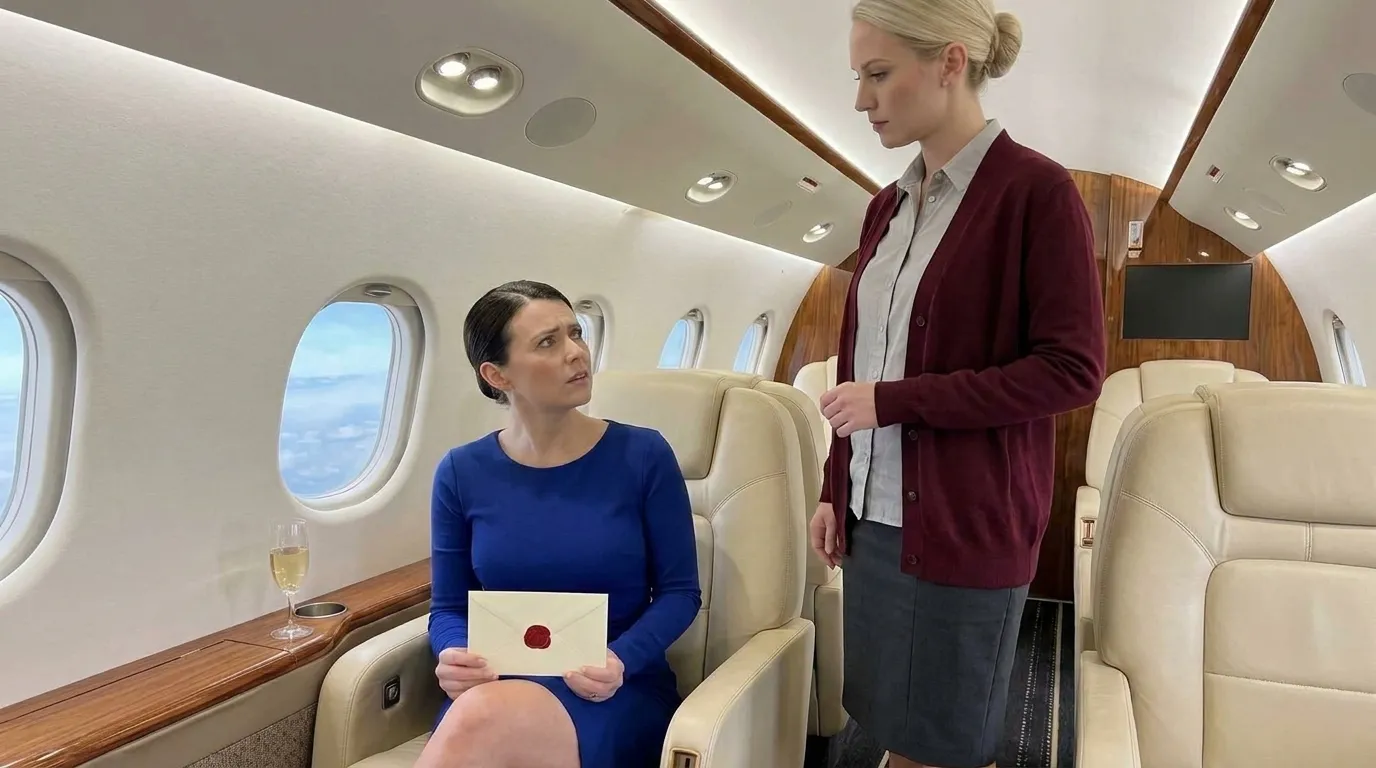
The silver-haired woman from the airplane eventually became someone I knew well.
Her name was Margaret Vale.
She had worked with Grandma on European investments for years.
One afternoon over coffee, I asked the question I had never stopped wondering about.
“Did Grandma know they would laugh at me?”
Margaret smiled.
“She counted on it.”
“That sounds cruel.”
“It was strategic.”
I raised an eyebrow.
Margaret laughed.
“Rosalind believed people reveal themselves fastest when they think nothing important is happening.”
That was exactly what Grandma used to do with me.
Ask one question.
Watch my face.
The answer was never the whole test.
“Why the boarding pass?”
“Because she wanted to know whether you would follow an instruction that looked worthless before anyone explained the reward.”
I sat back.
“So it was a test.”
Margaret shook her head.
“No.”
“What would you call it?”
“Confirmation.”
I never forgot that.
I had spent years thinking I had to prove to my family that they had underestimated me.
Eventually, I understood how exhausting that was.
They were allowed to be wrong.
I did not have to organize my life around correcting them.
I still saw them occasionally.
The relationships became calmer.
Miles lost a large portion of his inheritance in investments he did not understand, then finally learned to ask questions before signing things.
Kimberly sold the Douro house after several years and used part of the money to start a business.
It failed.
Then she started another.
That one lasted.
Even people you resent are capable of growing when life stops cushioning them.
My mother and I took longer.
One evening, years after the will reading, she visited Lisbon.
We sat on the balcony of one of the first buildings I had restored.
She looked toward the river.
“I was happy when the lawyer gave you only the envelope.”
I appreciated that she said it without pretending otherwise.
“I know.”
“I thought…”
She struggled.
“What?”
“I thought your grandmother had finally seen you the way everyone else did.”
There it was.
The sentence I had probably known my entire life without hearing aloud.
I looked at her.
“And how was that?”
She cried before answering.
“Less capable.”
I stared toward the water.
“I’m sorry,” she whispered.
I believed she was.
But apologies do not rewrite childhood.
They only change what happens next.
“I spent years thinking Miles was destined for big things,” she continued. “You were always quieter. You worked. You didn’t demand attention.”
“So you assumed I didn’t deserve any.”
“No.”
She shook her head.
“But maybe I assumed you didn’t need any.”
That answer stayed with me.
Sometimes the child who appears strongest is simply the child everyone has become comfortable overlooking.
Before Mom returned home, I took her to the bank.
Not the original vault.
That part of my life remained private.
Instead, I showed her something new.
A foundation I had created in Grandma’s name.
The Rosalind Tarver Legacy Fund.
It supported vocational education, small-business financing, and emergency grants for workers whose families would otherwise lose everything after one bad month.
Mom read the mission statement.
“This is what you did with her money?”
“Some of it.”
She touched Grandma’s name on the wall.
“She would have liked this.”
“No.”
Mom looked surprised.
I smiled.
“She would have found twelve things wrong with it.”
For the first time in years, we laughed together.
Later, when I was alone, I opened the original letter again.
Its folds had softened.
The ink had faded slightly.
But one paragraph remained as sharp as ever.
This is not a gift. This is a responsibility. Use it well. Use it wisely.
That became the real inheritance.
Not the stock.
Not the buildings.
Not the accounts.
Responsibility.
Grandma had spent her life building something larger than herself.
She trusted me not merely to possess it, but to continue it.
I still think about that afternoon in the lawyer’s office.
The green mints.
Perry touching his tie.
Miles laughing.
My mother lowering her chin.
The boarding pass in my hands.
At the time, I believed everyone else had received an inheritance while I had received an errand.
I was wrong.
Grandma had given them assets.
She gave me a direction.
Even now, when a decision frightens me, I sometimes hear those three words.
FOLLOW THE THREAD.
Not because the thread always leads to money.
Usually it doesn’t.
Sometimes it leads to work.
Sometimes responsibility.
Sometimes uncomfortable truth.
Sometimes a door you would never have opened if somebody had simply handed you the answer.
My family no longer laughs about the boarding pass.
Neither do I.
I keep it framed inside my office in Lisbon.
Beside it is Grandma’s first note.
Three shaky words.
Nothing else.
Visitors sometimes ask why someone who owns buildings and businesses keeps an expired airline ticket framed on the wall.
I tell them:
“Because that was the most valuable thing my grandmother ever left me.”
They usually assume I mean because it led to the money.
I don’t correct them.
The money was only where the thread began.
The real inheritance was learning what Grandma had been trying to teach me since I was twenty-two:
The most important thing isn’t what someone leaves in your hands.
It’s whether they taught you what to do with it once they’re gone.
And I have been following that thread ever since.
THE END.
Latest Posts
- My Husband Mocked My Postpartum Appearance in His Brothers’ Group Chat—I Stayed Quiet for Five Days
Four months after giving birth, I thought my husband understood why I hardly recognized myself. Then I discovered the cruel joke he'd been sharing with his brothers, along with photos I never knew he'd taken. I kept my discovery secret for five days, determined to make him regret every word. “Dude, you weren't exaggerating 😂” …
- My Stepdaughter Called Me the Help Until My Envelope Changed Everything
The insult came before I’d even finished setting down the peach cobbler. I’d baked it at five that morning in the kitchen of the lake cabin we’d rented, and it was still warm under the foil. The smell of cinnamon followed me across the grass toward the pavilion tables, where thirty-two members of the Cole …
- My In-Laws Gave Their Other Three Children $20,000 for Houses and Gave Us Only a Card Two Years Later, We Bought the Old Miller Place for $41,500
The envelopes were tucked under the Easter plates. Each had a name written on it in my mother-in-law’s round schoolteacher handwriting. Kim opened hers first. She’s the oldest. Divorced two years. Raising two boys in a rented trailer behind the grain elevator. She looked at what was inside the envelope and put her hand flat …
- My Mother-in-Law Told Me to Lose Weight After Giving Me a Dress That Didn’t Fit, but Minutes Later, She Regretted Everything
I couldn’t get it over my hips. I stood in my bedroom in my underwear with the dress bunched around my thighs like a deflated balloon. Midnight blue silk. A designer label I’d only ever seen in magazines. Tiny pearl buttons down the back. Beautiful. And four sizes too small. I pulled. I tugged. I …
- Teen Wore a Dress to His Best Friend’s Funeral—The Family Nearly Had Him Removed Before He Reached the Microphone
My son’s best friend read the eulogy at his funeral in a red dress. I almost had him removed before he reached the microphone. My son Jack died 17 days after his 18th birthday. Cancer. Fourteen months from diagnosis to funeral. We found out late. Too late, as it turned out, and the treatment never …