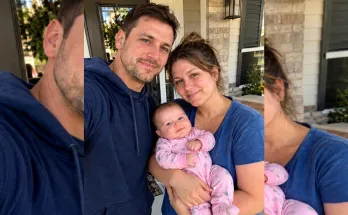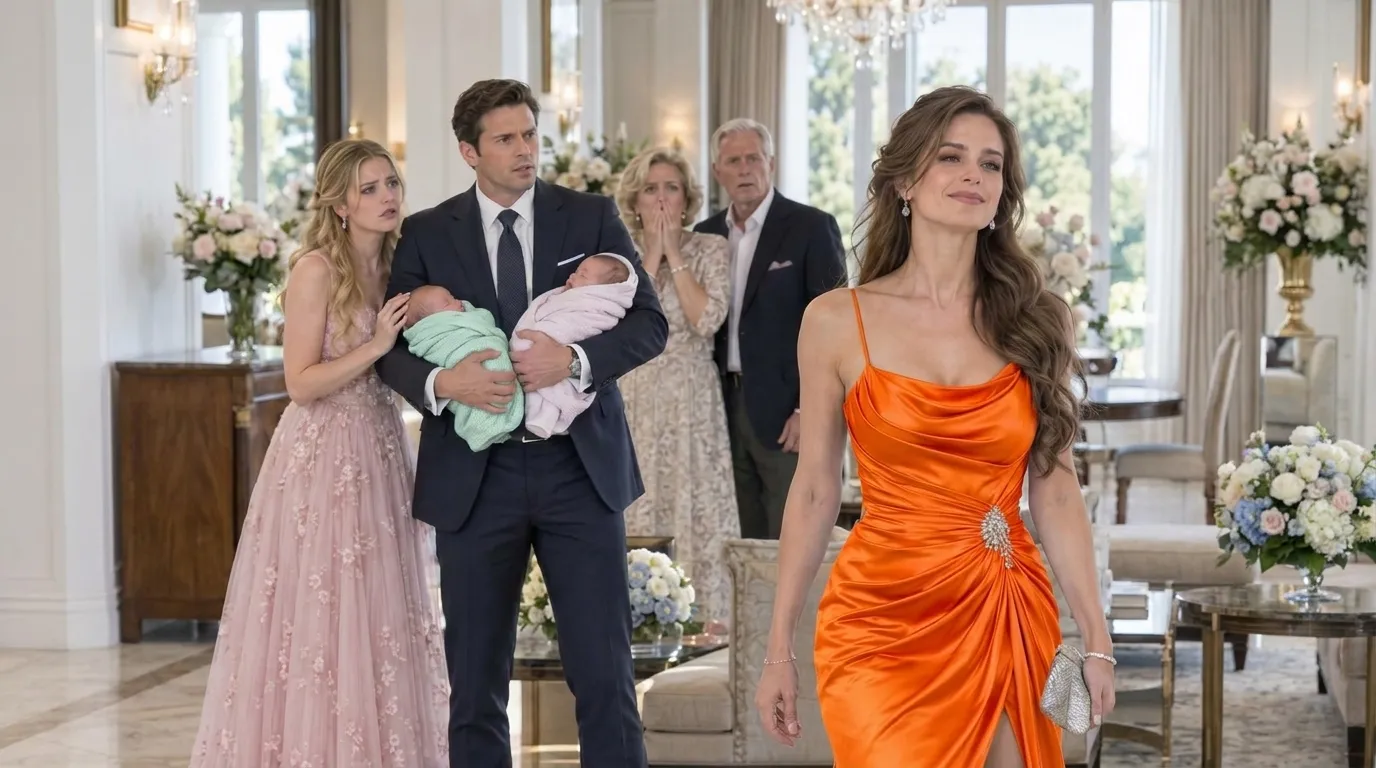
Six months passed.
The court moved slowly.
Evaluations.
Psychological reports.
Expert testimony.
Parenting assessments.
For once, I appreciated slowness.
Companies could be restructured in days.
Children deserved more care.
My visits increased.
Three times a week.
Then four.
Eventually overnight visits began.
The first night Ethan and Sophie stayed with me, I barely slept.
Ethan woke at 1:13.
Sophie at 1:26.
Ethan again at 2:02.
By 4:15, I stood in my kitchen wearing one sock, warming a bottle while Sophie screamed against my shoulder and Ethan kicked angrily in the crib.
And I started laughing.
On my kitchen counter was a spreadsheet tracking feeding times.
Christopher had once told me I would end up alone with spreadsheets.
Technically, I still had spreadsheets.
But I wasn’t alone.
By sunrise, both babies were sleeping against me on the couch.
For the first time, I allowed myself to think:
My son.
My daughter.
Then I corrected myself.
Not possessions.
People.
Ethan.
Sophie.
That distinction guided everything that followed.
Michelle and I eventually entered mediation.
She looked across the table.
“I’m not fighting your biological maternity.”
I nodded.
“I’m prepared to acknowledge the embryos were yours and that you never consented.”
“Okay.”
“But I carried them.”
“I know.”
“I was their mother from birth.”
“I know.”
“I love them.”
That was the hardest part.
“I know.”
Then she asked:
“Do you hate me?”
“Yes.”
The answer shocked both of us.
I continued.
“I hate what you did. I hate that you slept with Christopher. I hate that you ignored every reason to ask questions.”
She cried.
“But I do not hate you more than I love them.”
Michelle covered her mouth.
“Because I love Ethan and Sophie, I will not pretend you’re a stranger.”
But I also established boundaries.
Michelle would not remain legal mother based on a fraudulent arrangement.
She could not make unilateral medical decisions.
She could not remove the twins from the state.
And Christopher would have no unsupervised contact unless professionals and the court considered it safe.
The mediation lasted nine hours.
Eventually, I was legally recognized as Ethan and Sophie’s mother because of genetic parentage, forged consent, and the fraudulent embryo transfer.
Christopher remained their biological father, but his custodial rights were heavily restricted.
Michelle was not granted legal parental status.
However, the court approved a structured continuing caregiving relationship because she had carried and raised the babies during their earliest months.
Some friends thought I was insane.
Why allow the woman who betrayed me anywhere near my children?
Because this decision was not about my pride.
One day Ethan and Sophie would know their story.
I wanted to be able to tell them that eventually the adults stopped using them as weapons.
Christopher refused to do the same.
He blamed Simon.
Simon blamed Christopher.
Then Simon produced a recording.
It destroyed what remained of Christopher’s defense.
Simon said:
“If Victoria discovers those embryos are hers, genetic maternity becomes a problem.”
Christopher answered:
“Not before birth.”
“That doesn’t make her consent valid.”
“I’ll handle Victoria.”
“How?”
“She’ll be working.”
Then Simon asked:
“Why not divorce her and start over with Michelle?”
Christopher replied:
“Because I already paid for these embryos. They’re healthy. One is male.”
Then the sentence that finally broke something in me:
“Victoria will fight the divorce if she thinks there’s still a chance of having a child with me.”
Simon said something unclear.
Christopher continued:
“Once she believes that chance is gone, she’ll let go.”
I stood.
“Turn it off.”
Daniel stopped the recording.
Christopher had not only stolen our embryos.
He had deliberately told me they were destroyed because he wanted grief to weaken me before the divorce.
He understood what motherhood meant to me.
That understanding did not make him compassionate.
It made the embryos useful.
The criminal case never reached trial.
Christopher accepted a plea agreement.
So did Simon.
The press called it the Lawson Embryo Scandal.
I refused interviews.
Documentaries.
Magazine covers.
Ethan and Sophie were not a scandal.
They were children born inside one.
That distinction mattered.
Christopher was sentenced on financial fraud, conspiracy, falsification, and related offenses prosecutors could establish clearly.
Simon lost his medical license and faced civil and regulatory penalties.
Celia received probation after cooperating.
Vextor recovered part of its losses.
I became interim CEO.
Three months later, the board asked me to take the permanent position.
I said no.
The chairman stared.
“You built half this company.”
“I know.”
“Then why?”
Because for eleven years, I had mistaken being indispensable for being important.
They were not the same thing.
“I’m keeping my board seat.”
“And?”
“I’m going home before six.”
Within months, Vextor hired a new CEO.
I kept my equity.
More importantly—
I kept my time.
Ethan crawled first.
Sophie stood first.
Ethan wanted to touch everything.
Sophie preferred studying everything.
Evelyn visited twice a month.
She brought ridiculous clothes.
Cashmere sweaters for babies.
Tiny formal shoes.
Silver rattles.
I made her return the silver rattles.
“They can use normal toys.”
“They are Lawsons.”
“They are babies.”
She smiled.
“They can be both.”
Our relationship became better than it had ever been during my marriage.
One afternoon she admitted:
“I treated you as though your body owed this family children.”
I was silent.
“I’m sorry.”
Then she looked at sleeping Ethan.
“And now I discover you had children before any of us even knew.”
I answered gently:
“Nothing about this is that simple.”
She nodded.
“No. I suppose it isn’t.”
Nearly a year after the divorce, Christopher wrote from prison.
The first line said:
I don’t expect forgiveness.
He wrote about our marriage.
Our first apartment.
Santa Fe.
My mother’s death.
Our fertility appointments.
He said he had convinced himself the embryos belonged equally to both of us because he contributed half their genetics.
He admitted how monstrous that sounded now.
Then:
I know you think I used the twins for money. I did care about Lawson Capital, but I also desperately wanted children.
He claimed he believed everyone would gain something.
Michelle would become a mother.
He would become a father.
I would be freed from a marriage.
I stopped reading.
That was Christopher perfectly summarized.
He could steal someone’s choice—
then describe the theft as a gift.
At the bottom he wrote:
Please tell Ethan and Sophie that their father loved them before they were born.
I placed the letter in a locked box.
One day they could decide whether to read it.
I would not lie to them.
But I would not use truth as a weapon either.
Michelle moved twenty minutes away.
We were not friends.
I need to be clear about that.
Some betrayals do not transform into beautiful friendships simply because everyone learns a lesson.
But we became something else.
She attended birthdays.
Visited on scheduled weekends.
When Sophie developed a fever, Michelle reached the hospital almost as quickly as I did.
When Ethan needed minor ear surgery, we sat together in the waiting room for four hours.
She handed me coffee.
I took it.
Neither of us said anything.
That was enough.
Then fourteen months after the twins were born, Michelle found an old USB drive hidden among Christopher’s belongings.
Investigators opened it.
Inside was a folder labeled:
V.S. — Victoria Storage
There were fertility records.
Embryo photographs.
Genetic reports.
And one document none of us had previously recovered.
The original embryo disposition agreement Christopher and I had signed years earlier.
I remembered arguing about it.
Christopher originally wanted the embryos destroyed if we divorced.
I refused.
Eventually, we signed an agreement giving me sole authority over embryo disposition after marital separation.
Christopher’s signature was there.
Daniel called.
“This changes things.”
“He knew.”
“Yes.”
“He always knew they weren’t his to use without me.”
“Yes.”
There was no longer room for even a false misunderstanding.
Christopher had previously signed a document acknowledging my control—
then later forged documents to bypass it.
The USB also contained a handwritten note from Christopher:
Do this before filing divorce. Once transfer is completed, V has no leverage.
Then:
Family first.
I laughed when Daniel read it.
Family first.
Christopher had written those words beneath a plan to deceive his wife, manipulate his mistress, forge medical documents, use future children to activate a trust, and misuse company funds.
Sometimes people do not lie by saying the opposite of truth.
Sometimes they lie by giving beautiful names to ugly behavior.
Family.
Legacy.
Love.
Freedom.
Christopher had used all four.
What he actually meant was:
Control.
The civil cases eventually settled.
Insurance and clinic entities paid judgments.
Vextor recovered losses.
Damages awarded to me went into independent trusts for Ethan and Sophie.
Not Lawson family trusts.
Not Vextor stock.
Independent professional trusts.
Nobody would ever use my children’s money to decide who they were allowed to become.
On Ethan and Sophie’s second birthday, we had a small backyard party.
Ethan destroyed part of the cake.
Sophie looked at him with absolute disgust.
Michelle laughed until she cried.
Evelyn recorded everything.
That evening, Michelle helped me put them to bed.
For one strange moment, the four of us stood in the nursery.
There was no neat name for what our lives had become.
Maybe there didn’t need to be.
Michelle said quietly:
“I think about what I did every day.”
“So do I.”
“I wish I could undo it.”
“You can’t.”
“I know.”
Then she asked:
“Do you think they’ll hate me someday?”
“I don’t know.”
She nodded.
“I think they might.”
I looked at her.
“You loved them before you knew what Christopher had done.”
Her eyes filled.
“That matters too.”
It was not forgiveness.
But it was mercy.
And I learned that mercy does not erase consequences.
It simply refuses to let consequences become the only story.
Three months later, Christopher received his first court-approved video call with Ethan and Sophie.
Twenty minutes.
A therapist supervised.
Ethan cared more about a wooden truck.
Sophie stared suspiciously at the screen.
Christopher appeared in institutional clothing.
When he saw them, his face collapsed.
“Hi.”
Neither answered.
He laughed through tears.
Then looked toward me.
“Victoria.”
I remained quiet.
“Thank you.”
“For what?”
“For letting me see them.”
“The court allowed it.”
“You could have fought it.”
“I could have.”
His eyes lowered.
“I’m sorry.”
I answered:
“It means something.”
Hope appeared in his face.
Then I finished:
“It means you understand there is something to be sorry for.”
He nodded.
“Fair.”
Sophie reached toward the screen.
Touched his image.
Then said her favorite word:
“No.”
Even the therapist laughed.
So did Christopher.
The call ended nineteen minutes later.
I carried the twins downstairs.
I did not feel victorious.
I felt sad.
Christopher had wanted a family so desperately that he destroyed every honest path toward one.
That punishment began long before any judge sentenced him.
Three years after that first photograph, I spoke at a conference on corporate ethics.
A young woman asked:
“What was the biggest lesson from everything you went through?”
I thought about Christopher.
Michelle.
Simon.
The twins.
The forged documents.
The trust.
Then answered:
“People reveal themselves most clearly when they believe the outcome justifies what they did to get there.”
I continued:
“My former husband thought becoming a father justified lying.”
“He thought preserving a family name justified fraud.”
“He thought success justified taking other people’s money.”
“And he believed love justified taking away another person’s choice.”
Then:
“A good outcome never makes a dishonest method honest.”
When I returned home, three-year-old Ethan ran toward me wearing one shoe.
Sophie followed with a picture book.
“Mom!”
That word still stopped me.
I picked them both up.
That evening, after they slept, I stood in my study.
Years earlier, the glass wall had been covered with financial statements and arrows tracking Christopher’s fraud.
Now only one important document remained framed nearby.
Not the DNA report.
Not his conviction.
Not the court order recognizing me as their mother.
The original embryo agreement.
The one Christopher had signed before everything went wrong.
Proof that once, he understood something simple.
Choice matters.
I sometimes wondered what would have happened if he had simply come to me.
If he admitted he loved Michelle.
If he told me he still desperately wanted children.
If he asked what we should do with the embryos.
Maybe I would have refused.
Maybe I would have agreed to something I cannot imagine now.
Maybe I would have hated him.
But whatever happened—
the choice would have been mine too.
That was what Christopher stole.
Not simply embryos.
Not money.
Not even motherhood.
My right to choose the shape of my own life.
And unlike money, that could never truly be returned.
On the twins’ fifth birthday, I received one final letter from Christopher.
His handwriting was steadier.
His sentence was nearly complete.
Near the end, he wrote:
You once asked me how Michelle became pregnant so quickly when neither of us had an obvious fertility problem.
I already knew the answer.
I thought I was smarter than everyone in the room.
Then:
I never understood that the smartest person in the room is often the one willing to tell the truth before the truth has to be dragged out.
I read it twice.
Then placed it with his first letter.
Maybe Ethan and Sophie would read both one day.
Maybe they wouldn’t.
That choice belonged to them.
I walked outside.
Five-year-old Sophie stood on a chair directing the birthday decorations.
Ethan somehow had frosting in his hair before anyone had served the cake.
Evelyn was arguing with the caterer.
Michelle was bringing presents through the gate.
Daniel Kerr had arrived with his wife and was pretending not to notice Ethan stealing strawberries.
The afternoon sun covered the yard in gold.
Then Sophie saw me.
“Mom! Ethan ruined the cake!”
“I did not!”
“You touched it!”
“It touched me!”
I laughed.
Three years earlier, I might have looked at that scene and wondered how my life became so complicated.
Now I understood:
Complicated was not the same as broken.
Unusual was not the same as wrong.
And family did not have to begin honestly for the people inside it to choose honesty afterward.
I remembered Christopher’s words from the day of our divorce.
“At last, I have the family you could never give me.”
Once, that sentence would have destroyed me.
Now it almost made me smile.
Because Christopher confused having children with building a family.
The first could happen inside a laboratory.
The second required something he had never learned to give freely.
Truth.
Responsibility.
Respect.
Choice.
Love without ownership.
I bent down and kissed Ethan’s frosting-covered forehead.
Then Sophie’s.
“Happy birthday.”
They wrapped their arms around me.
And for the first time since the divorce, there was no anger attached to the memory.
No need to prove who had won.
No need to punish anyone.
Only the life in front of me.
Messy.
Loud.
Unexpected.
Mine to live.
And theirs to become.
Christopher once believed Michelle had given him a family I never could.
He was wrong.
Michelle had not given Christopher a family that I could not give him.
Christopher had taken the possibility of a family that already belonged to our future—
and tried to redesign it without my consent.
What he never understood was that children were not proof of victory.
They were not heirs.
They were not leverage.
They were not replacements.
They were people.
And when the truth finally placed Ethan and Sophie in front of me, I did not ask what they could give me.
I asked what I owed them.
That answer—
changed everything.
THE END
- My Husband Mocked My Postpartum Appearance in His Brothers’ Group Chat—I Stayed Quiet for Five Days
 By Saturday evening, Ryan had bought the groceries I’d listed, and dinner was ready. I wore a comfortable blue dress I’d bought after Emma was born. It fit properly, and …
- My Stepdaughter Called Me the Help Until My Envelope Changed Everything
 The family reunion was scheduled for the third Saturday in June at Lake Anna, the way it had been every summer for forty years. Thirty-two members of the Cole family. …
- My In-Laws Gave Their Other Three Children $20,000 for Houses and Gave Us Only a Card Two Years Later, We Bought the Old Miller Place for $41,500
 We still didn’t tell anybody. By then it wasn’t a rule so much as a habit. And there was a little pride in it too. I’ll own that. I wanted …
- My Mother-in-Law Told Me to Lose Weight After Giving Me a Dress That Didn’t Fit, but Minutes Later, She Regretted Everything
 But I need to tell you about March. Because that’s where this really starts. In March, before Hazel was born, Ryan and I decided to buy a house. We’d been …
- Teen Wore a Dress to His Best Friend’s Funeral—The Family Nearly Had Him Removed Before He Reached the Microphone
 My head snapped toward him. Theo looked at me. “Mrs. Harris, I’m sorry. I should’ve told you before today. I just… I couldn’t.” He unfolded the paper. “It says, ‘Theo, …