A wealthy widower from a nursing home asked me to marry him so his family couldn’t control his final days. After his funeral, his lawyer handed me an envelope and said, “Please, sit down. The truth inside may be difficult to process.”
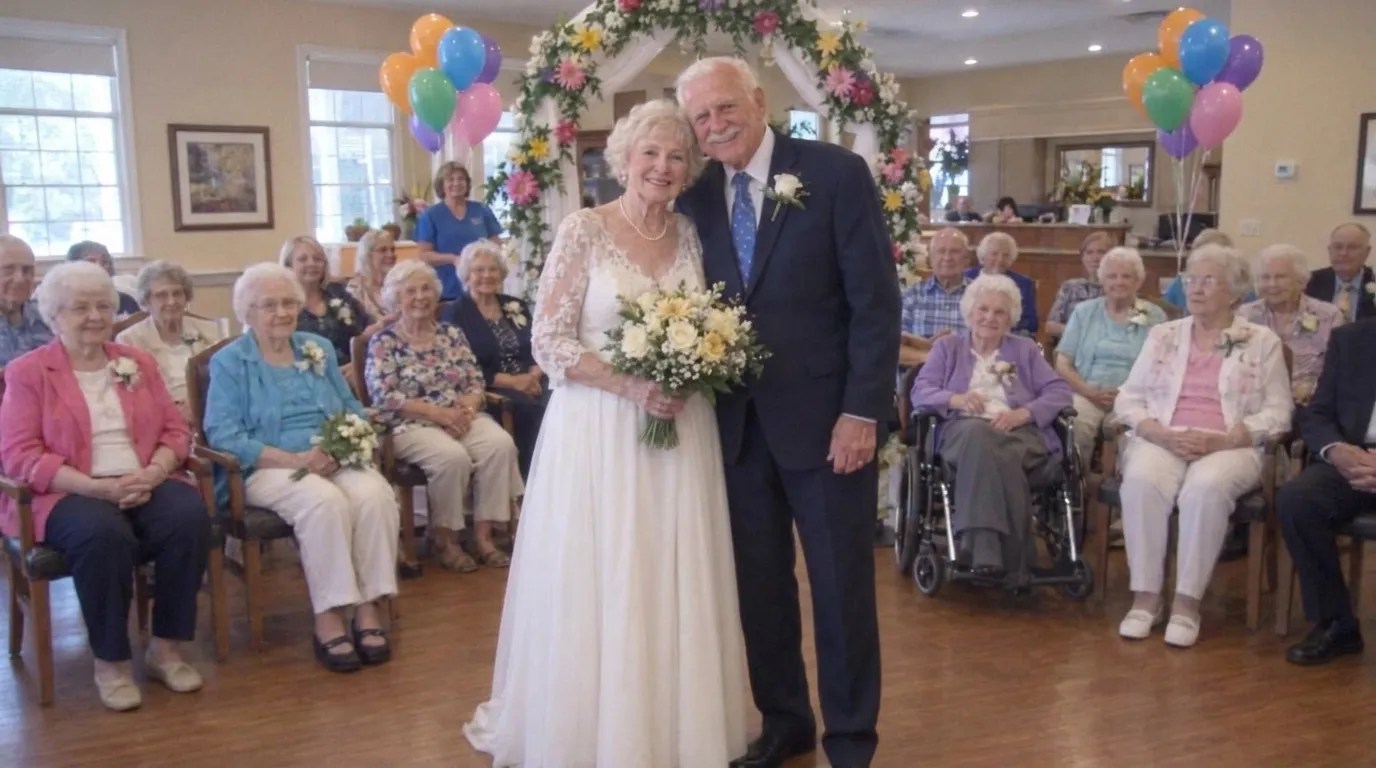
I was 78 and living in the state-funded wing of our nursing home. I shared a cramped room, ate soggy food, and survived on a tiny pension.
Harrison was 82 and lived in a different universe. He occupied the VIP penthouse suite with a private chef and round-the-clock nurses.
Despite the class divide, we met in the courtyard. Bonding over chess, we quickly became inseparable. We spent countless hours under the old oak tree, drinking imported tea, listening to jazz, and talking about our deepest regrets.
Harrison was a widower. Despite having three children, his suite was painfully empty.
“They don’t care about me. They’re just waiting for me to die,” he confessed one afternoon over the chessboard.
When Harrison’s health declined, his children abruptly appeared. They brought lawyers to take control of his medical decisions and quietly hasten his end.
Terrified, Harrison asked me to marry him so his family couldn’t dictate his final days.
I agreed without hesitation.
We spent two beautiful years as husband and wife. He moved me into his lavish suite, and neither of us felt lonely. We spent his final months reading to each other and watching sunsets from his balcony.
Then Harrison passed away peacefully, holding my hand.
At his funeral, his children barely acknowledged me. They whispered among themselves and watched me with open hostility.
A week after the funeral, Harrison’s lawyer came to see me. He handed me an envelope and looked at me with quiet concern.
“Please, sit down. The truth inside may be difficult to process.”
THE ENVELOPE
Those words echoed through the room as I stared at Harrison’s lawyer.
His name was Thomas Reed. I had met him only twice before—once when Harrison and I signed our marriage documents, and once when Harrison updated several legal papers after our wedding.
But that afternoon, Thomas looked different.
Not professional.
Not distant.
Almost frightened.
I slowly lowered myself into the chair.
“What truth?”
Thomas placed the envelope on the table between us.
“It concerns Harrison’s estate,” he said.
I looked at the envelope.
My name was written across the front in Harrison’s handwriting.
Evelyn. Open this only after my funeral.
My fingers began to tremble.
“Did Harrison leave me something?”
Thomas didn’t answer immediately.
“That depends on what you mean by ‘something.’”
I opened the envelope.
Inside was a single handwritten letter.
My eyes moved across the first line.
My Evelyn, if you’re reading this, then I’ve finally run out of time.
I stopped.
My throat tightened.
I continued.
There is something I never told you. Something I was afraid would destroy the peace we built together.
I looked up at Thomas.
“Did he know he was dying?”
“He suspected it,” Thomas replied.
I returned to the letter.
My children were never the reason I asked you to marry me.
My heart seemed to stop.
I read the sentence again.
Then again.
Never the reason.
My hands went cold.
For two years, I had believed Harrison married me because he needed protection from his children.
Because they wanted control.
Because they saw their father as an inheritance instead of a person.
Had I misunderstood everything?
I continued reading.
They were part of the reason. But they were not the beginning.
The room suddenly felt too quiet.
Then I reached the next line.
Evelyn, I knew you before you knew me.
I stared at the paper.
“What?”
Thomas lowered his eyes.
I looked at him.
“You knew about this?”
“Yes.”
“How long?”
“Before your wedding.”
My stomach dropped.
“You knew?”
“I promised Harrison I would tell you after his death.”
I stood so quickly that the chair scraped against the floor.
“You let me marry him without telling me?”
Thomas didn’t defend himself.
Instead, he quietly said, “He believed you deserved to hear it from him.”
I looked back at the letter.
And suddenly, every memory of Harrison began to feel different.
The first chess game.
The old oak tree.
The imported tea.
The way he always seemed to know exactly when I was having a difficult day.
I thought our friendship had been an accident.
Apparently, it wasn’t.
THE WOMAN IN THE PHOTOGRAPH
The letter continued.
Twenty-nine years ago, I made a decision that changed another woman’s life.
My heart began pounding.
Her name was Margaret Bell.
I froze.
That name meant nothing to me.
Until I reached the next sentence.
She was your mother.
The paper slipped from my hands.
For several seconds, I couldn’t breathe.
“My mother?”
Thomas nodded slowly.
“You knew my mother?”
“I knew of her,” he said. “Harrison knew her very well.”
My mother had died when I was forty-nine.
She had never spoken much about her younger years.
She had raised me alone.
Whenever I asked about my father, she would simply say, “Some questions are better left buried.”
I had always assumed that meant my biological father had abandoned us.
But Harrison’s letter was telling me something else.
I picked it up.
Your mother worked for one of my companies. She was brilliant, loyal, and far too trusting.
I was a younger man then. Powerful, impatient, and obsessed with expanding my business.
A financial scandal erupted inside the company. Money disappeared. Documents were altered. Your mother’s name was placed on several transactions she did not authorize.
My eyes filled with tears.
My mother had always insisted she had been innocent.
I remembered her sitting at our kitchen table late at night, sorting through old papers.
She had cried.
I had never understood why.
The letter continued.
I knew she was innocent.
I covered my mouth.
Thomas remained silent.
But I didn’t protect her.
That sentence hurt more than anything else.
I was afraid that exposing the truth would destroy the company and my reputation. So I remained silent. Margaret lost her job. She was investigated. Her reputation was ruined.
She left the city and raised you alone.
Tears ran down my face.
For decades, I had believed my mother’s life had simply been unlucky.
Now I learned someone had helped make it that way.
And that someone had been my husband.
I turned toward Thomas.
“Why would Harrison marry me after doing that?”
Thomas sighed.
“Keep reading.”
I did.
I searched for Margaret years later. By the time I found her, she had already built a life far away.
I wanted to apologize.
She refused to see me.
My fingers tightened around the paper.
Then came the sentence that changed everything.
But I continued watching from a distance.
I looked up sharply.
“Watching?”
Thomas nodded.
“Not in the way you’re thinking,” he said quickly. “He never wanted to intrude. But he kept track of whether you and your mother were safe.”
I returned to the letter.
I discovered that Margaret had a daughter. You.
I learned about your career. Your marriage. Your divorce. Your years caring for your mother.
I knew about the nursing home.
My entire body went still.
The nursing home.
The state-funded wing.
The cramped room.
The tiny pension.
The soggy food.
Harrison had known.
But why?
THE REAL REASON
I looked at Thomas.
“Was the nursing home part of this too?”
“Yes.”
“How?”
He opened his briefcase.
Inside was a thick folder.
He pushed it toward me.
“Before Harrison moved into the VIP suite, he established a private charitable foundation.”
I opened the folder.
The first document showed the foundation’s name.
The Margaret Bell Foundation.
My breath caught.
Thomas continued.
“Harrison funded it anonymously for years.”
“What did it do?”
“It paid for medical care, housing, food, and education for people who couldn’t afford them.”
I stared at the documents.
“How many people?”
“Hundreds.”
I swallowed.
“And why is my mother’s name on it?”
Thomas looked directly at me.
“Because he wanted to repair what he had done without turning your mother’s suffering into a public spectacle.”
I didn’t know what to say.
Then I noticed another document.
It was dated two years before Harrison and I met.
My name was written on it.
Evelyn Bell — Lifetime Beneficiary.
I stared.
“No.”
Thomas nodded.
“Yes.”
“But I never knew.”
“That was intentional.”
“Why?”
“Because Harrison wanted to know whether you would treat him differently if you knew he had set money aside for you.”
My chest tightened.
“So the chess games…”
“Yes.”
“The tea…”
“Yes.”
“The conversations…”
“All real.”
I shook my head.
“But he knew who I was.”
“Yes.”
“And I didn’t.”
Thomas nodded.
“He deliberately introduced himself simply as Harrison.”
I looked down at the documents.
For two years, I had thought our relationship began because two lonely elderly people happened to sit beneath an oak tree.
But Harrison had known my name before I ever knew his.
He had known my history.
He had known my mother.
And he had watched me from a distance for years.
Yet there was something I still couldn’t understand.
“If he had been trying to make amends, why did he ask me to marry him?”
Thomas’s expression changed.
“That part,” he said quietly, “was not about guilt.”
“Then what was it?”
“Fear.”
HIS CHILDREN’S SECRET
Thomas pulled another folder from his briefcase.
“This is what Harrison wanted you to see last.”
Inside were copies of emails, financial statements, and legal documents.
I recognized the names immediately.
Michael.
Laura.
Daniel.
Harrison’s three children.
The emails began shortly before they suddenly arrived at the nursing home.
One message read:
We need Dad’s signature before his condition gets worse.
Another:
If we don’t act now, Evelyn will become impossible to remove.
My heart began racing.
I read another.
The doctors think he has less than six months. We should move the assets while he is still competent.
Then another:
The marriage is a problem.
I looked at Thomas.
“They knew about me.”
“They knew about the marriage.”
“But they didn’t know about the foundation?”
“No.”
I continued reading.
The children had been attempting to gain control over Harrison’s financial affairs.
But there was something much worse.
One document was a draft petition requesting that Harrison be declared legally incapable of managing his own affairs.
It claimed he was suffering from severe cognitive impairment.
Yet I knew that wasn’t true.
Harrison could still beat me at chess.
He remembered every birthday.
Every conversation.
Every book we read.
Every jazz record we played.
And he certainly understood his finances.
The petition had one purpose:
To take control of his estate.
But then I saw the date.
It had been prepared before Harrison’s health had seriously deteriorated.
I looked at Thomas.
“They planned this before he was sick.”
“Yes.”
“Why?”
“Because they believed his wealth was about to become inaccessible.”
I flipped to the final page.
There was a handwritten note from Harrison.
This is why I asked Evelyn to marry me.
Not because I needed a shield.
Because I needed one person beside me whom they couldn’t buy, threaten, or manipulate.
My eyes filled with tears.
Then I reached the next line.
And because somewhere along the way, I stopped pretending that my feelings for her were part of a plan.
I pressed the letter against my chest.
I remembered Harrison’s face the day he proposed.
We had been sitting beneath the oak tree.
He had knocked over his queen.
I laughed at him.
He smiled.
Then he said, “Evelyn, would you marry an old fool who finally learned what matters?”
I had thought it was a joke.
It hadn’t been.
THE FUNERAL WASN’T THE END
Thomas closed the folder.
“There is one more thing.”
I looked at him.
“What?”
“Harrison’s will has not yet been carried out.”
“Why not?”
“Because there is a condition.”
“What condition?”
“You must attend a meeting tomorrow morning.”
“With whom?”
“All three of his children.”
My heart sank.
“No.”
Thomas leaned forward.
“Harrison specifically requested that you be present.”
“Why?”
“He wanted the truth revealed in front of them.”
I stared at him.
“What truth?”
Thomas opened his briefcase one final time.
He removed a small USB drive.
“This.”
“What is it?”
“A recording.”
“Of what?”
“Your husband’s final meeting with his children.”
I couldn’t speak.
Thomas placed the drive in my hand.
“Do you want to hear it?”
I hesitated.
Then I nodded.
He connected it to his laptop.
The screen went black.
Harrison’s voice filled the room.
Older.
Tired.
But unmistakably calm.
“I know why you’re here.”
A man’s voice answered.
Michael.
“Dad, we’re here because we’re worried about you.”
Harrison laughed softly.
“No. You’re here because you’re worried about what happens to my money.”
Silence.
Then Laura spoke.
“You’re confused.”
“I’ve never been more clear.”
Another silence.
Harrison continued.
“You think Evelyn is taking advantage of me.”
Daniel responded, “She came from the state wing. You moved her into the penthouse. What exactly are we supposed to think?”
Harrison answered, “That she loves me.”
Laura scoffed.
“You barely knew her.”
Harrison’s voice became quiet.
“I knew her long before she knew me.”
There was a brief pause in the recording.
Then Michael asked, “What does that mean?”
Harrison replied, “It means all three of you have been measuring her by the size of her bank account while ignoring the size of her heart.”
No one answered.
Then Harrison said something that made me hold my breath.
“Evelyn is not getting what you think she’s getting.”
Michael laughed.
“So you admit she’s getting something.”
“She is.”
“What?”
Harrison replied, “Everything you were trying to steal.”
The recording ended.
I stared at the screen.
Thomas closed the laptop.
“What did he mean?”
“You’ll find out tomorrow.”