Man Blamed Himself After His Wife Passed Away Giving Birth to Twins – Then Her Mother Arrived with a Truth She Had Hidden
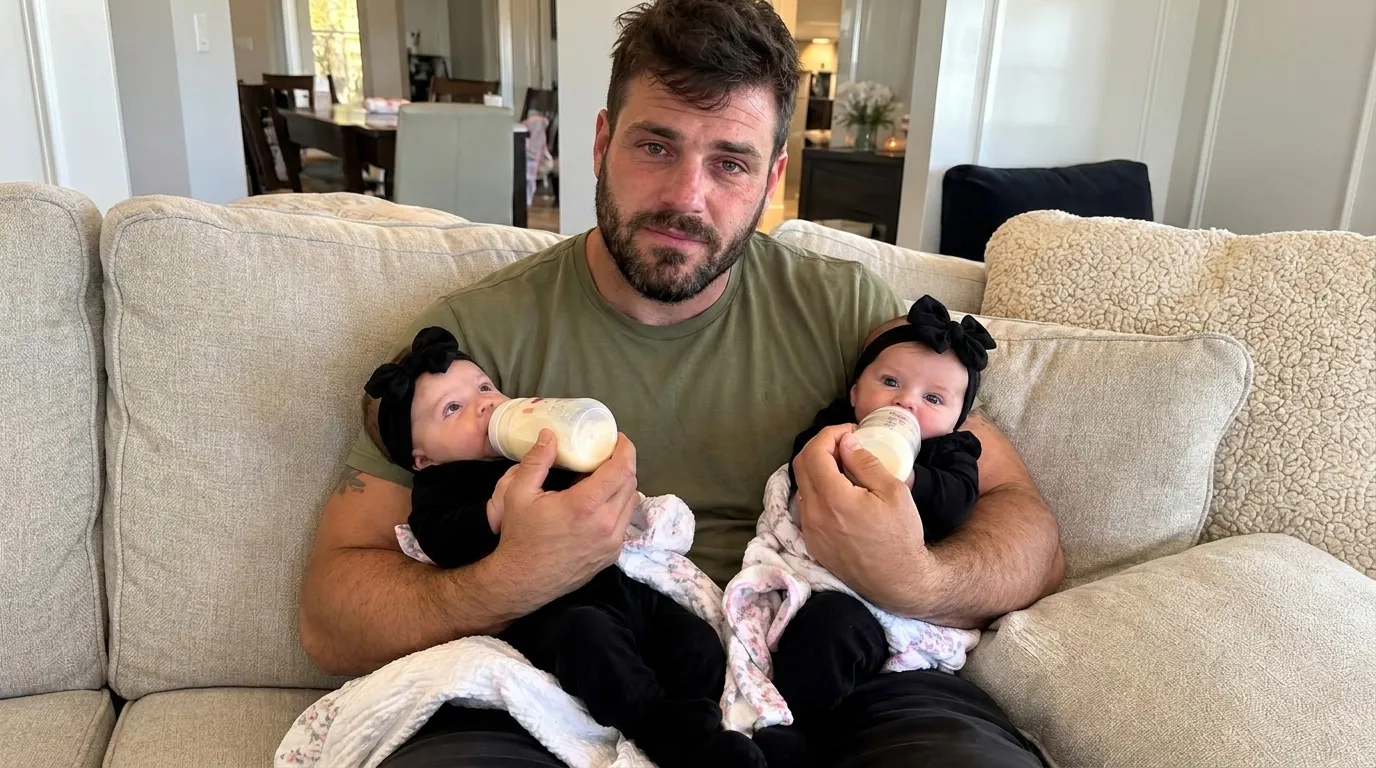
For three months after my wife died giving birth to our twins, her mother barely spoke to me. I thought she blamed me for choosing the babies.
The truth was something I couldn’t have imagined.
She didn’t speak to me at the funeral. Not afterward, either.
I’d send photographs of the girls.
“Thank you,” she’d reply.
Nothing else.
And I understood. I’d have done the same in her place.
Because when it came down to it in that room, I was the one who said, “Save the babies.”
Mary’s pregnancy had been difficult. There’d been several scares.
But at our last appointment, the doctors told us both babies were doing well. We’d started to relax.
That morning at the hospital, we’d even been arguing about names.
Mary said twins didn’t need matching names. I said we should have settled this months ago.
She laughed and asked me to pass her the water.
A few hours later, everything changed.
Serious complications developed during the delivery. The doctors warned us they might not be able to save all three of them.
By that evening, I was holding her hand while people I’d never met talked over her bed, and somebody asked what we wanted them to prioritize.
I looked at her.
“Mary—”
She squeezed my fingers.
“The girls. Obviously the girls.”
I wanted to tell her not to say that. To wait until the doctors had another answer.
I kept waiting for her to change her mind, or for somebody to tell us there was another way.
But she squeezed my hand again.
“Please,” she said.
And I finally said, “Save the babies.”
That was the last decision we ever made together.
By morning, she was gone.
I came home with two daughters and a bag of Mary’s belongings.
Her sweatshirt was inside—the one she’d arrived in.
I couldn’t wash it. Couldn’t even take it out.
Everyone told me the same thing.
“Stay strong. Those girls need you.”
So I got up at night. Warmed bottles. Wrote down how much each girl drank because I was too tired to keep it straight in my head. I couldn’t trust my memory.
I stood over their cribs for twenty minutes at a time, checking their breathing.
My sister brought food around. Days later, she threw most of it away, untouched.
My jeans stopped fitting.
And whenever the house went quiet, I heard myself agreeing.
Save the babies.
What if I’d said something else?
What if Mary would still be here?
I knew she’d asked me to save them. But knowing that didn’t stop me from wondering if I’d failed her.
Then last Thursday, the doorbell rang.
Mary’s mother stood on the porch.
An envelope shook between her hands.
I started apologizing before she stepped inside. I don’t know why. I think I’d been rehearsing it for three months.
“I didn’t want to lose her. She asked me to, and I—I should have done something. I should have at least—”
“I know.”
“No. You don’t understand. I agreed to it.”
She looked down at the envelope she was holding with both hands.
“Do you think I stayed away because I blame you?”
I couldn’t answer.
“Mary asked me not to tell you something. I promised her. I thought she’d have time to tell you herself.”
Behind me, one of the girls cooed softly. Her grandmother looked toward the hallway.
“Can we sit down?”
We sat at the kitchen table.
Mary had once covered it with scraps of paper, writing baby names and crossing them out.
Her mother kept the envelope in her lap.
“There’s something about Mary’s childhood you never knew.”
“I knew her for nine years.”
“I know.”
“She told me everything.”
Her mother looked at me.
“She didn’t tell you what happened after her father died.”
I knew about the heart attack. Mary was eight.
She remembered the ambulance and her mother’s shoes beside the front door.
“After the funeral,” her mother said, “I kept her fed. I got her to school. But I stopped being there.”
“What does that mean?”
“She had his eyes. Sometimes she’d smile, and I’d have to leave the room.”
I pictured Mary smiling at me across this table.
“Why?”
“Because I missed him so much I couldn’t stand it.”
Her mother rubbed her thumb over the envelope.
“One night, she found me crying over his picture.”
Mary had climbed onto the sofa beside her.
“Do you wish Daddy was here?”
“More than anything,” her mother had answered.
Then Mary asked, “More than you want me?”
I waited.
“What did you say?”
Her mother shook her head.
“I didn’t answer.”
“She was eight.”
“I know.”
“She thought you didn’t want her?”
“For years.”
I pushed my chair back.
Mary used to tell me she hated asking people for things. Even a glass of water.
She’d say she didn’t want to be a bother.
I’d always thought it was just Mary being Mary.
“She stopped bringing me his pictures,” her mother said. “Stopped asking about him. I thought she was getting better.”
“She was trying not to upset you.”
“Yes.”
A cry came from the nursery. I stood automatically.
Her mother started to rise too.
“I’ve got her,” I said.
I lifted the smaller twin. She quieted when I put her against my chest.
Her sister slept with one fist beside her face.
I watched them for a moment.
They didn’t know what had happened in that hospital.
One day, they’d ask.
I was terrified of what I’d tell them.
I settled her back in her crib.
When I returned, Mary’s mother was staring at a photograph on the refrigerator.
Mary was holding a pair of tiny shoes. She’d been laughing because she’d bought them before we knew there were two babies.
“She was so happy,” her mother whispered.
“She was.”
Her mother looked down.
“Before your wedding, Mary finally told me what that night had done to her.”
“Did you apologize?”
“Of course.”
“Did she forgive you?”
“She said she knew I loved her. She just wished she’d known it when she was little.”
I sat.
“When she became pregnant, she brought it up again,” her mother continued. “She said she couldn’t bear the thought of her girls feeling unwanted if anything happened.”
“What did you tell her?”
“I promised I’d be there. Whatever happened.”
I looked at the envelope.
“And then you disappeared.”
Her mother flinched.
“Yes.”
Something stirred in my memory.
Mary in our bed, a few weeks before the birth.
One baby had kicked so hard I could see her stomach move.
I’d laughed.
Mary hadn’t.
“If something happened to me, would you ever wish we’d never had them?”
“What kind of question is that?”
“Please. Just answer.”
“Of course not.”
“Even if you missed me?”
I’d rolled toward her.
“I’d miss you every day. But I’d still love them every day.”
Mary began crying.
I kissed her forehead. Told her she was tired. Told her everything would be fine.
I’d thought it was pregnancy nerves.
Now I understood.
“She asked me something,” I told her mother.
I repeated the conversation.
Her mother stared at me.
“She asked you that?”
“Yes.”
“And you told her you’d still want them?”
“Of course.”
Her hand flew to her mouth.
“That’s what I should have told her when she was eight.”
I looked toward the hallway.
“She never told me why she asked.”
“She was going to. After the girls came.”
“Why wait?”
“She was ashamed that one unanswered question still frightened her.”
“She didn’t need to be ashamed with me.”
“I know.”
For the first time, I felt angry with Mary.
Not for choosing the girls.
For carrying that hurt alone when I’d been right beside her.
Then I remembered how she’d cried in my arms.
Maybe she’d tried to tell me.
Maybe I’d been too busy promising everything would be fine to hear what she was asking.
Her mother slid the envelope across the table.
“She wrote this for me. She said I could show you if anything ever happened to her. I couldn’t bring myself to do it until now.”
“What was she afraid of?”
Her mother pushed the envelope toward me.
“Read it.”
I unfolded the paper.
Mary’s handwriting. The little hearts she sometimes drew above her letters.
I touched the page before reading.
Mom,
I know you loved me.
I know that now.
But when I was little, I thought you would have traded every day with me to have Dad back.
I know you never meant that.
Still, I spent years trying to be quiet enough not to make you sad.
Now I’m going to have two daughters.
I already love them more than I know how to say.
And I’m scared.
Not of them.
Of what grief can make people believe.
He will love them.
I know that.
He doesn’t know how much he’s already healed in me.
Someday I’ll tell him.
I know I’m probably worrying about nothing.
But if something happens to me, he’ll blame himself.
He’ll think there was something else he should have said or done.
Please don’t let the girls grow up thinking their mother was someone they cost him.
Tell him I trusted him.
Tell him I wanted them.
And please, Mom.
Don’t disappear.
You promised.
I want my girls to know they were wanted.
Always.