My parents told Grandma Eleanor they were taking her to lunch.
Three hours later, a nursing facility in Ohio called me.
“Is this Ivan Sterling?” the woman asked. “Your grandmother listed you as her emergency contact. Her suitcase is still here in our lobby, but the family members who brought her left before the admission paperwork was finished.”
I was standing in the kitchen of my apartment, holding a cup of coffee I suddenly had no desire to drink.
“What do you mean, they left?”
The administrator hesitated.
“They said they had to get some paperwork from their car. They never came back.”
I called my father, Arthur.
Straight to voicemail.
Then my mother, Wendy.
Same thing.
I drove 190 miles with both hands locked around the steering wheel.
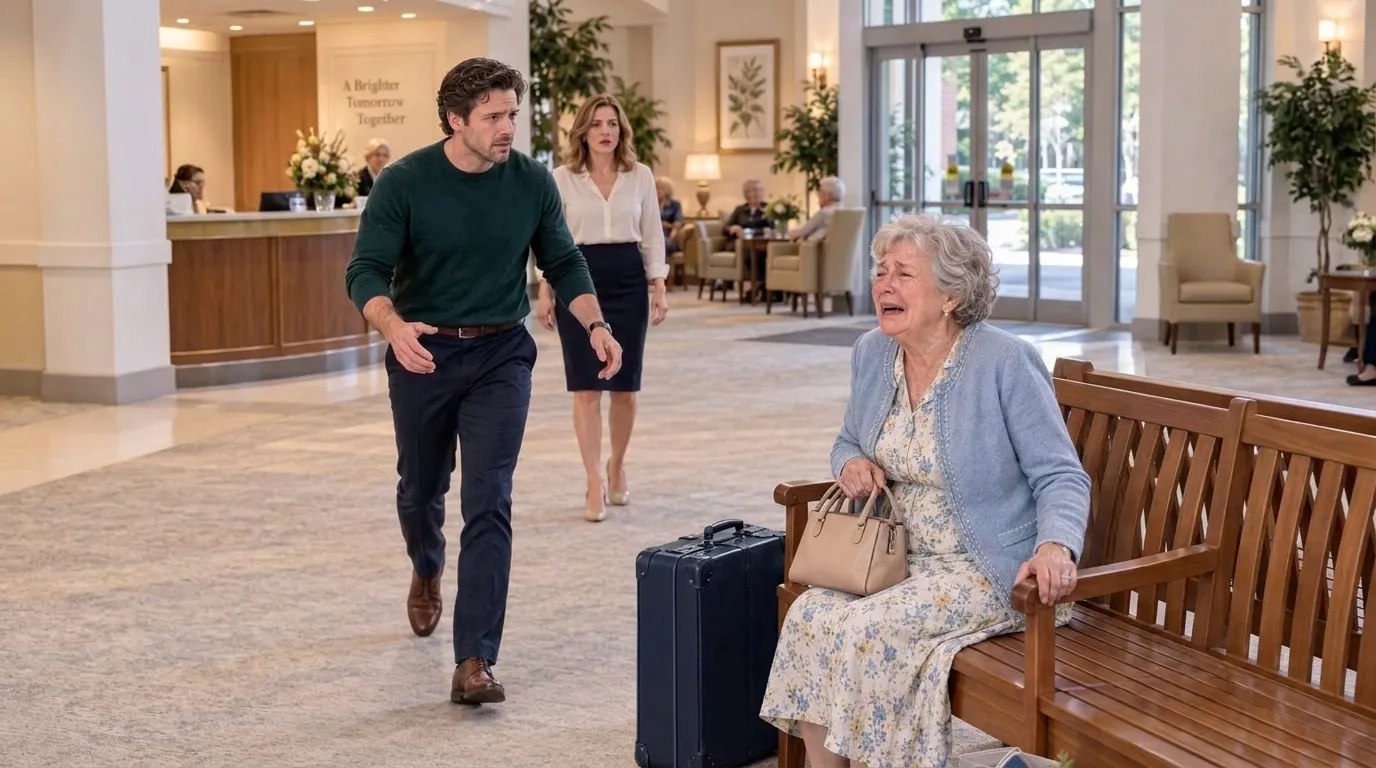
When I arrived, Grandma was sitting beside a single brown suitcase and a grocery bag filled with medications.
She was still wearing her church coat even though the lobby was warm.
Her gray hair remained carefully pinned, and her face had that calm, stone-cold expression it always took on whenever she was furious.
I crouched beside her.
“Grandma.”
She looked at me for several long seconds.
Then she stood.
No tears.
No questions.
She walked toward my car, climbed into the passenger seat, and buckled herself in.
“Don’t call them,” she said.
I looked at her.
“I’ll tell you where to drive.”
“Where?”
“First, the county courthouse.”
That got my attention immediately.
Once we were back on the highway, she opened her purse and handed me a folded bank statement.
Three withdrawals were circled in red.
Twelve thousand dollars.
Eighteen thousand.
Twenty-five thousand.
All taken within six weeks.
“Your father has temporary power of attorney,” she explained. “I signed it after my knee surgery because I trusted him.”
My stomach tightened.
“He told me I was starting to become forgetful. He said I needed help handling the bills.”
She stared out the window.
“Then yesterday, I found this.”
“Did you confront him?”
“I did.”
“And?”
“He said the money was being used to pay for my care.”
I glanced toward the lone suitcase in the back seat.
Grandma let out a humorless laugh.
“At lunch today, your mother told me we were stopping somewhere with a lovely garden. They walked me into that facility, began the admission process, and vanished.”
My phone buzzed.
Dad.
Grandma reached over and turned it face down on the console.
“Courthouse first,” she repeated. “Then the bank. Then there’s one more place.”
“What place?”
She looked directly at me.
“My house.”
I swallowed.
“Why?”
“Because if they’ve done what I think they’ve done, your parents didn’t just leave me there today.”
She reached inside her coat and pulled out a small envelope.
Across the front, in my grandfather’s handwriting, were two words:
HOUSE DEED.
“I kept this hidden before they picked me up,” she said. “I wanted to know whether they would go searching for everything connected to it.”
Her voice dropped.
“They wanted me out of the way.”
For several minutes, neither of us spoke.
The highway stretched ahead beneath gray winter clouds.
Grandma sat beside me with her hands folded neatly in her lap.
Anyone looking at her might have thought she was a fragile elderly woman abandoned by her family.
They would have been wrong.
Grandma Eleanor had always been the strongest person I knew.
She was the woman who raised my father after my grandfather died.
The woman who worked two jobs to keep their house.
The woman who remembered every birthday, every important date, and every small detail about the people she loved.
And now her own son had left her sitting in a nursing facility lobby with one suitcase.
“I don’t understand,” I finally said.
“What part?”
“Why would Dad do this?”
She sighed.
“Because your father has spent his entire life believing he deserves certain things simply because he is family.”
The answer hurt because it sounded familiar.
My father had always been charming.
Everyone loved Arthur Sterling.
He could enter a room and make strangers feel like old friends.
But behind closed doors, I had seen another side.
A side that always believed he was owed something.
“I thought he loved you.”
Grandma looked out the window.
“He does.”
That surprised me.
“He does?”
“Yes.”
She paused.
“That’s what makes this worse.”
The courthouse was quiet when we arrived.
Grandma walked through the doors carrying her purse like someone who knew exactly why she was there.
She reviewed the property records and began the process of formally revoking the authority she had previously given my father.
While she dealt with the paperwork, I watched her carefully.
She wasn’t shaking.
She wasn’t crying.
She wasn’t acting like someone who had just discovered a betrayal.
She was acting like someone who had finally confirmed what she already feared.
That frightened me.
Because it meant something had been wrong long before that morning.
Afterward, we went to the bank.
The manager recognized her immediately.
“Mrs. Sterling.”
She smiled politely.
“Hello, Thomas.”
They disappeared into a private office.
Twenty minutes later, Thomas returned with a serious expression.
“I’m sorry.”
My stomach tightened.
“For what?”
He looked at Grandma.
“There were concerns flagged on the account.”
Grandma nodded.
“I know.”
Thomas looked uncomfortable.
“Your son provided documentation claiming the withdrawals were related to medical expenses.”
“And were they?”
Silence.
Then:
“No.”
My jaw tightened.
“What were they for?”
Thomas looked at the records.
“Home renovation payments.”
Grandma gave a quiet laugh.
“Whose home?”
Thomas hesitated.
“Mr. and Mrs. Sterling’s property.”
My blood went cold.
My parents had taken Grandma’s money to renovate their own house.
Outside the bank, I finally called my father.
This time he answered.
“Ivan?”
His voice sounded surprised.
“You got Grandma?”
I stared at the phone.
Not:
Is she okay?
Not:
Where is she?
Just:
You got Grandma?
“Yes.”
A pause.
“Good.”
I couldn’t believe what I was hearing.
“Good?”
“Look, son. This is complicated.”
“No.”
My voice hardened.
“It’s actually very simple. You took Grandma to a nursing facility and left her there.”
“That’s not what happened.”
“Then explain it.”
My father sighed.
“Your grandmother is getting confused.”
I looked at her.
She was sitting beside me, calmly watching people walk up the courthouse steps.
More aware of what was happening than anyone.
“You told her she needed care.”
“Yes.”
“You emptied her account.”
“That money was for expenses.”
“You renovated your house.”
Silence.
That was my answer.
“Dad.”
My voice dropped.
“What happened to you?”
For a moment, he sounded less manipulative.
More tired.
“I’m handling things.”
“No.”
I shook my head.
“You’re handling Grandma.”
Then I ended the call.
The final place Grandma wanted to visit was the home where she had lived for thirty-six years.
The house where my grandfather built the porch himself.
The house where I spent every summer as a child.
When we arrived, I immediately noticed a luxury SUV in the driveway.
My father’s.
I looked at her.
“They’re here?”
She nodded.
“They thought I was gone.”
We entered.
The house was unlocked.
That bothered me immediately.
Grandma always locked her doors.
Inside, everything looked normal.
Almost too normal.
The furniture.
The photographs.
The decorations.
Then Grandma walked directly toward the study.
She opened one drawer.
Empty.
Another.
Empty.
Her expression changed.
“They searched it.”
“For the deed?”
“For anything connected to it.”
She walked toward the bookshelf.
Three old books came off the shelf.
Behind them was a small hidden compartment.
Inside was a second envelope.
My grandfather’s handwriting covered the front:
FOR ELEANOR — IF ANYONE TRIES TO TAKE WHAT BELONGS TO YOU.
Grandma sat.
For the first time that day, she looked tired.
Not weak.
Tired.
Inside the envelope was a letter and another property document.
She unfolded the letter.
It was dated twelve years earlier.
“Eleanor, if you are reading this, something has happened that made you doubt whether your family will protect you.”
Then:
“Remember this: love does not remove the need for boundaries.”
Grandma closed her eyes.
The letter continued.
“Arthur has always been my greatest joy and my greatest worry.”
My chest tightened.
Even my grandfather had known.
“He is kind, but he has always believed good intentions excuse bad decisions.”
Then came the sentence that mattered most:
“If he ever takes from you while claiming he is helping you, remember that help without honesty is control.”
I swallowed.
Grandma handed me the second document.
I read it.
Then read it again.
“What is this?”
“Your grandfather changed the ownership structure of the house ten years ago.”
I looked down.
The name listed was:
Ivan Sterling.
Mine.
I stared at her.
“What?”
“He knew Arthur might eventually make decisions based on pride.”
“Grandma…”
“He wanted to make sure this house remained with someone who loved it, not someone who wanted to profit from it.”
“You gave me your house?”
She smiled.
“No.”
Then she said something I never forgot.
“He gave you a responsibility.”
That night, my parents arrived.
Not because they were worried.
Because they realized something had changed.
Dad walked through the front door.
“Where is she?”
Grandma appeared from the hallway.
“I’m right here.”
My father froze.
For one second, he looked relieved.
Then angry.
“You left the facility?”
Grandma stared at him.
“You left me there.”
“I was trying to help.”
“No.”
Her voice stayed calm.
“You were trying to solve a problem.”
“What problem?”
She looked straight at him.
“Me.”
Silence.
My mother started crying.
“Ivan, you don’t understand.”
I looked at her.
“Then explain.”
She opened her mouth.
Nothing came out.
Because there was no explanation that made abandonment acceptable.
Dad stepped forward.
“Your grandmother is old. She needs care.”
Grandma nodded.
“Yes.”
Everyone looked at her.
“I do.”
Then she pointed toward herself.
“But needing help does not mean losing control of my life.”
That ended the argument.
My father looked at me.
“You’re taking her side?”
I stared at him.
“No.”
He frowned.
“I’m taking the truth’s side.”
It was the first time I had ever spoken to my father that way.
Not as a child.
Not merely as his son.
As an adult.