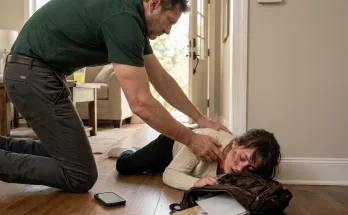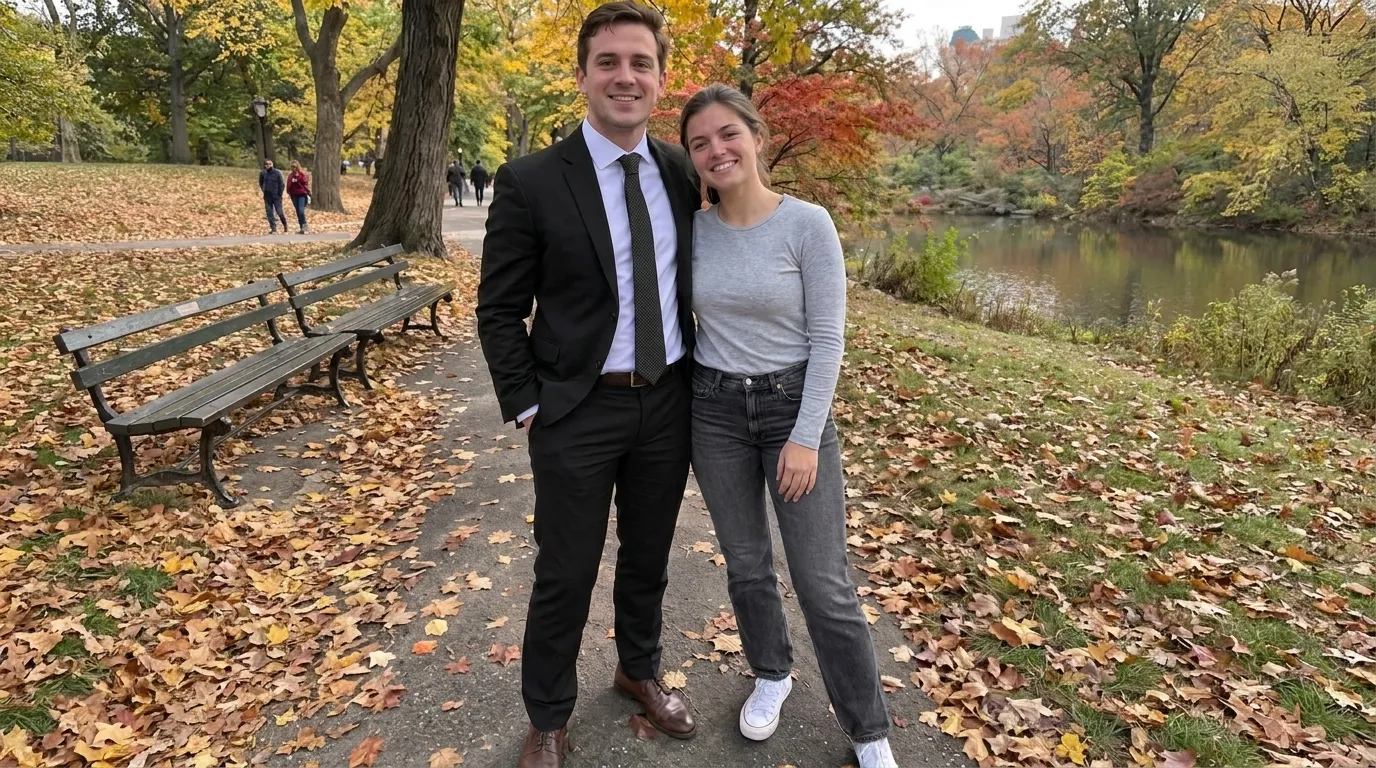
My girlfriend disappeared for five days after I told her I was dying, and when she finally returned carrying a battered envelope, I realized I had made the biggest mistake of my life.
Her name was Skyla Bennett, and she was the only woman who had ever loved me without asking for anything in return.
My name is Daniel Whitmore. I was thirty-two years old, and I had spent most of my adult life believing money could solve almost any problem.
I was about to discover that money could also destroy the one thing I desperately wanted to keep.
The evening everything changed began with a lie.
I sat across from Skyla in my living room, deliberately keeping my eyes lowered as I delivered the terrible news I had rehearsed in front of my bathroom mirror.
“The doctors found something serious, Skyla.”
Her fork stopped halfway to her mouth.
“What do you mean, serious?”
I swallowed, pretending the words were difficult to say.
“They think it’s a life-threatening illness, and I need treatment immediately.”
For a moment, she simply stared at me.
Then her face lost its color.
“Daniel, what exactly did they find?”
I looked toward the window because I couldn’t bear the concern in her eyes.
“They’re still discussing the options.”
She reached across the table and took my hand.
“Then we’ll find the best doctor, and we’ll figure it out.”
I had expected shock, perhaps tears, but the immediate certainty in her voice unsettled me.
I continued with the second part of my carefully constructed deception.
“There’s another problem.”
“What problem?”
“The treatment is expensive, and my insurance won’t cover enough of it.”
She squeezed my fingers.
“How expensive?”
I named an amount so enormous that I knew someone living paycheck to paycheck couldn’t possibly produce it.
“Two hundred and eighty thousand dollars.”
Skyla’s mouth opened slightly.
For several seconds, she appeared unable to speak.
Then she asked the question that should have ended my ridiculous experiment.
“How much time do we have to find it?”
Not how much I could contribute, not whether my parents would give her anything, and not whether she would inherit something if I died.
Her first concern was time.
I told her we had less than two weeks to arrange the initial treatment.
She nodded slowly.
“Okay.”
I frowned.
“Okay?”
“We have two weeks, Daniel, so we’re not wasting tonight panicking.”
That was Skyla.
She was twenty-four, still finishing college, and more determined than anyone I had ever known.
She worked evenings at a small neighborhood restaurant and spent weekends picking up extra shifts whenever someone needed coverage.
Her old blue sedan made a rattling sound whenever the engine started, and she carried a notebook filled with careful calculations of tuition payments, rent, utilities, and grocery expenses.
She bought used textbooks whenever she could. There were weeks when she lived on noodles so she wouldn’t fall behind on school fees.
But in almost two years together, she had never once asked me for money.
When I offered to help with tuition, she refused.
“I need to know I can do this myself.”
I had once found her standing in a supermarket aisle comparing the price of rice by the ounce.
I offered to fill her cart.
She smiled and shook her head.
“I appreciate it, but I’ve already planned what I need.”
That refusal had puzzled me at first.
I grew up in a house where the kitchen was larger than her entire apartment.
My parents owned commercial properties, investment portfolios, and a collection of cars that rarely left their climate-controlled garage.
I owned a successful logistics company, drove a luxury SUV, and had enough savings that an unexpected bill barely registered. If something broke, I replaced it without checking the price.
Skyla knew all of that.
She had known about my financial situation since our third date, when I accidentally mentioned owning the building that housed one of the restaurants we passed.
She didn’t seem impressed.
Instead, she asked whether I was planning to order dessert.
I fell in love with that simplicity.
We met when I walked into the restaurant where she worked during a thunderstorm.
My business meeting had been canceled, my phone battery was dying, and I needed somewhere to sit.
Skyla brought me coffee and noticed I was struggling with a presentation on my laptop.
She asked whether I wanted another cup, and I jokingly told her I needed another brain.
She laughed so hard that she nearly spilled the coffee.
When I returned the following evening, she remembered my order but not the expensive watch on my wrist.
Two weeks later, I asked her to dinner.
She insisted on splitting the check.
We argued playfully about it until she finally agreed that I could pay if she chose our next date.
She took me to a free outdoor concert and brought homemade sandwiches.
I had attended charity galas costing thousands of dollars per table, but nothing had felt as wonderful as sitting beside her on a blanket while music drifted through the warm summer air.
Our relationship grew through ordinary moments that I had never known how to appreciate.
She brought soup when I had a cold, remembered the anniversary of my grandfather’s death, and listened when I worried about a business decision.
She wasn’t interested in expensive vacations or designer handbags.
When I bought her a bracelet for our first anniversary, she thanked me but admitted she would rather have spent the evening cooking together.
I began wondering whether I had finally found someone who loved the man beneath the money.
Then the people around me began planting doubts.
It started with my friend Marcus.
We were having drinks after a business dinner when he mentioned seeing Skyla leaving a discount grocery store.
“Your girlfriend’s still doing all that struggling?”
I shrugged.
“She’s proud of paying her own way.”
Marcus laughed.
“Convenient attitude when she’s dating a millionaire.”
I asked what he meant.
He leaned closer.
“Come on, Daniel, girls like that know exactly what they’re doing.”
I told him he didn’t know Skyla.
He raised his glass.
“Maybe not, but I know people.”
Similar comments followed.
Another friend suggested Skyla might be playing the long game.
My mother, Patricia, questioned why a college student would be interested in a man eight years older with considerable wealth.
“Just be careful,” she once told me. “Some people are very good at pretending they love you until they get what they want.”
My father, Richard, said I should protect my assets before thinking about marriage.
“She knows what your family has. Don’t let yourself be used.”
One Sunday afternoon, my mother waited until Skyla left the room before speaking.
“She’s charming, sweetheart, but charming people can have motives.”
I told her Skyla had never requested financial assistance.
My mother smiled sadly.
“Sometimes refusing money at the beginning is the smartest strategy.”
That sentence stayed with me.
I hated that it stayed with me.
I had watched Skyla work herself to exhaustion.
I had seen her study until midnight after standing on her feet for eight hours.
I knew she had once skipped buying winter boots so she could pay for an expensive required textbook.
Yet each sacrifice somehow became evidence against her in my increasingly suspicious mind.
Was her independence genuine, or was it calculated?
Was she patient because she loved me, or because she expected something greater later?
The more I questioned her intentions, the less I trusted my own happiness.
Eventually, Marcus suggested the test.
“Tell her you’re broke and see whether she stays.”
I rejected the idea immediately.
But several days later, during another conversation, he mentioned a wealthy acquaintance whose girlfriend had supposedly disappeared when his business failed.
“Nothing reveals people’s priorities faster than losing money,” Marcus declared.
That night, I lay awake beside Skyla while she slept with a textbook open on her chest.
I watched her breathing and wondered why I was allowing other people to turn my love into an investigation.
I could have woken her and told her I was frightened of being used.
I could have listened to her answer.
Instead, I convinced myself that words were too easy to fake.
I wanted proof.
And the test I invented was far crueler than anything Marcus had suggested.
I decided to pretend I had a serious illness requiring treatment I couldn’t afford.
In my twisted reasoning, financial hardship alone might not reveal whether Skyla loved me.
But a future filled with debt, uncertainty, and the possibility of losing me surely would.
I told myself I would end the deception after a day.
I told myself I was protecting my heart.
Those excuses were comforting until I saw how thoroughly I broke hers.
After I delivered the false diagnosis, Skyla hardly slept.
She stayed beside me on the couch, researching hospitals and financial assistance programs.
She wrote down questions about treatment costs and insurance appeals.
She asked whether my parents could help.
I lied again.
“They’re tied up in business problems right now.”
She looked confused.
“Your parents have always seemed financially secure.”
“They can’t access the money quickly enough.”
She accepted my explanation, although I noticed a small crease forming between her eyebrows.
The following morning, she called during her lunch break.
“I found three organizations that might help patients with medical expenses.”
I thanked her.
She told me she was also researching loans.
I said it probably wouldn’t be enough.
“Then I’ll find something else.”
That evening, she arrived carrying printed information and a notebook full of figures.
Her eyes were red from exhaustion.
She had missed an afternoon lecture to make telephone calls.
I felt an unpleasant tightening in my stomach, but I still continued the performance.
“I don’t want you ruining your future because of me.”
She stared at me.
“You’re part of my future, Daniel.”
I looked away.
She moved closer.
“Do you hear me?”
I nodded.
“Then stop talking as if you’re already gone.”
For one brief moment, I nearly confessed everything.
I could have told her there was no illness.
I could have admitted how badly I had allowed my family and friends to poison my thinking.
Instead, I asked whether she was truly prepared to stand by someone who had nothing.
Her expression changed.
“Is that what you think this is about?”
I said nothing.
She sat back slowly.
“Daniel, I’m trying to figure out how to keep you alive.”
Shame prickled beneath my skin.
Yet I somehow persuaded myself that the test wasn’t complete.
During those two days, Skyla became increasingly quiet.
She spent hours making calls outside my hearing.
She asked for the exact amount again.
She wanted to know which hospital expected payment and whether the deadline was firm.
I gave her vague answers, telling myself that patients often misunderstood medical paperwork.
On the second evening, she asked whether I could send her anything documenting the treatment estimate.
My heart thudded.
“I don’t have everything together yet.”
She studied my face.
“Daniel, I need to know what we’re dealing with.”
I said I would find the documents.
She didn’t argue.
Instead, she kissed my forehead and said she had something important to arrange.
The following morning, a message appeared on my phone.
“I’m leaving for five days. Don’t call me.”
I stared at those words until they blurred.
I called immediately.
She didn’t answer.
I tried again an hour later.
Nothing.
By evening, I had convinced myself she had finally realized how much trouble loving me could become.
I drove past her apartment.
Her car wasn’t there.
I checked the restaurant where she worked, but a coworker said Skyla had requested several days away.
I called her again.
The ringing eventually stopped without an answer.
The next day, I spoke to Marcus.
“She’s gone.”
He remained silent for a moment.
Then he sighed.
“Well, now you know.”
I hated how relieved he sounded.
My mother offered sympathy that somehow felt like satisfaction.
My father reminded me that difficult experiences revealed character.
By the fourth day, I was alternating between anger and humiliation.
I had expected Skyla to fight for me.
Instead, she appeared to have vanished when I needed help.
I began rehearsing what I would say if she returned.
I would tell her the relationship was over.
I would explain that I’d discovered her true character.
I would never admit that the crisis had been fabricated.
On the fifth evening, I sat alone in my living room as rain tapped against the windows.
A familiar key turned in the lock.
My heart stopped.
Skyla stepped inside.
Her hair was tangled, her face looked pale, and her clothes were wrinkled as though she had slept in them.
She carried a battered brown envelope in one hand.
There were dark circles beneath her eyes.
For a moment, neither of us moved.
Then I stood.
“Where have you been?”
She didn’t answer immediately.
She walked toward the coffee table, set down the envelope, and removed a thick stack of folded documents.
“Skyla, I asked you a question.”
Her hands trembled.
“I know.”
“Five days without a single call?”
She finally looked at me.
There was exhaustion in her expression, but also something I couldn’t identify.
“I had to make sure everything was finished before I came back.”
I laughed bitterly.
“Everything?”
She pushed the documents toward me.
“Please look at these first.”
I picked up the first page.
At the top were the words VEHICLE SALE AGREEMENT.
The next paper was a withdrawal receipt.
Then came a document bearing the name of her college.
My stomach twisted when I read the heading.
REQUEST FOR VOLUNTARY WITHDRAWAL FROM ENROLLMENT.
I looked up in disbelief.
“Skyla, what is this?”
She opened the envelope and took out one final item.
It was a cashier’s check.
The amount printed across it made my mouth go dry.
I looked from the check to her exhausted face.
Then I noticed the bare space on her hand where the little silver ring her late grandmother had given her had always rested.
Tears filled my eyes.
“Skyla,” I whispered, “what have you done?”
She held my gaze.
And with a voice that was almost too quiet to hear, she said something that made me realize her five-day disappearance had been nothing like I imagined.
“I sold everything I could, Daniel, and there is something else you need to know.”