Chapter 1: The Audacity of Ten O’Clock
My name is Vicky Williams, and for most of my forty years, I existed somewhere near the edge of my own family’s portrait.
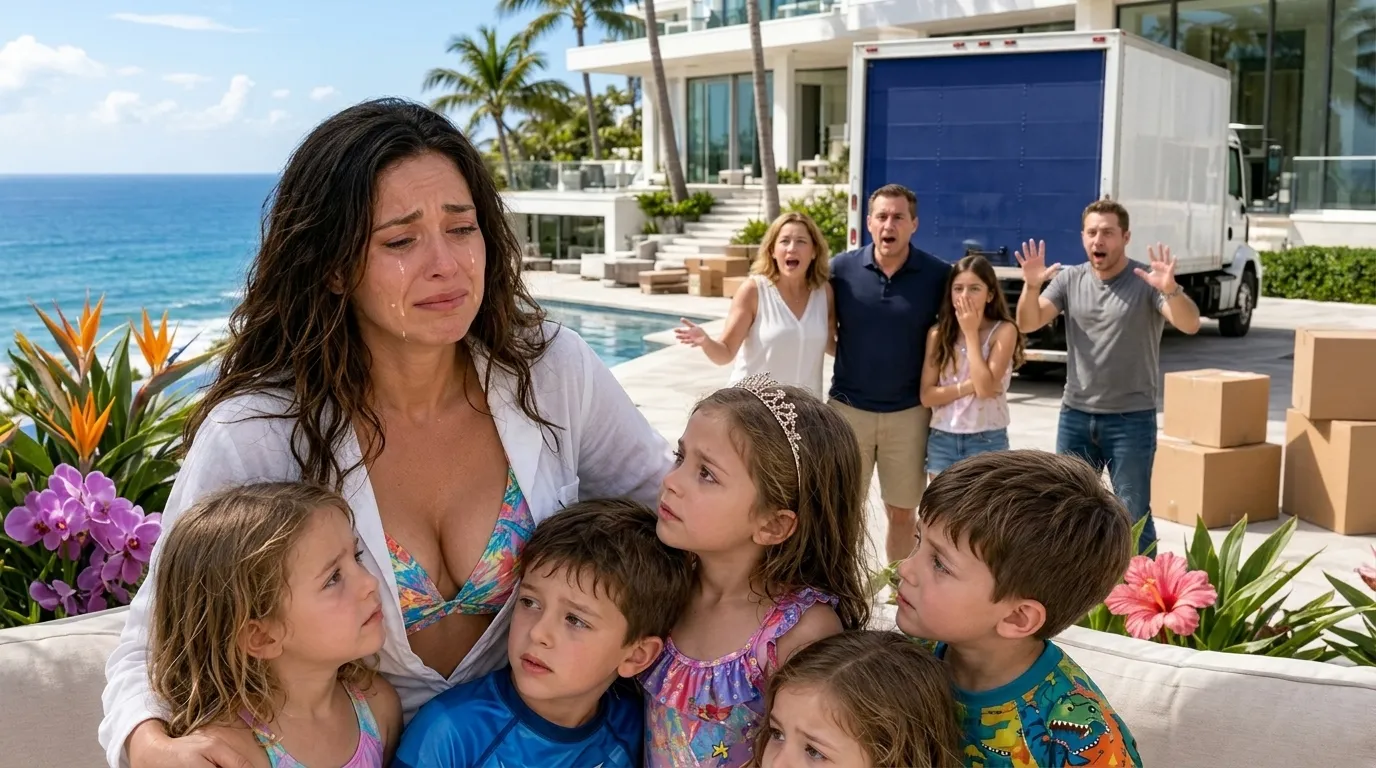
On my first night inside the coastal home I had paid for with eleven relentless years of pediatric nursing shifts, my mother called.
She didn’t bother saying hello.
“Pack up the master bedroom, Vicky. Your sister has a real family. You don’t. Four bedrooms for a single woman is selfish and wasteful.”
Before I could process the sheer entitlement in her voice, my father took the phone.
“Hand the keys over to Kristen and her husband. You’re childless. Go rent a small apartment. Don’t make people look at this family and think you’re an ungrateful hoarder.”
Then they ended the call.
Exactly thirty seconds later, my phone vibrated against the marble kitchen island.
A text from my younger sister, Kristen:
Moving truck arrives at 10 AM tomorrow. Don’t make this awkward. Just clear out.
I stared at the screen.
The house still smelled of fresh paint and lemon cleaner. Through an open window, I could hear the Atlantic moving beyond the dunes.
I did not throw the phone.
I did not cry.
Calm is not always the absence of anger.
Sometimes it is what remains after you have been burned by the same people so many times that the flames no longer surprise you.
I looked down the hallway toward two smaller bedrooms at the rear of the house.
They were freshly painted.
They were already waiting.
I typed:
10 is absolutely perfect.
Then I programmed the coffee maker and placed two ceramic mugs on the counter.
Finally, I opened my calendar.
A blue appointment block had been sitting there for more than a week:
10:00 AM — Foster-to-Adopt Home Inspection — Diane Prescott, DHS Child Welfare.
Ten o’clock.
For everyone.
My parents believed they were driving three hours to take control of my property.
They had no idea who would already be standing in my living room.
Chapter 2: The Currency of “The Strong One”
To understand why my four-bedroom house in Emerald Isle offended my parents so deeply, you have to understand my role in the family.
I am a pediatric nurse practitioner.
During my early thirties, I worked years of exhausting travel-nursing contracts, moving from one understaffed pediatric unit to another.
The pay during some crisis periods was extraordinary.
I treated every dollar like something I might someday need to escape.
I lived in temporary apartments.
I ate terrible food after twelve-hour shifts.
I saved aggressively.
Not because I dreamed about a beach house.
Because I wanted independence.
Eventually, I purchased the Emerald Isle property for $625,000, putting approximately $190,000 down.
Between the mortgage, coastal insurance, taxes, maintenance, and flood-related costs, my monthly overhead sat near $3,800.
I carried it myself.
My family saw none of that.
To them, anything I owned was simply a resource that had somehow not yet been redirected toward Kristen.
Eight years earlier, Kristen bought a luxury SUV she could not afford.
My mother called me while I was working in another state and informed me that I would wire $9,000 to keep the vehicle from being repossessed.
I sent the money.
At the next holiday dinner, I listened while Mom told relatives how she and Dad had generously helped Kristen through a financial emergency.
My money.
Their generosity.
That was how things worked.
Kristen’s needs were emergencies.
Mine were extravagances.
Whenever anyone questioned the imbalance, my mother used the same phrase:
“Vicky is the strong one.”
For years, I thought it was a compliment.
Eventually, I understood it was an excuse.
The strong child is the child nobody worries about.
Then the child nobody helps.
Then eventually the child everyone assumes can keep giving because she has somehow proven she needs nothing.
The only person who ever understood what that did to me was my grandmother, Ruth.
When she died in 2019, she left me a modest inheritance.
But what mattered more were three things:
An old tide clock.
A recipe box.
And a weathered children’s book about a tiny lighthouse.
When I was young, Ruth used to pull me into a quiet room while everyone else revolved around Kristen and read that book to me.
The story was about a lighthouse that believed it was too small to matter against the enormous darkness of the ocean.
Ruth never explained why she loved it.
She didn’t need to.
She was telling me that being quiet did not make me invisible.
And being overlooked did not make me worthless.
Chapter 3: The Girl My Family Erased
Ruth had another daughter besides my mother.
My Aunt Carol.
In our family, Carol became the person nobody discussed.
She married someone my parents disliked.
She struggled financially.
She didn’t maintain the polished image they valued.
Eventually, Dad began ending every conversation about her with:
“We don’t discuss that side of the family.”
Carol had a daughter.
Amanda.
My cousin.
And unlike everyone else, I refused to forget her.
In 2011, I experienced an ectopic pregnancy.
The loss was early, painful, and private.
My family never understood what happened because I hardly spoke about it.
During that same period, Aunt Carol died.
Amanda was fifteen.
She entered the foster system.
I was twenty-six, grieving my own loss, but I wanted to take her.
I contacted the county.
Met a caseworker.
Prepared a bedroom.
Bought a desk.
Bought a bed.
Bought a stuffed bear I was too embarrassed to admit I had chosen carefully.
Then my parents stepped in.
My mother met with the caseworker.
She told the state that I was grieving, emotionally unstable, and incapable of properly raising a teenager.
She promised the family would handle Amanda’s situation.
I backed down because I was young, exhausted, and still conditioned to believe my mother understood things I did not.
Amanda remained in the system.
My parents did nothing.
Years later, after Ruth died, I requested records connected to that old placement attempt.
A document arrived.
My mother’s words were there in black and white:
My daughter is grieving and unstable. She cannot raise a child right now. We will handle it ourselves.
Her signature sat underneath.
It had not been misunderstanding.
It had been deliberate.
I tried to remain connected with Amanda whenever I could.
Years later, we met in coffee shops and diners.
Once she asked whether I remembered reading her Ruth’s old lighthouse book.
I did.
“If I ever have kids,” Amanda told me, “I want them to have steady things like that.”
In 2023, Amanda died in a car accident on a rain-soaked highway.
She was twenty-eight.
I attended the memorial.
There were only a handful of chairs.
None of my immediate family came.
When my mother relayed the news to my father, his response was simple:
“That’s not really our problem.”
At the back of the memorial room stood a photograph.
Amanda was holding two children.
Lily and Owen.
After their mother’s death, they entered foster care.
Again.
No one from my family stepped forward.
Until one night during my shift.
A five-year-old boy arrived in my pediatric unit struggling to breathe.
After he was stabilized, I looked at his hospital wristband.
REED, OWEN.
My heart stopped.
I stepped away from his direct care immediately and disclosed the family connection to the charge nurse.
Then I walked into the waiting room.
An eight-year-old girl sat in a vinyl chair holding a library book against her chest.
Lily.
A county caseworker sat beside her.
Temporary placement.
I looked into that little girl’s guarded eyes and saw something painfully familiar.
A child already learning not to expect adults to stay.
That night, I made a decision.
I contacted the Department of Human Services.
I began the relative-placement and foster-to-adopt process.
And I started searching for a home large enough for two children who deserved permanent bedrooms.